
Pruning
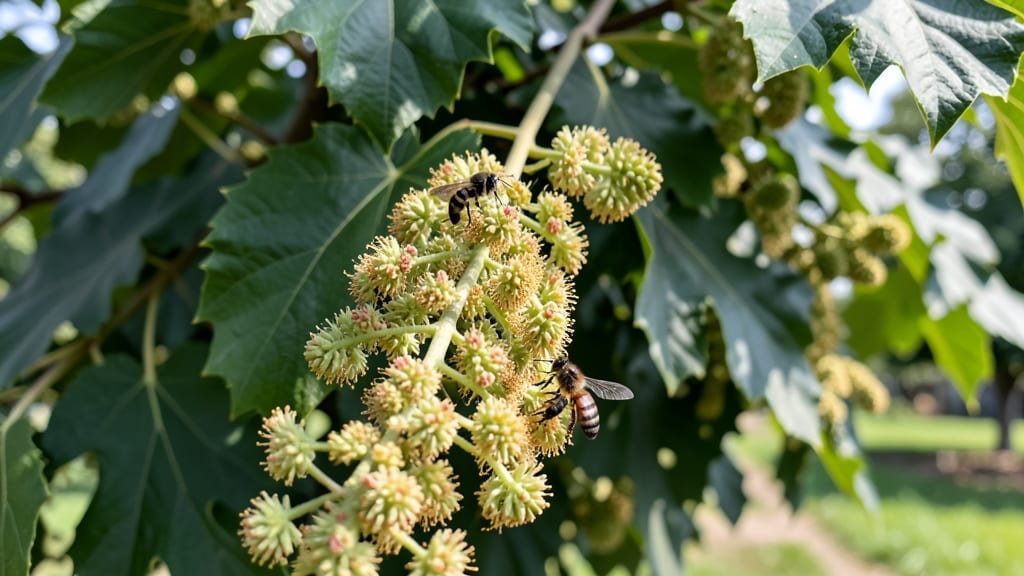
Understanding mulberry tree pollination is key to maximizing fruit production, as it depends primarily on wind and insect activity like bees to carry pollen between flowers, with some self-pollinating varieties available. Effective pollination directly impacts berry yield and tree health, particularly in warm growing regions.
Mulberry trees have a fascinating reproductive system where wind and pollinators play starring roles. 🌬️ The male flowers release pollen that either gets carried by breezes or picked up by bees and flies, which then transfer it to female flowers. This cross-pollination process is what triggers fruit development.
Some varieties like the Illinois Everbearing mulberry can self-pollinate, but they still produce more fruit when other trees are nearby. The timing of flowering—typically spring—aligns perfectly with peak pollinator activity, making warm climates ideal for abundant harvests.
For gardeners looking to boost production, planting male and female trees within 50 feet of each other creates an optimal pollination zone. 🐝 You can also enhance yields by planting pollinator-friendly flowers nearby or gently shaking branches during bloom to encourage pollen dispersal.
In cases where fruit set is poor, hand-pollination with a small brush works well—just collect pollen from male flowers and transfer it to female ones on calm days.
💡 In This Article
- How Mulberry Trees Reproduce: Wind vs Insect Pollination
- Boosting Mulberry Fruit Production Through Pollination Strategies
How mulberry trees reproduce: wind vs insect pollination
Mulberry trees employ a dual pollination system where both wind and insects play crucial roles. The male flowers produce abundant pollen that's easily carried by breezes or picked up by bees and flies, which then transfer it to female flowers.
This cross-pollination triggers fruit development, with wind being most effective during dry, sunny days when pollen grains remain lightweight and airborne for up to 30 minutes. The tree's catkin flowers—long, drooping clusters—are perfectly structured to catch wind currents while also exposing pollen to visiting insects.
Not all mulberries rely equally on external pollinators. Some varieties like Illinois Everbearing are monoecious (male and female flowers on same tree) and can self-pollinate, though yields improve when other trees are nearby. Dioecious varieties (separate male and female trees) require cross-pollination entirely.
The female flowers have sticky stigmas that trap pollen, while male flowers release it in clouds that can travel up to 100 feet under ideal wind conditions. 🌬️ This dual mechanism explains why mulberries thrive in open orchards where both wind and insect activity are maximized.
The timing of pollination is critical—mulberries flower in early spring when temperatures reach 55-65°F, coinciding with peak bee activity. Bees are particularly drawn to mulberry flowers because they produce nectar rewards, making them more effective pollinators than wind alone.
The tree's reliance on both methods creates a built-in redundancy: if one pollination pathway fails (like during rainy periods when bees stay grounded), the other can compensate. This adaptability is why mulberries succeed in diverse climates from Zone 5 to Zone 10.
Here's what happens when pollination succeeds: fertilized female flowers develop into berries through a process called parthenocarpy (fruit formation without seeds in some cases). The tree's hormonal response to successful pollination triggers cell division in the ovary, which grows into the characteristic elongated mulberry fruit.
Without proper pollination, flowers drop off within 7-10 days, resulting in minimal fruit set. This biological efficiency explains why mulberries can produce 100-200 pounds of fruit per tree annually when conditions are optimal.
One fascinating adaptation is how mulberry flowers change color as they age. Male flowers start yellow-green and darken to brown as they release pollen, while female flowers remain green until pollinated, then develop a slight pinkish hue.
This color shift provides visual cues for pollinators about which flowers are ready for pollen collection or deposition. The tree's ability to signal pollination status makes it particularly efficient at maximizing fruit production in natural ecosystems.
For gardeners, understanding this dual pollination system offers practical insights. Planting male and female trees within 50 feet ensures adequate pollen transfer, while creating pollinator habitats nearby can double fruit yields.
The tree's adaptability means even small gardens can achieve good production, though larger orchards benefit most from this natural redundancy. 🌿 The key takeaway is that mulberries have evolved sophisticated pollination strategies that make them one of the most resilient fruit trees for home growers.