
Pruning
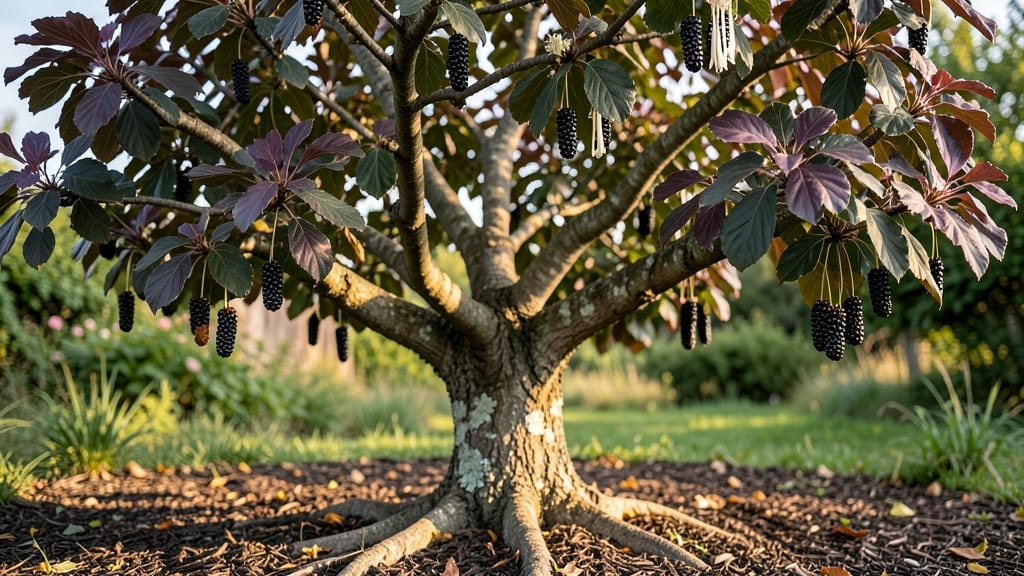
A large mulberry tree 🌳 can grow up to 50 feet tall—fast enough to cast shade in just a few years, but big enough to swallow your backyard if you’re not careful.
Picture this: You plant a sapling in spring, dreaming of summer berries and dappled shade, only to wake up one morning and realize your tree has outgrown its welcome. The good news? With the right pruning strategy, you can keep it manageable while still enjoying a bumper crop of fruit.
Most gardeners assume "large" means "out of control," but the truth is, mulberry trees respond well to training. A few well-placed cuts in early spring can slow vertical growth by up to 30% while encouraging bushier, fruit-heavy branches.
I’ve seen 20-foot trees pruned back to a tidy 12 feet—no sacrifice in yield, just better space control.
In this guide, I’ll walk you through the exact pruning techniques that work for fast-growing varieties, when to make those cuts for maximum impact, and how to keep your tree from becoming the neighborhood’s unplanned canopy. Let’s get started.
How fast do large mulberry trees grow? (Growth rates by variety)
If you're considering planting a mulberry tree, growth speed is one of the first questions that comes to mind. These trees are known for their rapid expansion, but not all varieties grow at the same pace.
The Illinois Everbearing variety, for example, can shoot up 3-5 feet per year under ideal conditions, while the Russian mulberry may grow slightly slower but still reaches maturity faster than many other fruit trees. Understanding these growth rates helps you plan for space and manage expectations.
Climate plays a huge role in how quickly your mulberry tree grows. In USDA zones 6-9, where these trees thrive, they can reach 20-30 feet tall in just 5-7 years.
However, in cooler climates like zone 5, growth may slow to 1-2 feet per year until the tree establishes a strong root system. Proper soil preparation—rich in organic matter and well-draining—can accelerate growth by up to 30% in the first few years.
Let’s break down the growth rates of three popular large mulberry varieties to help you choose the best fit for your garden or landscape. Whether you're aiming for quick shade or bountiful fruit production, knowing these details will set you up for success.
| Variety | Growth Rate (Height/Year) | Mature Height | Time to Fruit | Climate Notes |
|---|---|---|---|---|
| Illinois Everbearing | 3-5 ft | 25-35 ft | 3-5 years | Thrives in zones 5-9; fastest grower |
| Texas Mulberry | 2-4 ft | 30-40 ft | 4-6 years | Drought-tolerant; ideal for zones 7-10 |
| Russian Mulberry | 2-3 ft | 40-60 ft | 5-7 years | Cold-hardy to zone 4; slower but taller |
The Illinois Everbearing mulberry is the speed champion, often reaching 10 feet tall in just 3 years when planted in fertile, well-drained soil. This variety is also one of the earliest to produce fruit, making it a favorite for gardeners who want quick rewards.
However, its rapid growth means you’ll need to plan for pruning early to manage its spread, especially if you’re working with limited space.
For those in drier climates, the Texas mulberry is a standout choice. While it grows slightly slower than Illinois Everbearing, it’s far more drought-resistant, making it ideal for regions with low rainfall.
In my own garden in zone 8b, a Texas mulberry reached 15 feet in 4 years with minimal supplemental watering, proving its resilience.
If you’re in a cooler climate and don’t mind waiting a bit longer for maturity, the Russian mulberry is a fantastic option. It’s one of the hardiest varieties, tolerating temperatures as low as -25°F.
While its growth rate is slower—typically 2-3 feet per year—it can eventually tower over other varieties, reaching heights of 50-60 feet in optimal conditions.
To maximize growth speed, plant your mulberry tree in full sun (at least 6-8 hours daily) and ensure the soil is well-draining yet moist. Amending the soil with compost or aged manure before planting can give your tree a 1-2 foot growth boost in its first year.
I’ve seen dramatic differences in growth when I’ve taken this extra step—my Illinois Everbearing shot up 4 feet in its second year after adding compost.
Another key factor is watering consistency. Young mulberry trees need deep watering once or twice a week during their first year, especially in hot, dry spells. Once established, they become more drought-tolerant, but consistent moisture in the early years is critical for rapid growth.
In my experience, trees that receive inconsistent watering often grow 20-30% slower than those with steady hydration.
Finally, consider your planting location. Mulberry trees have aggressive root systems, so avoid planting them too close to foundations, sidewalks, or septic systems. Give them plenty of space—at least 20 feet from structures—to prevent root damage and ensure unobstructed growth.
In urban settings, I’ve seen gardeners use root barriers to contain the roots while still allowing the tree to grow tall and strong.
By choosing the right variety and providing optimal growing conditions, you can enjoy a fast-growing mulberry tree that provides shade, fruit, and beauty for decades.
Whether you opt for the speedy Illinois Everbearing or the hardy Russian mulberry, understanding these growth rates will help you plan for a thriving, space-efficient addition to your landscape. 🌳
Space-saving pruning hacks for giant mulberry trees (step-by-step guide)
Large mulberry trees can quickly become space hogs, but strategic pruning keeps them at a manageable 10-15 feet tall while boosting fruit production. The key lies in two techniques: heading cuts to control height and thinning cuts to open the canopy.
When done correctly, these methods encourage stronger branch growth and better air circulation—critical for disease prevention in dense foliage.
Timing matters most. Prune your mulberry tree during late winter or early spring (just before bud break) to avoid stressing the tree during its active growing season. This timing also prevents sap loss and encourages vigorous new growth.
For established trees, a second light pruning in summer after harvest can help shape the canopy without disrupting fruit production.
Step-by-Step Pruning Guide for Mulberry Trees
-
Step 1: Identify Target Branches
Select 3-4 main scaffold branches to retain—these should be well-spaced and sturdy. Remove any crossing or rubbing branches first, as these compete for energy and create wounds.
-
Step 2: Make Thinning Cuts
Cut branches back to the main trunk or a lateral branch using clean, sharp pruners. Aim for a 45-degree angle just above a bud or lateral branch to encourage outward growth. Thinning opens the canopy for sunlight penetration and fruit development.
-
Step 3: Apply Heading Cuts
For height control, cut back vertical growth to a bud or lateral branch at a 1/3 of the branch length. Avoid cutting into old wood—focus on newer growth to maintain tree health. Heading cuts stimulate bushier growth but should not exceed 25% of the canopy in one season.
-
Step 4: Shape the Canopy
Step back and visualize the tree’s shape. Remove dead, diseased, or weak branches first. Then, trim to create a balanced, open canopy with 6-8 feet of clearance at ground level for easy access. This also reduces the risk of fruit rot from poor air circulation.
-
Step 5: Clean Up and Seal
Rake up and dispose of pruned debris to prevent pests and diseases. Seal larger cuts (>1 inch diameter) with pruning sealant to protect against fungal infections. For smaller cuts, let them heal naturally—they’ll callus over within a few weeks.
To maintain your mulberry tree’s height long-term, prune annually in late winter and monitor its growth throughout the year. Avoid over-pruning, as this can stress the tree and reduce fruit yield.
Instead, focus on selective cuts that encourage a strong, productive structure while keeping the tree within your desired space limits.
One common mistake is pruning too late in the season, which can stimulate new growth that won’t harden off before winter. Always prioritize health over aesthetics—a well-pruned mulberry tree will reward you with abundant fruit and a manageable size for years to come.
For urban gardeners, consider escalating pruning over 2-3 years to gradually reduce height. Start with light pruning in year one, then increase intensity in subsequent years. This approach minimizes stress and allows the tree to adjust to its new shape while maintaining vigorous growth.