
Pruning
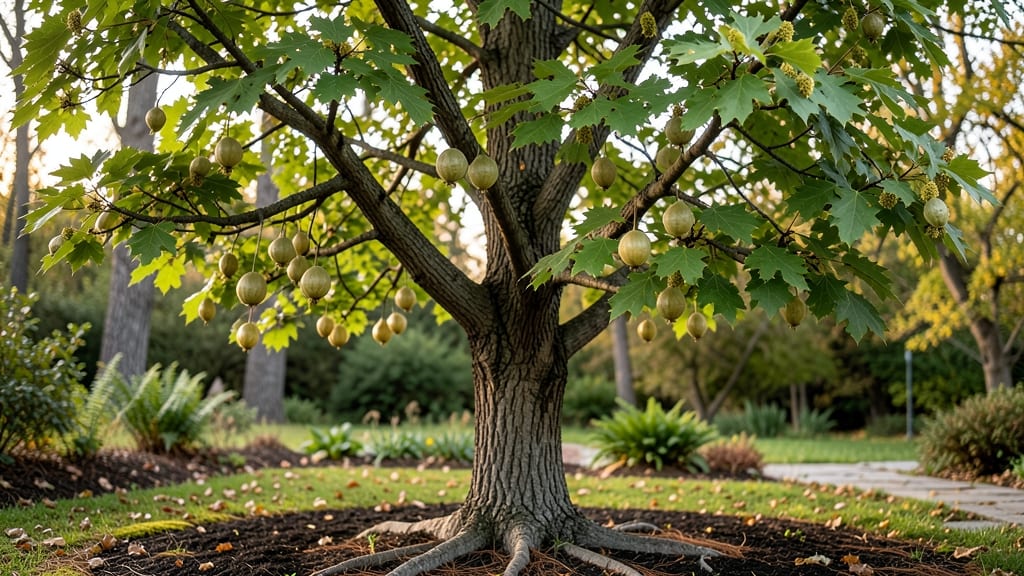
Those weird, grape-like clusters on your maple branches aren’t just ugly—they’re bladder galls, and they’re silently stressing your tree. 🌳 I’ve seen these turn a once-proud maple into a shadow of itself, but the good news?
You can prune them out before they cause real damage. These growths, caused by tiny mites, might look harmless, but they drain your tree’s energy and leave it vulnerable to disease.
The mites responsible—Andricus quercusfloccosus—lay eggs in spring, triggering the tree to form these gall-like growths as a defense. By summer, the galls swell to 2-4 inches, weighing down branches and blocking sunlight to lower leaves.
Left unchecked, they weaken the tree over time, making it easier for pests or storms to take hold. The key? Catch them early, when they’re still small and manageable.
Pruning is your first line of defense: simply cut out infected branches 6-12 inches below the galls in late winter or early spring, before the mites become active. Sterilize your tools with rubbing alcohol to prevent spreading, and dispose of the galls in sealed bags.
For severe cases, repeat treatments in 2-3 years—patience is key, but your tree will thank you with stronger, healthier growth by next season.
If your maple is young or the infestation is widespread, consider consulting an arborist. But for most homeowners, this natural pruning method works wonders—just like it did for my 20-year-old sugar maple, now thriving without a single gall in sight.
The secret? Act fast, stay consistent, and let the tree heal.
The Tiny Invaders Behind Maple Galls
When your maple tree starts sprouting those peculiar, balloon-like bladder galls, don’t assume it’s just a quirky part of nature—there’s a very specific reason behind them, and it almost always comes down to tiny, unseen attackers.
These galls aren’t random; they’re the result of a deliberate biological interaction between your tree and its pests. Let’s break down the science behind why these strange growths form—and who’s really to blame.
Bladder galls on maple trees are primarily caused by maple bladder gall wasps (Andricus quercusfloccosus or related species). These insects don’t just randomly attack—they’ve evolved a highly targeted strategy to ensure their survival. Here’s how it works:
- 🔍 Egg-Laying Trigger: Female wasps emerge in spring and seek out young, tender maple leaves. Using their ovipositor (a specialized egg-laying tool), they inject a single egg just beneath the leaf surface, near a bud or stem.
- 🧪 Chemical Warfare: Along with the egg, the wasp injects a growth-regulating substance that forces the tree’s cells to multiply rapidly, forming a protective gall around the developing larva. Think of it like a natural nursery designed by the wasp.
- 🛡️ The Gall’s Purpose: The gall acts as a food source and shelter for the wasp larva. Inside, the tree’s nutrients are redirected to feed the growing insect, ensuring it survives until it’s ready to pupate and emerge as an adult wasp.
Pro Tip: 💡 These galls are not harmful to the tree’s long-term health—they’re more of a cosmetic annoyance than a serious threat. However, if galls appear year after year on the same tree, it may indicate a high wasp population in your area.
While wasps are the primary architects of bladder galls, your maple tree’s overall health plays a surprising role in how severe the infestation becomes. Stressed trees are more susceptible to gall formation because:
- 🌡️ Weakened Defenses: Trees under stress (from drought, poor soil, or disease) have compromised immune responses, making it easier for wasps to successfully inject eggs without the tree mounting a strong resistance.
- 🍃 Nutrient Redirection: A stressed tree may prioritize survival over defense, leading to excessive gall formation as the tree diverts energy to support the wasp larvae.
- 🌧️ Environmental Factors: Wet springs can create ideal conditions for wasp activity, while drought-stressed trees may produce more tender, vulnerable new growth—both scenarios can worsen gall outbreaks.
Actionable Fix: ✨ To reduce gall severity, focus on improving tree health:
- Ensure proper watering (especially during dry spells).
- Test and amend soil nutrients (maples thrive in well-draining, slightly acidic soil).
- Prune damaged or diseased branches to reduce stress.
Bladder galls are not equally common everywhere. Their prevalence depends on climate, tree species, and regional ecology. Here’s why some maples suffer more than others:
| Factor | How It Affects Galls |
|---|---|
| 🌡️ Warm, Humid Climates | Ideal for wasp activity—longer active seasons mean more generations of wasps per year, leading to higher infestation rates. |
| 🌳 Maple Species | Some species (like sugar maples and red maples) are more attractive to gall wasps due to their leaf chemistry. |
| 🏡 Urban vs. Rural | Urban areas with high tree density can create microclimates that favor wasp populations, while rural areas may have more natural predators (like birds) to keep them in check. |
Regional Note: 🌎 If you live in the Northeastern or Midwestern U.S., you’re in a hotspot for bladder galls—these areas have the perfect mix of maple trees and wasp-friendly climates.
How to Treat Maple Tree Bladder Galls
Bladder galls on maple trees can be unsightly, but with the right approach, you can manage—and even prevent—them effectively. Below are practical, step-by-step solutions tailored to the root causes of these pesky growths, from pruning techniques to long-term care.
Let’s get your maple tree back to its healthy, gall-free glory! 🌳✂️
Cause: Bladder galls often form due to stress, pests (like mites or aphids), or fungal/bacterial infections. Pruning removes the source of the problem while promoting airflow and sunlight.
How to Fix It: 🔥 Step 1: Identify the Right Branches
- Look for branches with multiple galls, yellowing leaves, or dieback. These are priority targets.
- Avoid pruning healthy branches unless they’re rubbing against infected ones (which can spread issues).
🍳 Step 2: Sterilize Your Tools
- Disinfect pruners with 70% isopropyl alcohol or a 10% bleach solution (1 part bleach to 9 parts water) to prevent cross-contamination.
👨🍳 Step 3: Make Clean Cuts
- Cut just outside the branch collar (the swollen area where the branch meets the trunk) at a 45-degree angle.
- Remove only the infected portion—don’t over-prune, as this stresses the tree further.
🥘 Step 4: Dispose of Galls Safely
- Bag the pruned branches and galls in a sealed plastic bag before disposal. Do not compost them—this can spread pathogens or pests to other plants.
⏰ Best Time to Prune:
- Late winter or early spring (before buds swell) is ideal. Avoid pruning in fall, as wounds may not heal before cold sets in.
Cause: Weak, nutrient-deficient, or water-stressed maples are more susceptible to galls. A robust tree fights off pests and diseases better.
How to Fix It: 💡 Pro Tip: Focus on soil health, hydration, and balanced feeding—this is 80% of the battle!
🌡️ Step 1: Improve Soil Conditions
- Test your soil’s pH (aim for 6.0–7.0 for maples) and amend with:
- Compost (for organic matter)
- Aged bark or wood chips (to retain moisture)
- Slow-release fertilizer (like 10-10-10) in early spring
- Avoid fresh manure or high-nitrogen fertilizers, which can burn roots.
🎯 Step 2: Water Deeply and Consistently
- Maple trees need 1–2 inches of water per week, especially during drought or hot spells.
- Mulch heavily (3–4 inches of wood chips) to retain moisture and regulate soil temperature.
✨ Step 3: Encourage Beneficial Microbes
- Apply mycorrhizal fungi (available as powders or granules) to help roots absorb nutrients.
- Avoid chemical pesticides—they can harm beneficial insects and soil life.
Cause: Bladder galls can stem from mites, aphids, or fungal infections like Taphrina (a common cause of maple bladder galls).
How to Fix It: 🔪 Step 1: Spray with Neem Oil or Horticultural Oil
- Mix 1–2 tbsp neem oil per gallon of water and spray infested branches in early spring or fall (when pests are active).
- Reapply every 7–10 days until galls subside.
🌿 Step 2: Introduce Predatory Insects
- Ladybugs, lacewings, and parasitic wasps eat aphids and mites. Buy them online or attract them with native plants like dill or yarrow.
🍄 Step 3: Apply Fungicidal Sprays (If Needed)
- For fungal galls, use copper fungicide (like Bordeaux mixture) or baking soda spray (1 tbsp baking soda + 1 tsp dish soap + 1 gallon water).
- Spray every 2 weeks during wet seasons (spring/fall).
Cause: Galls often return if the tree remains stressed or the environment stays conducive to pests/fungi.
How to Fix It: 🛡️ Step 1: Monitor for Early Signs
- Check your maple tree monthly for:
- Small, blister-like bumps (early galls)
- Sticky residue (aphid honeydew)
- Wilting or curled leaves
🌱 Step 2: Promote Air Circulation
- Thin out dense foliage to reduce humidity near the tree.
- Avoid overwatering—soggy soil invites fungal growth.
🚫 Step 3: Avoid Common Mistakes
- ❌ Don’t prune in wet weather (increases disease risk).
- ❌ Don’t use heavy clay pots for young maples (roots need drainage).
- ❌ Don’t ignore nearby weeds (they compete for nutrients).
If your maple tree has:
- Large, spreading galls (sign of advanced infection)
- Multiple branches dying despite care
- Unknown pest/disease (bring a sample to a local cooperative extension office for diagnosis)
A certified arborist can assess structural damage and recommend targeted treatments without harming the tree.
Final Thought: With proactive pruning, soil care, and natural pest control, your maple tree can bounce back stronger—and stay gall-free for years! 🌿💪 Start with one fix at a time (e.g., pruning first, then soil amendments), and watch your tree thrive.
Frequently asked questions
Are bladder galls harmful to my maple tree?
Bladder galls themselves aren't typically fatal, but they can stress your tree by diverting its energy. The real concern comes when galls appear yearly—they indicate persistent wasp activity, which may weaken the tree over time. Focus on removing them during pruning to prevent long-term damage.
How do I tell if my maple tree has bladder galls or something else?
Look for grape-like clusters (2-4 inches) that form in spring and swell by summer. These galls appear on branches, not leaves, and contain tiny wasp larvae inside. Compare with photos of fungal galls or insect damage—they usually have different textures or colors.
Can I prune bladder galls myself, or should I hire a professional?
For most homeowners, DIY pruning works well if you follow proper techniques. Sterilize tools, cut 6-12 inches below the galls, and dispose of them in sealed bags. However, if your tree is large, diseased, or the infestation is severe, consult an arborist to avoid damaging the tree.
Will removing bladder galls prevent future outbreaks?
Pruning helps reduce galls, but it won't eliminate them completely since wasps can reinfest. For long-term control, combine pruning with soil health improvements and natural pest deterrents. Repeat treatments in 2-3 years if needed—consistency is key.
Are there natural ways to repel the wasps causing bladder galls?
Yes! Plant native flowers like yarrow or dill to attract predatory insects that eat wasp larvae. You can also apply neem oil in early spring to disrupt their lifecycle. Avoid chemical sprays—they harm beneficial insects and may worsen the problem.