
Trees
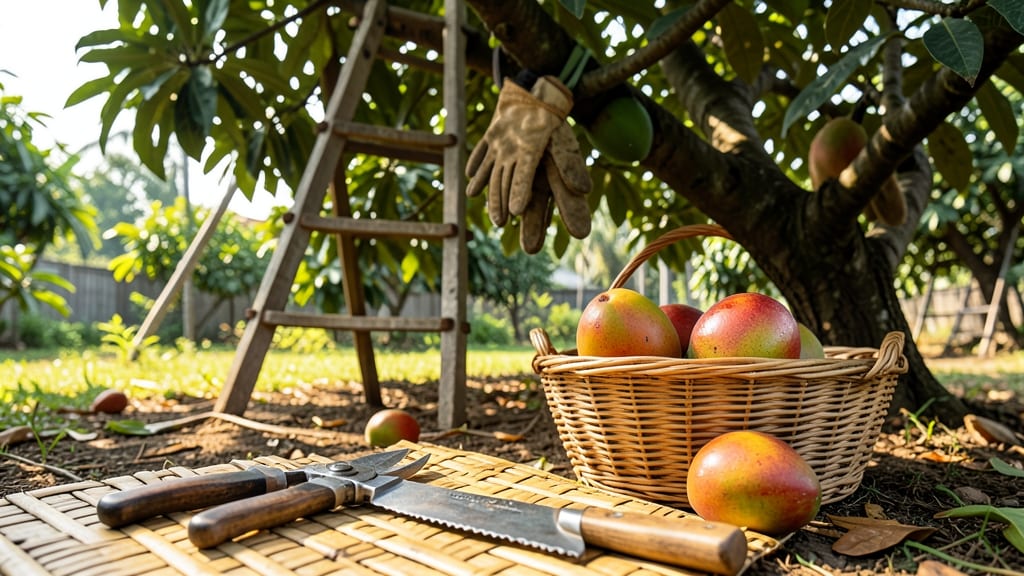
Harvesting mangoes from your own 🥭 tree is one of the sweetest rewards of growing fruit—but timing it right is the key to juicy, flavorful payoff.
Picture this: you’ve waited months for those glossy green fruits to ripen, only to pick them too soon and end up with mealy, underripe mangoes that taste like disappointment. Worse, you might even damage the tree if you don’t know the proper technique.
That’s why understanding when and how to harvest matters just as much as planting and caring for your tree.
In tropical and subtropical zones (USDA 10–12), mangoes typically ripen between April and September, but cooler varieties in zones 9b–11 may fruit as early as December. The trick lies in reading the fruit’s color, scent, and texture—plus a little twist of the stem—to know it’s ready.
Skip the guesswork and learn the exact signs that mean your mangoes are finally at peak ripeness.
Below, I’ll walk you through the step-by-step process—from the thumb test to safe picking methods—that ensures you bring home mangoes bursting with flavor, not regret. Let’s make sure your harvest is worth the wait!


How to determine the perfect time to harvest mangoes
Harvesting mangoes at the right time transforms your tree into a flavor factory, delivering sweet, juicy fruit packed with tropical goodness. But wait too long, and you risk overripe mush—or pick too early, and you’ll miss out on that peak sweetness we all crave.
The key? Knowing the 5 key ripeness signals and how your climate and variety influence timing.
Mangoes don’t ripen like apples or bananas—you can’t just pick them green and wait. Instead, they ripen on the tree and continue softening slightly after harvest. This means timing is everything.
A perfect mango should be firm but yielding, fragrant, and fully colored. Miss these cues, and you’ll end up with underwhelming flavor or wasted effort.
🌱
Your mango variety plays a huge role in harvest timing. For example, ‘Keitt’ mangoes typically ripen in late spring to early summer, while ‘Haden’ varieties peak in mid-to-late summer. Even within the same tree, fruit on lower branches often ripens 1-2 weeks earlier than those higher up.
This is why I always harvest in batches, checking ripeness every 3-5 days during peak season.
Climate also shifts the harvest window. In tropical zones (USDA 10-12), mangoes ripen year-round, with April-September being the prime window. But in cooler subtropical zones (9b-11), like parts of Florida or Southern California, the harvest shrinks to May-July.
If you’re in a warmer microclimate, your tree might produce two harvests per year—a rare treat!
One common mistake I see is relying only on color. Some varieties, like ‘Carrie’, stay green-tinged at the base even when ripe. That’s why I always combine all 5 indicators—color, firmness, scent, thumb test, and variety notes—to avoid disappointment.
Pro tip: Keep a small harvest journal to track when your specific tree and variety ripen each year.
For off-the-tree ripening, place freshly picked mangoes in a paper bag with a banana or apple to speed up the process. The ethylene gas from these fruits triggers ripening, but only if your mangoes are close to ready.
If they’re still hard and green, they won’t respond—so don’t waste your time!
Remember, the perfect mango isn’t just about flavor—it’s about texture too. A ripe mango should have a slight give when pressed, with skin that’s smooth and unblemished.
Avoid fruit with soft spots or wrinkles, as these signal overripeness or pest damage. With these tips, you’ll never miss the sweet spot again!
🌿
Step-by-step guide to picking mangoes without damaging the tree
Harvesting mangoes from your tree is an art—one that requires patience and the right technique to avoid harming the fruit or the tree. Unlike many fruits, mangoes don’t ripen well after picking, so timing and gentle handling are everything.
I’ve learned that even a slight misstep can bruise the fruit or stress the tree, leading to poor yields next season. The key is knowing when to pick and how to do it without causing damage.
Start by selecting the right tools—your hands and a sharp, clean pruning shears are all you need. Avoid using knives or saws, as they can tear the fruit or leave jagged cuts on the branches.
I’ve made the mistake of using dull tools, which caused unnecessary stress to the tree and bruising to the mangoes. Always sanitize your tools with rubbing alcohol to prevent spreading disease between cuts.
One common mistake I see is picking mangoes too early just because they’re colorful. Unripe mangoes won’t soften properly and will taste bland or even bitter. Always double-check for the slight give when gently pressed—this is your best indicator of readiness.
Also, avoid harvesting during peak heat (midday), as the fruit is more prone to bruising and the tree is stressed.
After harvesting, resist the urge to wash the mangoes immediately. The natural wax coating on the skin helps preserve freshness. Instead, rinse them just before eating or cutting.
I’ve also learned to avoid storing mangoes with ethylene-producing fruits like apples or bananas, as the gas can cause uneven ripening or spoilage.
With these steps, you’ll enjoy plump, flavorful mangoes while keeping your tree healthy for future harvests. The satisfaction of picking ripe fruit straight from your own tree is unmatched—just remember, patience and care are the secrets to success! 🌱🥭