
Pruning
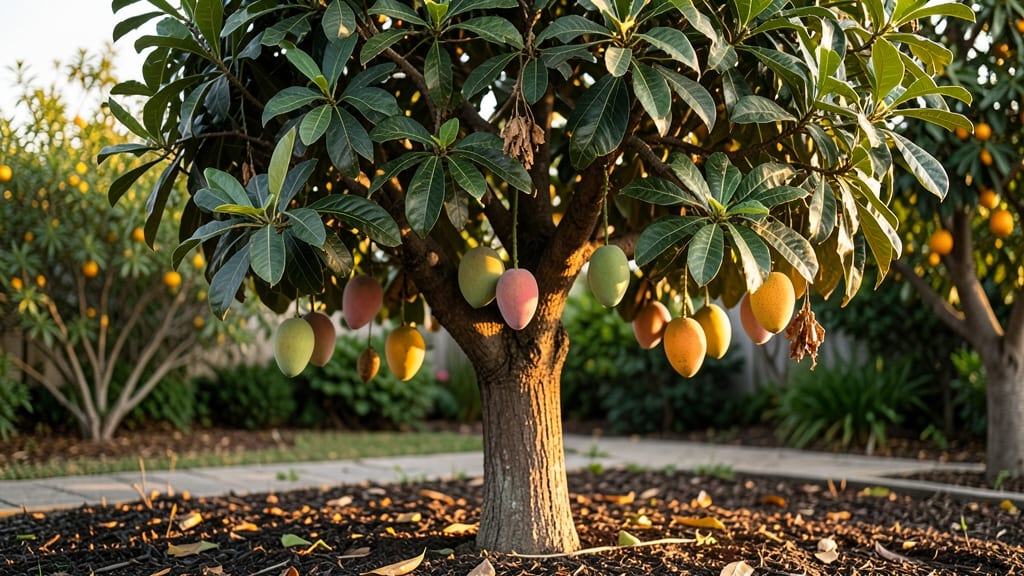
Summer pruning turns your mango tree into a fruit-producing powerhouse—if you do it right. ✂️ The key is working with the heat, not against it, to keep branches strong while encouraging next year's harvest.
I learned the hard way that aggressive pruning in summer stress can invite pests and slow recovery, but the right cuts keep your tree thriving through the hottest months.
Start by focusing on heat-resistant trimming—removing only dead, crossing, or weak branches while preserving the tree's natural shape. Mango trees fruit on new growth, so avoid heavy pruning that could delay flowering.
A sharp pair of pruners and a clean workspace are all you need, plus a hose to rinse wounds and prevent disease.
What you’ll end up with is a tree that handles summer’s intensity better, with stronger branches and fewer pests. The right cuts now mean more fruit next season and a canopy that shades itself efficiently. Just don’t rush—prune in the early morning or late afternoon to avoid shocking the tree.
This method works for both tropical and subtropical climates, though timing shifts slightly depending on your zone. In hotter regions, prune after the monsoon season; in cooler subtropical areas, wait until late summer. The goal is always the same: a tree that stays productive through the heat.
📚 In This Guide
- What you need
- Instructions
- Tips and common mistakes
- Wrapping up and next steps
What you need
- ● Sharp pruning shears – Bypass pruners (for clean cuts on branches up to ½ inch thick) or pruning saws (for thicker branches). Sterilize with rubbing alcohol before and after use to prevent disease.
- ○ Gloves – Heavy-duty, cut-resistant gloves (optional but recommended for thorns and sharp edges).
- ● Disinfectant – 70% isopropyl alcohol or bleach solution (1 part bleach to 9 parts water) for sterilizing tools.
- ○ Pruning sealant – Tree wound sealant (optional but helpful for large cuts to prevent infection).
- ● Water & hose – For post-pruning hydration (especially critical in summer heat!).
- ● Ladder or step stool – If your tree is taller than 6 feet, use a stable, non-slip ladder with a spotter.
- ● Trash bags or compost bin – For collecting pruned branches (avoid leaving debris near the tree).
- ● Sun protection – Wide-brim hat, sunglasses, and sunscreen (SPF 30+)—summer pruning means working under the blazing sun!
- ● Hand pruners – For smaller, precise cuts on twigs.
- ● Pole pruner – Extends reach for high branches without a ladder.
- ● Shade cloth or tarp – To drape over the tree temporarily if pruning during peak heat (10 AM–4 PM).
- ● Fertilizer (balanced, slow-release) – Apply 2–4 weeks post-pruning to support regrowth.
- ● Mulch – Organic mulch (2–3 inches) to retain soil moisture after trimming.
Step-by-step summer pruning for your mango tree
Summer’s the perfect time to shape your mango tree for bigger harvests—just follow these heat-smart cuts.
🌿 Step 1: Identify and Remove Dead or Diseased Branches
Start by scanning your tree for branches that are dry, brown, or showing signs of fungal spots. These are dead weight that drain energy from fruit production. Use clean, sharp pruning shears to cut these branches back to the nearest healthy growth point—you’ll see fresh green tissue just below the damage. Never leave stubs; always cut at a 45-degree angle just above a leaf node or bud.
If you spot any branches with oozing sap or blackened bark, these are infected and must go. Bag and dispose of these branches immediately—don’t compost them. The goal here is to prevent disease from spreading to healthy parts of the tree. I like to work on cloudy summer mornings when the tree isn’t sweating heavily from heat stress.
✂️ Step 2: Thin Out Crowded or Crossing Branches
Look for branches that rub against each other or grow inward toward the center of the tree. These “crossing” branches compete for sunlight and nutrients, and they’ll eventually break under the weight of fruit. Use your pruners to make clean cuts at the branch collar—the swollen area where the branch meets the trunk. You’ll see a slight ridge there; that’s your target.
Thinning also helps improve airflow, which is critical in summer’s humid conditions. Aim to remove about 20-30% of the tree’s foliage in this step. Watch for branches growing straight up—these are called “water sprouts” and should be cut back to a lateral branch or bud. You’ll know you’re doing it right when you can see light filtering through the canopy more easily.
☀️ Step 3: Shape the Canopy for Better Sun Exposure
Mango trees thrive on sunlight, so your goal is to create an open, vase-like shape that lets light reach all branches. Start by shortening overly long branches by about one-third—cut just above a leaf node or outward-facing bud. Avoid cutting back to bare wood; always leave some foliage to support photosynthesis. I like to step back every few cuts to visualize the tree’s new shape.
Focus on the outer branches first, then work inward. You want the tree’s center to stay slightly open to prevent humidity buildup, which can lead to fungal issues. If you’re unsure where to cut, look for branches that are growing toward the inside of the tree—these are the ones that need to go. After shaping, the tree should look balanced, with no heavy clusters of fruit on the outer edges.
💧 Step 4: Prune for Fruit Production and Airflow
Now it’s time to encourage fruit-bearing branches. Look for suckers—fast-growing shoots that emerge from the trunk or roots. These steal energy from the tree’s main structure, so cut them back to 1/4 inch above the ground. For established fruit clusters, thin them out so only 3-5 mangoes per branch remain. Overcrowded fruit means smaller, lower-quality mangoes.
Finally, check for any branches growing below the 4-foot mark on the trunk. These shade the lower trunk and can cause moisture buildup, inviting pests. Remove these entirely. After pruning, give the tree a deep watering to help it recover. You’ll see new growth within 2-3 weeks, signaling that the tree is responding well to the cuts.
⏰ Step 5: Clean Up and Protect Your Tree
After pruning, gather all the clippings and dispose of them in a sealed bag—never leave them under the tree. This prevents pests and diseases from taking hold. Sterilize your pruning tools with rubbing alcohol to kill any lingering bacteria or fungi. I also apply a copper-based fungicide to any fresh cuts to protect against infections, especially in summer’s damp conditions.
Finally, spread a 2-3 inch layer of mulch around the base of the tree (but keep it away from the trunk). This helps retain moisture and keeps roots cool during heatwaves. Water deeply once a week, focusing on the root zone. Your tree will thank you with stronger growth and a better fruit yield next season.
Tips & tricks for perfect summer mango tree pruning
Summer pruning transforms your mango tree from a tangled mess into a fruit-bearing powerhouse—here's how to avoid common mistakes and get the best results.
Timing is Everything: The instructions mention working on cloudy summer mornings, but I've learned this the hard way—heat stress makes cuts heal poorly. If you must prune during peak sun, do it in the early morning (before 9 AM) or late afternoon (after 4 PM). The tree's natural sap flow slows down then, reducing stress. For large branches, wait for a completely overcast day if possible. The goal is to minimize the tree's water loss while it's recovering from the cuts.
Tool Precision Matters: Sharp pruning shears aren't just about clean cuts—they're about preventing damage to the branch collar. I invested in bypass pruners with a 6-inch blade specifically for my mango tree, and it made all the difference. Dull tools crush the bark and leave jagged edges that invite disease. Always test your tools on a small branch first to ensure they're sharp enough to cut cleanly through the branch without tearing. For branches thicker than your wrist, consider renting a pruning saw.
Visual Cues for Better Cuts: When shaping the canopy in Step 3, here's what I look for: After cutting back a branch by one-third, I step back and visualize sunlight paths. The ideal shape should resemble an open vase—wider at the top than the bottom, with branches spreading outward. For the 45-degree angle cuts, imagine slicing off the top of a cone. This angle helps water run off the cut, preventing rot. I also check for "compartmentalization"—healthy trees naturally isolate damage in specific areas, so aim to make cuts that maintain this natural structure.
Post-Pruning Care: The instructions mention deep watering after pruning, but I've found adding a slow-release fertilizer at this stage gives the tree an extra boost. Look for a balanced 10-10-10 or 8-3-9 formula specifically designed for fruit trees. Apply it within the drip line (the area under the tree's canopy) but keep it at least 6 inches away from the trunk. This helps the tree recover faster and promotes new growth. I also like to apply a thin layer of organic mulch immediately after pruning to lock in moisture while the tree heals.
Pro Tips for Mango Tree In Summer
- Summer pruning transforms your mango tree from a tangled mess into a fruit-bearing powerhouse—here's how to avoid common mistakes and get the best results.
- Timing is Everything: The instructions mention working on cloudy summer mornings, but I've learned this the hard way—heat stress makes cuts heal poorly.
- Tool Precision Matters: Sharp pruning shears aren't just about clean cuts—they're about preventing damage to the branch collar.
Frequently asked questions
Got questions about pruning your mango tree in the summer heat? Here are some of the most common concerns—and their answers—to help you keep your tree thriving while enjoying that sweet summer fruit!
Why should I prune a mango tree in summer instead of winter?
Summer pruning (especially in late summer) encourages new growth and fruit production for the next season. Unlike winter pruning, which can stress the tree, summer trimming helps manage heat stress, improves airflow, and reduces disease risk. Just avoid extreme heat—morning or evening sessions are best!
What’s the best time of day to prune a mango tree in summer?
Prune during early morning or late afternoon (6 AM–9 AM or 4 PM–7 PM) to avoid peak heat. This reduces stress on the tree and prevents sap bleeding. If you must prune midday, water the tree thoroughly beforehand and work quickly to minimize heat exposure.
How do I know which branches to cut in summer?
Focus on:
- Dead/diseased branches (cut at the base).
- Crossing or rubbing branches (remove one to prevent damage).
- Overly dense growth (thin out 20–30% to improve airflow).
- Suckers or water sprouts (trim to redirect energy to fruit production).
What if my mango tree looks stressed after summer pruning?
Stress is normal, but monitor for wilting, yellowing leaves, or sap oozing. If severe, reduce watering slightly (mangoes hate soggy roots) and apply a balanced fertilizer (like 10-10-10) 4–6 weeks post-pruning. Mulch with organic matter (e.g., wood chips) to retain moisture and cool roots.
Can I prune a young mango tree the same way as a mature one?
No! Young trees (under 3 years) need light pruning—just remove dead branches or shape gently to encourage a strong structure. Mature trees (3+ years) can handle heavier trimming. For young trees, prioritize airflow and sunlight access over aggressive cuts to avoid stunting growth.
Will summer pruning affect next year’s mango harvest?
Done correctly, summer pruning boosts fruit production by redirecting energy to healthier branches. However, avoid heavy pruning in fruit-bearing seasons (e.g., don’t trim heavily when flowers appear). Time your cuts for late summer (after harvest) for optimal results.
Wrapping up and next steps
Summer pruning your mango tree isn’t just about shaping—it’s an investment in bountiful harvests and heat-resistant growth. By following the right techniques, you’ll encourage stronger branches, better airflow, and fruit that thrives even in the hottest months. 🌞✂️
Now that you’re armed with the tools, timing, and tips, take action! Start small—trim just one section at a time—and watch your tree reward you with juicy, sun-kissed mangoes for years to come. Happy pruning!
- Next step: Schedule your first pruning session on a cool summer morning to avoid stressing the tree.
- Pro tip: Keep a pruning journal to track growth and adjust your approach each season.