
Trees
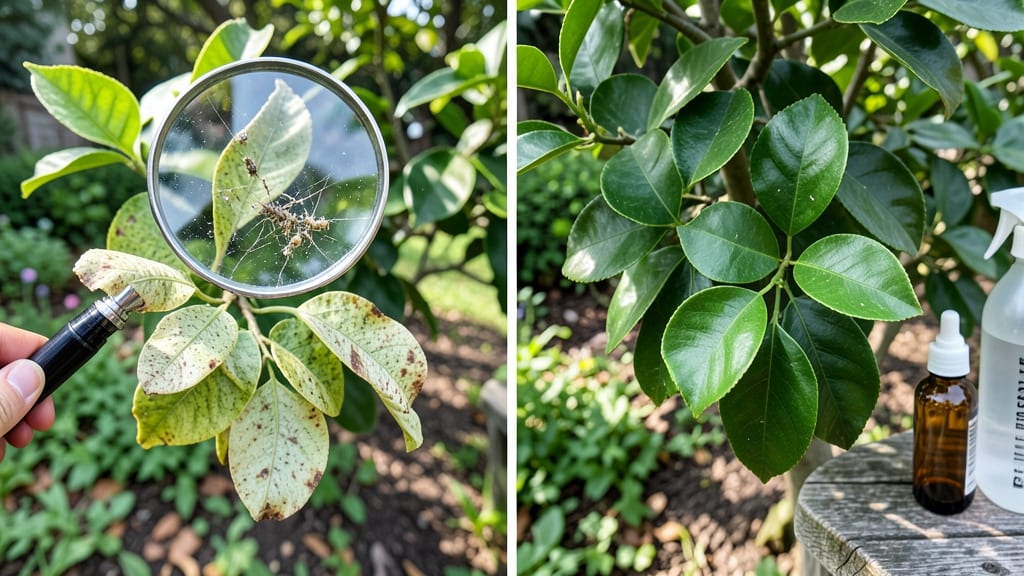
Your lime tree’s curled leaves could mean anything from thirsty roots to a hidden pest invasion—and the sooner you diagnose it, the faster you’ll save your tree. 🌿 I’ve seen everything from spider mites to fungal stress cause this symptom, and the fix depends on what’s really going on.
The good news? Most cases are reversible with the right approach, whether it’s a simple watering adjustment or targeted pest control.
Start by checking the undersides of leaves for tiny webs (spider mites), sticky residue (scale insects), or strange spots (fungal issues). A quick inspection with a magnifying glass can reveal the culprit in minutes.
I made the mistake of assuming it was just heat stress—until I found a colony of scale insects hiding beneath the curled fronds. Once you identify the problem, you’ll know whether to prune, spray, or adjust your care routine.
Most fixes take less than 30 minutes and can stop the issue before it spreads. For pests, neem oil or insecticidal soap works wonders on both spider mites and scale. If it’s environmental stress, deep watering and shade adjustments can turn things around in days.
The key is acting fast—before the tree’s health declines further or the pests move to other plants.
This works for all lime varieties, from the hardy 'Bearss' to the delicate 'Meyer.' The same principles apply, so you’ll know exactly what to do no matter which type you’re growing. Let’s get your tree back to its full, vibrant self—before the problem gets worse.
Underlying Causes Of Leaf Curling
When your lime tree’s leaves start curling, it’s rarely a coincidence—it’s a distress signal. Understanding the root causes helps you act fast and save your tree. Below, we break down the most common triggers, from environmental stress to pests, with clear explanations and actionable insights.
Lime trees thrive in warm climates, but extreme heat or sudden temperature swings can cause leaves to curl as a protective response. When temperatures soar above 90°F (32°C), the tree’s stomata (tiny leaf pores) close to conserve moisture.
This disrupts gas exchange and leads to curling, often accompanied by a leathery texture or yellowing edges.
💡 Pro Tip: If your tree is in a hot, dry microclimate (like a paved patio or full sun with no shade), provide afternoon shade with a lightweight shade cloth (30-50% coverage). Mulching around the base also helps regulate soil temperature and retain moisture.
Watch for:
- Curling that worsens in afternoon heat but improves in cooler mornings
- Leaves that feel dry or crispy to the touch
- New growth appearing smaller than usual
Water stress—whether from drought or overwatering—is a top culprit for curled lime tree leaves. These trees prefer consistent moisture but hate soggy roots. Here’s how each extreme triggers curling:
| Underwatering | Overwatering |
|---|---|
|
Leaves curl upward or inward to reduce water loss. Soil feels bone-dry 1–2 inches below the surface. 💡 Fix: Water deeply 2–3 times per week (more in extreme heat) until moisture reaches 12–18 inches down. Use a moisture meter to check. |
Leaves curl downward or develop yellow, mushy spots. Soil stays clay-like or smells rotten. 💡 Fix: Let the top 2–3 inches of soil dry out between waterings. Improve drainage with organic matter (compost) or raised beds. |
Red Flag: If leaves curl only on one side of the tree, it may be a root-bound issue—time to repot or prune roots.
Sap-sucking insects like aphids, spider mites, and lime leaf miners inject toxins that distort leaf growth, causing curling, stunted leaves, or silver webbing. Here’s how to ID the culprit:
| Pest | Signs | Action Steps |
|---|---|---|
| Aphids |
|
Blast off with a strong water spray or use neem oil (1 tsp per quart of water). Introduce ladybugs as natural predators. |
| Spider Mites |
|
Spray with water daily to deter them. Apply insecticidal soap or horticultural oil every 5–7 days. |
| Leaf Miners |
|
Remove and destroy infested leaves. Apply kaolin clay or Bacillus thuringiensis (Bt) spray. |
🔥 Prevention: Keep your tree healthy and well-watered—stressed trees attract pests faster!
Lime trees need a balance of nitrogen, potassium, and micronutrients. Deficiencies or excess salts (from tap water or fertilizers) can cause curling, often paired with:
- Yellowing between veins → Nitrogen deficiency (fix with balanced fertilizer like 6-6-6)
- Purple or red stems → Phosphorus deficiency (add bone meal)
- Brown leaf tips → Potassium or magnesium deficiency (use Epsom salt or kelp meal)
- Crispy, curled edges → Salt buildup (flush soil with rainwater)
🌡️ Test Your Soil: Use a home soil test kit to check pH (ideal: 6.0–7.0) and nutrient levels. If pH is off, amend with lime (to raise pH) or sulfur (to lower pH).
Strong winds or mechanical stress (like hail or improper pruning) can cause leaves to curl as a protective reflex. Look for:
- Curling only on exposed branches
- Torn or jagged edges on leaves
- Leaves cupping upward (like a boat)
💡 Solutions:
- Provide windbreaks (like a lattice fence or nearby shrubs)
- Avoid pruning in windy conditions—use sharp shears to make clean cuts
- If hail damage occurs, remove severely damaged leaves to reduce stress
Fixing Twisted Lime Tree Leaves
Once you’ve identified the root cause behind your lime tree’s curled leaves—whether it’s pests, disease, environmental stress, or nutrient deficiencies—it’s time to take action. Below are practical, step-by-step solutions tailored to each problem, plus prevention tips to keep your tree thriving.
Let’s get your lime tree back to its lush, healthy self!
If mites, aphids, or scale insects are the culprits, act fast to stop their spread and restore your tree’s health.
🔥 Step 1: Inspect and Confirm the Pest
- Shake a few leaves over a white sheet of paper or a bucket of soapy water. Tiny moving specks? That’s likely mites or aphids.
- Check for sticky residue (honeydew) on leaves or branches—a telltale sign of sap-sucking pests.
🍳 Step 2: Apply Natural or Chemical Treatments
- For light infestations:
- Neem oil spray (1 tsp neem oil + 1 tsp mild soap + 1 quart water). Spray under and on top of leaves at dusk to avoid harming bees.
Repeat every 5–7 days for 2–3 weeks. - Insecticidal soap (follow label instructions). Works well on soft-bodied pests like aphids. - For severe infestations: - Use a systemic insecticide (e.g., imidacloprid) only as a last resort, following label directions carefully. Test a small branch first to check for sensitivity.
👨🍳 Step 3: Encourage Beneficial Predators
- Introduce ladybugs, lacewings, or parasitic wasps (available at garden centers). These natural enemies will feast on the pests for you!
- Plant marigolds or dill nearby to attract predatory insects.
💡 Prevention Tips:
- Prune regularly to improve airflow and reduce hiding spots for pests.
- Water deeply but less frequently to discourage mites (they thrive in dry conditions).
- Mulch around the base with wood chips to retain moisture and deter crawling insects.
If heat, wind, or drought are causing leaf curling, your tree needs hydration, shade, and recovery time.
🥘 Step 1: Adjust Watering Practices
- Deep watering (1–2 inches per week) is key—avoid shallow, frequent watering, which encourages weak roots.
- Mulch heavily (3–4 inches of organic mulch like bark or straw) to retain moisture and regulate soil temperature.
- Water slowly at the base (early morning or late evening) to prevent evaporation and fungal issues.
🌿 Step 2: Provide Temporary Shade and Windbreaks
- If your tree is in a hot, sunny spot, use shade cloth (30–50%) for a few weeks to help it acclimate.
- Wind damage? Wrap young trees in burlap or tree guards during stormy seasons.
- Move potted lime trees to a sheltered location if possible.
✨ Step 3: Fertilize Gently for Recovery
- Apply a balanced, slow-release fertilizer (e.g., 6-6-6 or 10-10-10) in early spring to boost growth.
- Avoid over-fertilizing—lime trees prefer slightly acidic to neutral soil (pH 6.0–7.5). Test your soil first!
🎯 Prevention Tips:
- Choose the right location—lime trees thrive in partial shade to full sun but need protection from scorching afternoon heat.
- Group trees together to create a microclimate that reduces wind exposure.
- Avoid pruning during drought—wait until the tree is well-watered before trimming.
Yellowing, curling leaves with brown edges or spots often signal a lack of nitrogen, magnesium, or iron.
📊 Step 1: Diagnose the Deficiency
| Symptom | Likely Nutrient Deficiency | Quick Fix |
|---|---|---|
| Yellow leaves (new growth) | Nitrogen (N) | Apply blood meal or compost tea |
| Yellow between veins (older leaves) | Magnesium (Mg) | Sprinkle Epsom salt (1 tbsp/gal water) every 2 weeks |
| Pale yellow leaves (young & old) | Iron (Fe) or Chlorosis | Use chelated iron spray or adjust soil pH (lime trees prefer slightly acidic) |
💪 Step 2: Amend the Soil
- For nitrogen: Work in compost or well-rotted manure around the root zone.
- For magnesium: Mix Epsom salt into the top 6 inches of soil (1–2 tbsp per square foot).
- For iron/chlorosis: Apply iron sulfate or iron chelate according to package instructions.
🥗 Step 3: Improve Drainage
- Lime trees hate soggy roots. If your soil is clay-heavy, mix in sand or perlite to improve drainage.
- Avoid overwatering—let the top 2 inches of soil dry out between waterings.
🔥 Prevention Tips:
- Test your soil every 2–3 years (use a home kit or send a sample to a lab).
- Mulch annually to slowly release nutrients into the soil.
- Avoid synthetic fertilizers high in salt—they can burn roots and worsen deficiencies.
If your lime tree’s curled leaves are covered in spots, mold, or oozing sap, a fungal or bacterial infection may be to blame.
🔪 Step 1: Prune Infected Areas
- Remove and destroy (do not compost) severely damaged leaves, branches, or fruit.
- Sterilize pruners with rubbing alcohol between cuts to prevent spreading disease.
🌡️ Step 2: Apply Fungicide
- For fungal issues (e.g., anthracnose, leaf spot):
- Spray with copper fungicide or baking soda solution (1 tbsp baking soda + 1 tsp oil + 1 gallon water).
- Reapply every 7–10 days until new growth appears healthy.
- For bacterial issues (e.g., citrus canker):
- Use a copper-based bactericide (e.g., Copper Soap).
Follow label instructions carefully.
⏰ Step 3: Improve Airflow & Reduce Humidity
- Thin out dense foliage to allow better air circulation.
- Water at the base (avoid overhead spraying) to keep leaves dry.
- Space trees 6–10 feet apart to prevent future outbreaks.
💡 Prevention Tips:
- Water in the morning so leaves dry quickly.
- Avoid overhead irrigation—use drip systems instead.
- Clean up fallen leaves and debris regularly to remove fungal spores.
Recovering a lime tree with curled leaves takes time and consistency. Monitor your tree’s progress, and adjust treatments as needed. With the right care, your tree should bounce back—and you’ll be rewarded with glossy, vibrant foliage and bountiful fruit in no time! 🌿🍋
Frequently asked questions
Why do my lime tree leaves curl upward in hot weather?
Your lime tree curls leaves upward during heat to reduce water loss through tiny leaf pores. When temperatures exceed 90°F (32°C), the tree conserves moisture by closing stomata, which causes curling. Provide afternoon shade with 30-50% shade cloth and mulch the base to help regulate soil temperature. This mimics natural shade from other trees in their native tropical environments.
How can I tell if spider mites are causing my lime tree's curled leaves?
Look for tiny webs on leaf undersides and bronze or speckled leaf patterns. Spider mites thrive in dry conditions, so check for curling that worsens during drought. Shake leaves over white paper—if you see tiny moving specks, it's likely mites. Treat with insecticidal soap or neem oil applied every 5-7 days.
Can overwatering cause lime tree leaves to curl?
Yes, but differently than underwatering. Overwatered lime trees show downward curling with yellow, mushy spots and soil that stays clay-like. Let the top 2-3 inches of soil dry out between waterings. Improve drainage by adding organic compost or planting in raised beds. Always water at the base, not overhead.
Will pruning help my lime tree with curled leaves?
Pruning helps only if the curling is caused by pests, disease, or overcrowding. Remove severely damaged leaves to reduce stress, but avoid heavy pruning during drought. For pest issues, prune to improve airflow—cut back 1/3 of the thickest branches to allow better light penetration. Always sterilize tools with rubbing alcohol to prevent spreading infections.
How long does it take for lime tree leaves to recover after treatment?
New growth typically appears within 4-6 weeks if you address the root cause. For pests, expect 2-3 weeks of consistent treatment before seeing improvement. Environmental stress (like heat or drought) shows recovery faster—often within 2 weeks of proper watering and shade adjustments. Monitor your tree daily and adjust treatments as needed for best results.