
Pruning
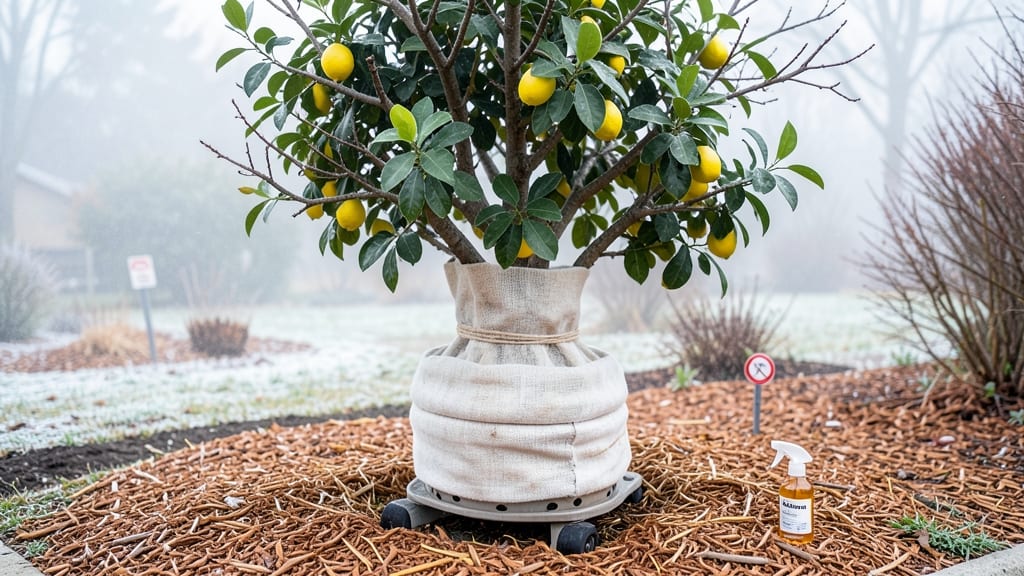
Lemon trees tolerate the low temperature only down to 25-30°F (-4 to -1°C), though temperatures below 28°F (-2°C) for extended periods can cause irreversible damage or kill the plant. Young trees and sensitive varieties like Meyer lemons need extra protection during winter freezes.
Understanding why lemon trees struggle in cold is key to saving them. 🌱 The real danger comes from ice crystals forming inside plant cells, which disrupt their structure and halt metabolic processes.
Mature trees handle brief cold snaps better because their thicker bark and established root systems store more energy reserves. However, even established trees can suffer if temperatures drop suddenly or stay low for more than a few hours.
For practical protection, start by gradually acclimating young trees to cooler temperatures in late fall. Frost cloths work better than plastic sheets because they allow airflow while trapping heat, and mulching around the base improves insulation.
If a hard freeze is forecasted, moving potted citrus indoors is often the safest option—just avoid placing them near cold drafts or heating vents, which can cause stress.
💡 In This Article
- Lemon Tree Cold Hardiness: Science Behind Temperature Tolerance
- Protecting Lemon Trees from Frost: Step-by-Step Cold Weather Prep
Lemon tree cold hardiness: science behind temperature tolerance
Lemon trees originate from subtropical climates where temperatures rarely drop below 50°F (10°C), making them highly sensitive to frost. The real damage occurs when ice crystals form inside plant cells—a process called intracellular freezing.
These crystals rupture cell membranes, disrupting water transport and nutrient flow, which can lead to brown, mushy tissue or even plant death. 🔥 The critical threshold of 25-30°F (-4 to -1°C) reflects the point where most lemon varieties begin experiencing cellular damage.
Root systems play a crucial role in cold resilience. Mature trees with deep, established roots can draw on stored energy reserves to survive brief cold snaps better than young trees.
For example, a 5-year-old lemon tree might tolerate 28°F (-2°C) for a few hours, while a newly planted sapling could suffer damage at 32°F (0°C).
This explains why citrus growers in USDA zones 9-11 face greater risks—these zones only guarantee protection down to 20-30°F (-7 to -1°C), leaving lemon trees vulnerable to unexpected freezes.
Genetic variability also matters. Meyer lemons, a hybrid variety, are slightly more cold-tolerant than standard Eureka or Lisbon lemons, often surviving down to 20°F (-7°C) with proper protection. However, even these hardier types can't withstand prolonged sub-freezing temperatures.
The key difference lies in their cellular composition—Meyer lemons have slightly thicker cell walls that resist ice crystal formation better than standard varieties. 💫
Another critical factor is the rate of temperature drop. A sudden plunge from 40°F (4°C) to 25°F (-4°C) gives lemon trees no time to adjust their metabolic processes, leading to shock. This is why gradual acclimation in fall—exposing trees to cooler nights over 4-6 weeks—helps them build cold tolerance.
The goal is to strengthen their natural defenses without causing stress that weakens them before winter.
Understanding these mechanisms helps explain why some lemon trees survive winter freezes while others perish. For instance, a 10-year-old tree with thick bark and extensive roots might recover from a 26°F (-3°C) night, while a 2-year-old potted lemon could suffer leaf burn and stunted growth at the same temperature.
This disparity highlights the importance of age, root development, and variety when assessing cold hardiness.
For gardeners in marginal climates (like USDA zone 8b), the solution often involves a combination of protective measures. These include mulching to insulate roots, using frost blankets to trap heat, and avoiding overwatering—wet soil conducts cold more efficiently than dry soil.
Even with these precautions, temperatures below 25°F (-4°C) remain risky, which is why many growers in colder regions opt for container-grown lemons that can be moved indoors during winter. ✨