
Pruning
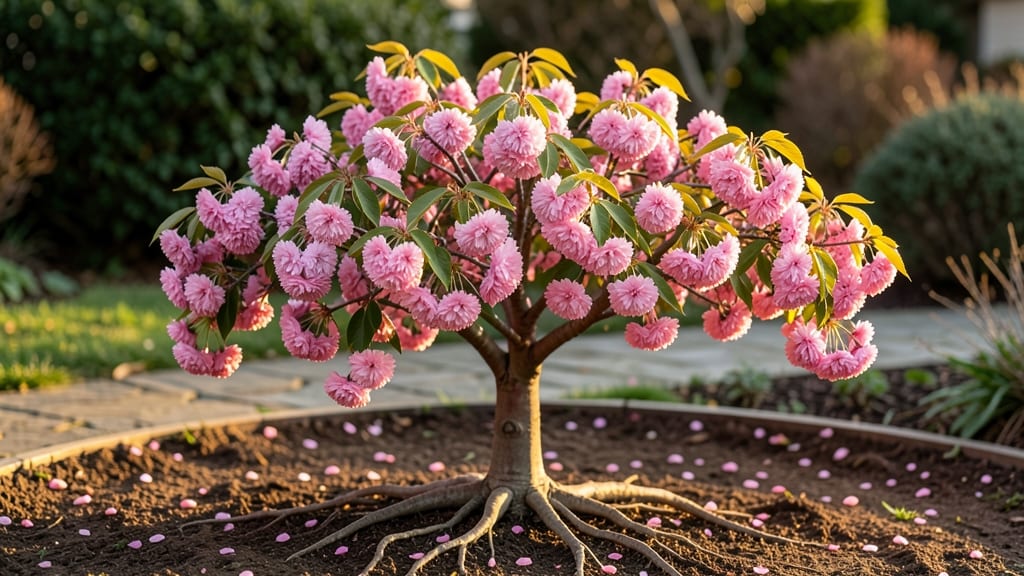
The Kwanzan cherry tree’s root system is the foundation for its breathtaking 🌸 spring blooms, and getting it right means the difference between a tree that thrives for decades and one that struggles from day one.
Picture this: You’ve just planted your Kwanzan cherry tree, dreaming of those cascading pink blossoms—but if the roots can’t spread freely, the tree will fight you every step of the way.
Unlike grafted varieties, this tree’s natural root structure is fibrous and aggressive, craving deep, well-draining soil to fuel its growth.
In this guide, I’ll break down exactly how the Kwanzan cherry tree’s roots behave—where they grow, how deep they reach, and what soil conditions they need to avoid common pitfalls like girdling or transplant shock.
You’ll learn the 3-step planting method that encourages strong, natural root development, plus how to spot early warning signs of root stress before they become big problems.
Understanding the Kwanzan cherry tree’s natural root system and its growth habits
The Kwanzan cherry tree (Prunus serrulata 'Kwanzan') boasts a fibrous root system that spreads widely but stays relatively shallow. Unlike grafted varieties, its natural roots grow organically from the seedling, creating a robust network that supports the tree’s 20-30-foot stature and abundant flowering.
This root structure thrives in well-draining, slightly acidic soil with a pH between 5.5 and 6.5, mimicking its native Japanese forest floors.
Unlike many fruit-bearing cherries, the Kwanzan’s roots aren’t typically grafted, which means you’re working with a self-sustaining root system from day one. This natural approach eliminates the risk of graft failure while promoting longer lifespan—some specimens live over 100 years with proper care.
The key to unlocking this potential lies in understanding its root depth, spread, and soil preferences.
| Root Characteristic | Details | Key Considerations |
|---|---|---|
| Root Type | Fibrous (not taproot) | Spreads 3-5x wider than canopy; shallow but dense. |
| Depth | 12-18 inches deep | Avoid planting deeper than 2 inches below graft union (if present). |
| Spread Radius | 15-20 feet | Plant 15 feet from structures, sidewalks, or other trees. |
| Soil pH | 5.5-6.5 (slightly acidic) | Amend clay soil with compost or peat moss. |
| Drainage Needs | Well-draining | Avoid waterlogged soil; raise beds if needed. |
| Root Development Speed | Moderate (1-2 feet/year) | Mulch annually to stimulate root growth. |
The Kwanzan’s fibrous roots prioritize horizontal expansion over depth, which is why proper spacing is critical. Planting too close to buildings or other trees can lead to root competition, stunting both growth and flowering.
The tree’s roots also respond poorly to compaction, so avoid heavy foot traffic near the planting area during the first 2-3 years.
One of the Kwanzan’s greatest advantages is its adaptability to various soil types, though it prefers loamy, well-aerated soil. Sandy soils may require organic matter additions like compost or leaf mold to retain moisture, while clay soils benefit from gypsum or sand amendments to improve drainage.
Always test your soil’s drainage rate—a simple percolation test can save you from root rot.
Root development directly impacts the Kwanzan’s flowering performance. Trees with well-established roots produce 2-3x more blossoms than those planted in poor soil or compacted areas.
The tree’s first flush of flowers typically appears in late April to early May, but consistent root health ensures repeat blooming throughout the season.
When comparing the Kwanzan’s roots to grafted varieties, you’ll notice fewer structural weaknesses. Grafted cherries often struggle with graft union stress or rootstock incompatibility, but the Kwanzan’s natural roots grow uniformly, reducing the risk of weak branch support.
This uniformity also makes the tree more resistant to windthrow—a common issue with shallow-rooted grafted trees.
To encourage deep, healthy roots, focus on mulching with 2-4 inches of organic mulch (like wood chips or shredded bark) and deep watering every 7-10 days during the first growing season.
Avoid over-fertilizing, as excessive nitrogen can lead to leafy growth at the expense of roots. A balanced 10-10-10 fertilizer applied in early spring is ideal.
If you’re planting in urban environments, consider root barriers to guide roots away from sidewalks or foundations. The Kwanzan’s roots can lift pavement if unchecked, but a 3-foot-deep barrier installed at planting time prevents this.
Just ensure the barrier doesn’t fully encircle the trunk, which can cause girdling.
Finally, remember that the Kwanzan’s root system matures slowly—full root establishment can take 3-5 years. During this time, the tree relies on consistent care to build resilience.
Prioritize soil health, proper spacing, and seasonal mulching, and your Kwanzan will reward you with decades of spectacular blooms.
Step-by-step planting guide for maximum root development without grafting
The Kwanzan cherry tree thrives when planted correctly to encourage its fibrous root system. Unlike grafted varieties, natural roots spread widely and deeply, ensuring stability and nutrient access. I’ll walk you through planting bare-root or container-grown trees for optimal root development, focusing on soil prep, depth, and spacing.
Start by selecting a well-draining, slightly acidic soil (pH 5.5–6.5). Kwanzan cherries hate soggy roots, so amend heavy clay with compost or sand if needed. Dig a hole twice as wide as the root ball but only as deep as the roots—never deeper, or you’ll suffocate the tree.
Planting Steps for Strong Kwanzan Cherry Roots
- 1 Soil Prep: Loosen soil to 12–18 inches deep and mix in 2–3 inches of compost for nutrients. Avoid fertilizing at planting—wait until spring.
- 2 Positioning: Place the tree so the root flare (where roots meet trunk) sits 1–2 inches above soil level. This prevents girdling roots later.
- 3 Backfill Carefully: Fill the hole with native soil, tamping gently to remove air pockets. Water deeply to settle roots, then add a 3-inch mulch ring (keep mulch away from the trunk).
- 4 Spacing: Space trees 20–25 feet apart for mature size. Closer planting leads to root competition and weaker blooms.
- 5 Staking (Optional): Use one stake for young trees in windy areas. Secure loosely to avoid root strangulation as the tree grows.
After planting, water deeply once a week for the first month to encourage root spread. Avoid overwatering—soggy soil causes root rot, which is fatal for Kwanzan cherries. In Zone 6a, plant in late fall or early spring to give roots time to establish before summer heat.
Prune only dead or crossing branches in the first year. Let the tree focus on root growth before shaping. By year three, you’ll see stronger blooms from a well-anchored root system—no grafting needed!
For container-grown trees, remove the pot and loosen roots if circling the root ball. This mimics natural root spread and prevents root-bound stress.