
Pests
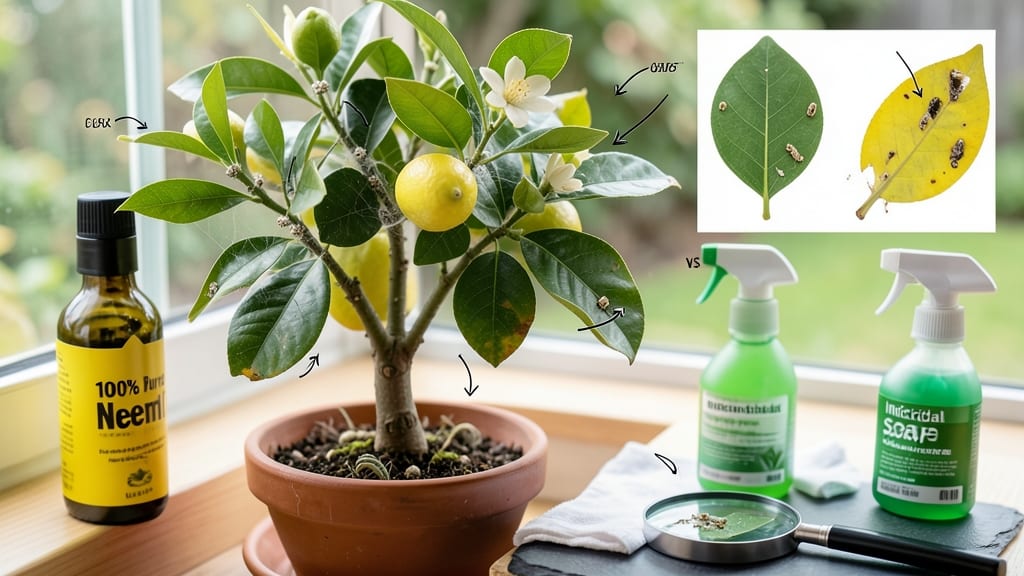
Indoor citrus trees attract pests like spider mites and mealybugs because their tender leaves look like an all-you-can-eat buffet. 🌿 I’ve seen healthy trees turn into sad, sticky messes overnight—until I learned these simple tricks to kick pests out for good.
The key is catching them early, when a quick wipe-down or spray can save your tree instead of a full-scale battle.
Most pests thrive in dry indoor air, so humidity control is your first line of defense. A pebble tray under the pot or a small humidifier nearby keeps the air just right to deter mites and scale.
I also isolate new plants for two weeks—this stops infestations before they start spreading to your lemon or lime tree’s branches.
Once you spot pests, act fast: a mix of neem oil and water (1 tsp per quart) sprayed on leaves works like magic, while rubbing alcohol on a cotton swab zaps stubborn scale insects.
Repeat weekly until you see fresh, clean growth. Your tree will bounce back stronger than ever—just like mine did after that panic-inducing spider mite outbreak.
Prevention is easier than cleanup, so check leaves weekly for tiny webs or cottony clusters. Adjust care too: bright, indirect light and well-draining soil keep trees resilient. With these habits, your citrus tree will stay pest-free and keep gifting you fruit for years.
How Bugs Invade Your Citrus Tree
Indoor citrus trees—like Meyer lemons, Calamondins, or Kumquats—are a stunning addition to any home, but their delicate leaves and sweet fruit make them prime targets for pests. Understanding why these tiny invaders show up is the first step to stopping them before they cause damage.
Here’s a breakdown of the most common reasons your citrus tree becomes a pest buffet.
Citrus trees thrive in warm (65–80°F) but not overly humid conditions. When indoor environments stray from this ideal—whether too dry from heating or too damp from poor airflow—pests get a foothold.
- Dry Air = Spider Mites & Scale Insects
Low humidity (below 40%) weakens your tree’s defenses, making it easier for Tetranychus urticae (spider mites) to suck sap from leaves.
These pests thrive in dry conditions because their tiny bodies lose less moisture. Scale insects (like Icerya purchasi) also love dry air—they secrete a waxy coating that traps moisture, creating a cozy microclimate for reproduction.
Pro Tip: 🌡️ Use a hygrometer to monitor humidity. Aim for 50–60% humidity near your tree. A pebble tray with water or a humidifier can help.
- High Humidity = Fungal Gnats & Mealybugs
Overly moist air (above 70%) encourages Sciaridae (fungal gnats) to lay eggs in damp soil. Their larvae feed on organic matter, weakening roots. Meanwhile, mealybugs (like Planococcus citri) adore humid conditions because their cottony secretions retain moisture, protecting them from drying out.
Pro Tip: ⚡ Ensure proper drainage and avoid overwatering. If your tree sits in a bathroom or kitchen, use a small fan to improve airflow.
Citrus trees are sensitive to stress, and pests love a struggling plant. Overcrowding, lack of sunlight, or nutrient deficiencies create the perfect storm for infestations.
- Lack of Sunlight = Weak Leaves = Aphid Attacks
Aphis gossypii (greenfly aphids) and Toxoptera citricida (black citrus aphids) target weak, etiolated (stretched, pale) leaves. Without enough direct sunlight (6+ hours/day), your tree’s leaves produce less sugar, making them a nutritional buffet for sap-sucking pests.
Pro Tip: 🌞 Place your citrus tree near a south- or west-facing window. If natural light is limited, supplement with a grow light (10,000–12,000 lux) for 12–14 hours daily.
- Nutrient Deficiencies = Root Weevils & Whiteflies
Citrus trees need balanced NPK (nitrogen, phosphorus, potassium) and micronutrients like magnesium and iron. When deprived, their roots become easier targets for:
- Citrus root weevils (Diaprepes abbreviatus) – Larvae burrow into weakened roots, causing wilting.
- Whiteflies (Bemisia tabaci) – They flock to stressed trees because the honeydew they excrete attracts sooty mold, which thrives on nutrient-poor leaves.
Pro Tip: 📊 Test your soil every 6 months. Use a citrus-specific fertilizer (3-6-6 or 8-3-9 ratio) and flush the soil annually to prevent salt buildup.
Even the most vigilant plant parents can accidentally introduce pests. Here’s how it happens—and how to avoid it.
- New Plants or Soil = Hidden Hitchhikers
Pests like mealybugs, scale, or citrus psyllids (Diaphorina citri) often hide in:
- New citrus cuttings or nursery-bought trees (check leaves/stems before bringing them home).
- Potting mix contaminated with eggs or larvae (especially fungal gnat eggs in peat-based soils).
- Secondhand pots or garden tools (e.g., root weevil larvae in reused containers).
Pro Tip: 🔍 Quarantine new plants for 2–4 weeks before introducing them to your citrus. Inspect every leaf, stem, and pot edge with a magnifying glass.
- Outdoor Contaminants = Thrips & Spider Mites
If you’ve had outdoor citrus trees or plants near open windows, thrips (Frankliniella spp.) or spider mites can blow in on breezes or hitch a ride on clothing. These pests are tiny (1/50th of an inch!) and often go unnoticed until they’ve established colonies.
Pro Tip: 🚪 Keep windows screened and wipe down surfaces near your tree with a neem oil solution (1 tsp neem oil + 1 quart water) every few months as a preventive spray.
Next up: Learn how to spot these pests early and which natural remedies work best for your citrus tree’s specific invaders.
How to Fix It Naturally
Pests on your indoor citrus tree don’t have to mean the end of its life—with the right approach, you can restore its health and keep it thriving. Below, we’ve mapped out practical, chemical-free solutions for common citrus pests, paired with prevention tips to stop future infestations.
Think of this as your citrus tree’s first-aid kit, but with a focus on gentle, effective fixes that won’t harm your plant (or your lungs).
Cause: These sap-sucking insects cluster on new growth, leaving sticky residue (honeydew) that attracts mold. Fix:
- Blast Them Off 💦
- Spray the tree with a strong stream of water (from your sink or hose) to dislodge aphids. Repeat every 2–3 days until they’re gone.
- Soap It Up 🧼
- Mix 1 tbsp mild liquid soap (like Castile) + 1 quart water in a spray bottle. Test on a leaf first, then spray directly on aphids (avoid overspraying soil). Reapply every 5–7 days.
- Neem Oil Rescue 🌿
- Combine 1 tsp neem oil + 1 tsp dish soap + 1 quart water. Shake well and spray all leaves (top and bottom). Neem disrupts their life cycle—use weekly until aphids vanish.
💡 Prevention Tip:
- Encourage natural predators like ladybugs or lacewings by keeping a small potted herb (e.g., basil or dill) nearby.
Cause: These microscopic pests thrive in dry air, spinning fine webs and causing yellowing leaves. Fix:
- Wipe Down Leaves 🧽
- Dampen a soft cloth with water + a drop of rubbing alcohol (70% isopropyl). Gently wipe every leaf to smother mites and remove webbing.
- Hydrate the Air 💧
- Increase humidity around the tree with a pebble tray (fill a tray with water and pebbles, place the pot on top) or a small humidifier. Spider mites hate moisture!
- Oil Trap Attack 🛡️
- Spray 1 tbsp vegetable oil + 1 tsp soap + 1 quart water on both leaf sides. Oil coats their bodies, suffocating them. Repeat weekly.
💡 Prevention Tip:
- Mist leaves 2–3 times a week, especially in winter when indoor air gets dry.
Cause: These fluffy white pests hide in leaf axils and stems, draining sap and leaving black sooty mold. Fix:
- Scrape Them Off 🧹
- Use a cotton swab dipped in rubbing alcohol to dab individual mealybugs. Be patient—this works best for small infestations.
- Alcohol Bath 🛁
- Spray 70% isopropyl alcohol directly on clusters (hold the bottle 6–8 inches away). Reapply every 3 days until gone.
- Hydrogen Peroxide Soak 🧴
- Mix 1 tbsp 3% hydrogen peroxide + 1 cup water. Spray on infested areas—it kills eggs and adults on contact.
💡 Prevention Tip:
- Inspect new plants for 2 weeks in quarantine before adding them to your citrus family.
Cause: These immobile, shell-covered bugs attach to stems/leaves, sucking sap and weakening the tree. Fix:
- Physical Removal 🧤
- Use a soft toothbrush dipped in soapy water to scrub off scales. Focus on stems and leaf undersides.
- Diatomaceous Earth (DE) Barrier 🏗️
- Lightly dust food-grade DE around the soil and on leaves (avoid overspraying—it’s harsh on beneficial insects). Reapply after watering.
- Citrus Peel Spray 🍊
- Simmer 4 citrus peels in 2 cups water for 20 mins, strain, and mix with 1 tsp soap. Spray weekly—citrus oils deter scales.
💡 Prevention Tip:
- Prune heavily infested branches and dispose of them in a sealed bag (not your compost).
Keep your tree pest-free with these low-effort habits:
- 🌡️ Monitor temperature: Keep your citrus tree in 65–75°F—pests love stress from extreme temps.
- 🍃 Rotate leaves: Turn the pot weekly so all sides get even light, reducing hiding spots for pests.
- 🚿 Clean up debris: Wipe fallen leaves from the saucer and remove yellowing leaves promptly.
- 🌿 Companion planting: Place garlic, marigolds, or lavender nearby—their scents repel pests naturally.
✨ Pro Tip: If pests persist after 2–3 weeks, quarantine the tree and inspect for hidden causes like overwatering (root rot attracts fungus gnats) or underwatering (stressed trees attract spider mites). A happy, healthy citrus tree is the best pest deterrent!
Frequently asked questions
How do I know if my indoor citrus tree has pests before the damage is severe?
Look for tiny webs on leaves (spider mites), white cottony clusters (mealybugs), or sticky residue (aphids/honeydew). Inspect leaf undersides and stems weekly—pests hide there first. A magnifying glass helps spot early signs like tiny moving dots (mites) or shell-like bumps (scale). Act within 3–5 days of noticing these to prevent spread.
Can I use store-bought pesticides on my indoor citrus tree?
Most chemical pesticides are too harsh for indoor use—they can harm your tree, pets, and even you. Opt for organic solutions like neem oil, insecticidal soap, or rubbing alcohol instead. If you must use a commercial product, choose a food-safe, OMRI-listed option and apply it outdoors (like a balcony) to avoid residue in your home.
Why do pests keep coming back even after I treat them?
Pests often return if you miss eggs or reinfest from nearby plants. Quarantine your tree for 2–4 weeks after treatment and check surrounding areas (windowsills, other houseplants). Also, ensure you’re treating all leaves—pests hide on undersides. Adjust care too: overwatering attracts fungus gnats, while dry air invites spider mites.
Is it safe to use essential oils to repel pests from my citrus tree?
Some essential oils (like peppermint, tea tree, or citrus oils) can repel pests, but use them carefully. Mix 5–10 drops with 1 cup water + 1 tsp soap and spray lightly (test on one leaf first). Avoid oils like eucalyptus or clove—they can burn leaves. Reapply every 3–5 days, but don’t rely solely on oils for severe infestations.
How can I prevent pests from spreading to other houseplants?
Isolate your citrus tree immediately if you spot pests. Place it in a separate room or cover it with a mesh bag for 2 weeks. Clean nearby surfaces with soapy water, and avoid moving the tree until you’re sure it’s pest-free. Check other plants for signs of infestation—pests like mealybugs and spider mites jump easily between plants.