
Propagation
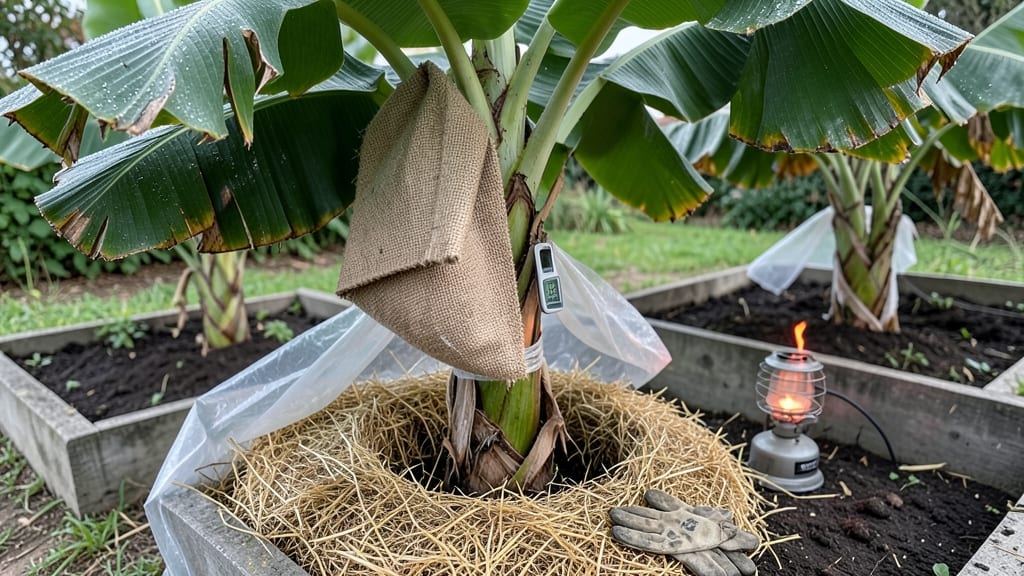
Your banana tree’s broad leaves are the first to freeze, turning crispy brown by morning—unless you act fast. 🌱 Frost kills banana trees by rupturing cells in minutes, but layered protection can save even mature plants when temperatures dip below 28°F.
The key is combining mulch, coverings, and strategic watering to slow heat loss and prevent ice formation on the crown.
Start with 3-4 inches of straw or wood chips around the base to insulate roots, then drape burlap or frost cloth loosely over the plant (never touching leaves). For severe freezes, add a clear plastic sheet on top to trap heat—just prop it up to avoid smothering.
Water the soil before the freeze to add weight to the plant and release heat as it cools.
If frost hits, rush to cover the tree immediately, even if it’s just a blanket or cardboard box. Afterward, monitor for blackened leaves—those can be trimmed away, but focus on protecting the pseudostem (the thick trunk) where new growth emerges.
With proper care, your banana tree can bounce back, producing new fronds within weeks.
This method works for both potted and in-ground banana trees, even in zones as cold as 7b. The secret? Acting before temperatures drop below 32°F and removing covers on sunny days to prevent rot. Your tropical plant will thank you with lush new growth by spring.
📚 In This Guide
- What you need
- Instructions
- Tips and common mistakes
- Wrapping up and next steps
What you need
- ● Frost cloth or row covers: 3–5 layers (depending on expected frost severity), minimum 30" x 50" to fully drape the tree.
- ● Burlap sacks or old blankets: 2–3 large pieces (for extra insulation if frost cloth isn’t available).
- ● Stakes or wooden dowels: 4–6 pieces, 3–4 feet tall, to secure covers in place.
- ● Twine or zip ties: 1–2 rolls, for fastening covers tightly.
- ○ Plastic sheeting or clear plastic: 1–2 sheets (optional but helpful for trapping heat under covers).
- ● PVC pipes or cardboard tubes: 2–4 pieces (to create makeshift "greenhouse" supports if needed).
- ● Watering can or hose: For pre-frost hydration (light watering helps insulate roots).
- ● Pruners or sharp scissors: To trim any damaged leaves post-frost.
- ● Heat lamps or string lights: Place 1–2 feet away from the tree for mild warmth (use safely!).
- ● Straw or mulch: Spread a 2–3 inch layer around the base for root insulation.
- ● Thermometer: To monitor temperatures and adjust protection as needed.
- ● Fan (for ventilation): If using plastic, leave a small gap or use a fan to prevent overheating during the day.
Step-by-Step guide to shielding your banana tree from frost
Here’s how I’ve kept my banana trees thriving through chilly nights—no fancy equipment needed.
🌱 Step 1: Identify Frost Risks in Your Microclimate
Banana trees die back when temperatures drop below 32°F, but damage starts at 40°F. Check your local frost forecast and note when temps dip below 45°F—that’s your warning. I always monitor my tree’s location: valleys, low spots, and north-facing areas freeze faster. If your tree sits in one of these zones, act early.
Look for signs of stress first: yellowing leaves, stunted growth, or brown spots on older fronds. These mean your tree’s already struggling with cooler temps. The key is prevention—don’t wait for frost warnings to act. I’ve seen trees recover from light frosts if protected beforehand, but severe damage is permanent.
☀️ Step 2: Water Deeply Before Cold Snaps
Water your banana tree 24 hours before the first frost—this helps the soil retain heat overnight. Soak the root zone to a depth of 12 inches, then let the top inch dry out slightly before the cold hits. Wet soil holds warmth longer than dry soil, acting like a natural insulator. I use a hose with a gentle spray nozzle to avoid disturbing the roots.
After watering, add a 2-3 inch layer of mulch (straw, wood chips, or leaves work) around the base but keep it 6 inches away from the trunk. Mulch traps radiant heat from the ground and prevents temperature swings. Avoid plastic or thick layers—these can suffocate roots. If you’re in a windy area, mound extra mulch on the north and west sides of the tree where cold air settles.
🪴 Step 3: Layer Protective Coverings Strategically
Start with a breathable frost cloth (not plastic—it traps moisture and causes rot). Drape it loosely over the tree, securing the edges with bricks or clothespins to allow airflow. For younger trees or small varieties, a large cardboard box (open on the sunny side) works in a pinch—just remove it by mid-morning to prevent overheating.
For mature trees, I combine methods: wrap the trunk with burlap or bubble wrap (the reflective side out) to shield the vascular system. Then, cover the canopy with frost cloth or old blankets, leaving the top open to let sunlight in during the day. If winds exceed 10 mph, add stakes and twine to keep coverings from flapping and tearing. The goal is to mimic a greenhouse effect—trapping heat without suffocating the plant.
⏰ Step 4: Monitor and Adjust During the Night
Check your tree every 2 hours after sunset if temps are near freezing. If the coverings fog up or feel damp, loosen them slightly to prevent condensation buildup. I’ve seen frost cloth turn into a sauna overnight, which actually makes things worse. A quick shake or lift of the edges keeps air circulating.
If a hard freeze is forecasted (below 28°F), add a second layer of insulation: stack cardboard boxes around the base or drape clear plastic sheeting (temporarily) over the frost cloth. This creates a mini greenhouse effect. Remove all coverings by 9 AM—banana trees need sunlight to recover from stress. Watch for new fronds emerging within 2-3 weeks; that’s your sign the tree is healing.
✂️ Step 5: Prune and Recover After Frost Damage
Wait 2-3 weeks before pruning—this gives the tree time to assess damage. Cut back only dead or blackened fronds with sterilized pruners, making clean cuts at the base of the pseudostem. Avoid removing healthy leaves, even if they’re browned. The tree uses these for photosynthesis to fuel regrowth.
If the trunk shows cracks or oozing sap, apply a thick layer of mulch around the base to protect the root flare. Feed the tree with balanced fertilizer (10-10-10) once new growth appears, but hold off until spring if damage is severe. I’ve seen trees bounce back from 90% defoliation if the trunk remains intact—patience is key. By late spring, you’ll often see new shoots emerging from the base, signaling a full recovery.
Tips & tricks for protecting banana trees from frost
These simple but effective strategies will help you shield your banana tree like a pro—without breaking the bank or overcomplicating things.
Microclimate Awareness: The 45°F threshold isn't just a number—it's your early warning system. I've learned the hard way that trees in low spots or near water freeze faster. If your banana tree sits in a valley or near a pond, prepare coverings 24 hours earlier than the frost warning suggests. Use a simple trick: place a thermometer near the tree trunk—when it hits 45°F, it's time to act. This extra hour of preparation can make all the difference between a happy tree and a sad one.
Mulch Layering Technique: That 2-3 inch layer of mulch isn't just decoration—it's your tree's winter blanket. For extra protection in windy areas, I go beyond the standard recommendation and create a windbreak by mounding mulch 6-8 inches high on the north and west sides of the tree. This creates a natural barrier against cold air currents. Just remember to keep it 6 inches away from the trunk to prevent rot. The key is creating a consistent heat zone around the roots.
Covering Strategy: When you're layering those protective coverings in Step 3, think of it like putting on a jacket—loose is better than tight. The frost cloth should drape loosely enough that you can still see the tree's outline through it. For mature trees, I've found that combining burlap on the trunk with frost cloth on the canopy creates the perfect insulation sandwich. The burlap acts as a thermal barrier while the frost cloth traps radiant heat. If you're using old blankets, make sure they're breathable—plastic will turn your protection into a moisture trap.
Monitoring Hack: Those 2-hour checks after sunset don't have to be stressful. Set a timer on your phone for every 2 hours and pair it with a quick visual inspection. Look for condensation on the coverings—this is your signal to adjust. I keep a small flashlight in my gardening toolkit for these nighttime checks. If you see fogging, simply lift one edge of the covering to let excess moisture escape. This simple habit prevents the "greenhouse effect" from becoming a sauna that actually harms your tree.
Pro Tips for Protect Banana Tree From Frost
- These simple but effective strategies will help you shield your banana tree like a pro—without breaking the bank or overcomplicating things.
- Microclimate Awareness: The 45°F threshold isn't just a number—it's your early warning system.
- Mulch Layering Technique: That 2-3 inch layer of mulch isn't just decoration—it's your tree's winter blanket.
Frequently asked questions
Got questions about keeping your banana tree frost-free? Here are some common concerns—and practical answers—to help you safeguard your tropical beauty before winter strikes.
How cold is too cold for a banana tree?
A banana tree starts suffering when temperatures drop below 32°F (0°C). Frost (28°F/-2°C) can cause leaf damage, while prolonged exposure to 20°F (-6°C) or lower may kill the plant. Young trees are more vulnerable, so act fast if frost is forecasted!
When should I protect my banana tree from frost?
Start preparing 2–3 weeks before the first frost date in your area. If a sudden cold snap is predicted, cover the tree immediately. Use a frost calendar (like the Old Farmer’s Almanac) to plan ahead—better safe than sorry!
Can I move my banana tree indoors to avoid frost?
Yes, but it’s tricky! If your tree is potted, relocate it to a sunny, unheated garage or shed (above freezing). For large outdoor trees, this isn’t practical—focus on layered protection (mulch, blankets, row covers) instead. Avoid sudden temperature swings, which stress the plant.
What if my banana tree’s leaves turn black after frost?
Blackened leaves are a sign of frost damage, but don’t panic! Prune the affected foliage with sterilized shears to encourage new growth. The tree may survive if the crown (base) and roots are still healthy. Water lightly to reduce stress—overwatering can worsen damage.
Are there frost-resistant banana tree varieties?
Consider ‘Dwarf Cavendish’ or ‘Red Dacca’—they tolerate cooler climates better than tropical varieties. For extreme cold (15°F/-9°C), try ‘Ice Cream’ banana, a hardier hybrid. Even then, protection is key during harsh winters!
Wrapping up and next steps
Protecting your banana tree from frost doesn’t have to be a daunting task—just a little preparation and care can make all the difference! 🌱 By using layered coverings like frost cloth, mulch, and even DIY solutions, you can shield your tropical beauty from chilly temperatures and keep it thriving year-round. Remember, consistency is key: monitor weather forecasts, act quickly, and don’t hesitate to get creative with your solutions.
Now that you’re armed with these tricks, go ahead and give your banana tree the love it deserves! Start by assessing your tree’s needs and implementing one or two protective measures today.
With a little effort, you’ll be enjoying lush, frost-free foliage—and maybe even those sweet bananas—sooner than you think! 🍌✨