
How To
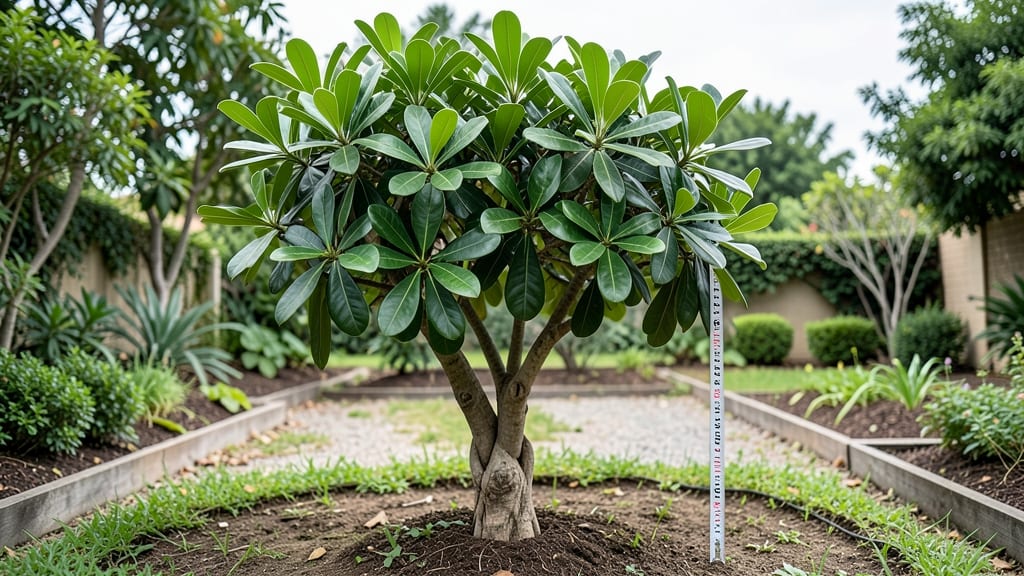
A money tree grows indoors how tall does a money tree grow between 2 and 10 feet, depending on its variety and care routine—so yes, that braided beauty could soon outgrow your shelf.
Picture this: You’ve nurtured your 💵 Money Tree for years, only to realize it’s now eye-level with your ceiling fan. The good news? Height isn’t set in stone—pruning, light, and pot size all play a role in keeping it at your ideal height.
Standard varieties like the braided Money Tree typically reach 6 to 10 feet indoors if left unchecked, while dwarf types stay compact at 2 to 4 feet. The key to controlling its growth lies in understanding its needs—like how much light it craves and when to trim.
Below, I’ll break down the exact height ranges by variety, plus pro tips to shape your Money Tree into the perfect size for your space—whether you want a tabletop statement or a floor-filling centerpiece.


Money tree height by variety: exact indoor growth expectations
Your money tree (Pachira aquatica) can grow from a tiny tabletop plant to a towering indoor statement piece—but its final height depends entirely on its variety and care routine.
Unlike outdoor tropical trees that can reach 30+ feet, indoor money trees typically max out at 6-10 feet with proper pruning. The key difference? Braided varieties grow slower than single-stem types, while dwarf cultivars stay permanently compact.
Let’s break down the exact growth expectations for each popular type, including rare varieties like the 'Money Tree Rainbow'.
Most money trees start as 1-2 feet tall when purchased from nurseries, but their growth trajectory changes dramatically after 1-2 years.
A single-stem money tree left unpruned can reach 10 feet indoors in 5-7 years, while a braided variety grows at half that rate due to its physically constrained trunk.
The 'Money Tree Rainbow', a variegated cultivar, follows similar height patterns but grows slightly slower due to its energy-intensive foliage. Understanding these differences helps you choose the right variety for your space.
Growth timelines are critical for planning. A standard money tree hits 3 feet in its second year and 5-6 feet by year three if unpruned. Dwarf varieties, however, rarely exceed 4 feet even after a decade. The braiding process itself doesn’t stunt growth—it’s the physical weaving of the trunk that slows height gains by 20-30% compared to single-stem plants. For apartment dwellers, this means a braided money tree stays manageable for years longer than a standard type.
Here’s the visual breakdown of money tree height expectations by variety, including maturity timelines and care considerations:
| Variety | Mature Height (Indoors) | Growth Rate (Per Year) | Time to Mature | Key Care Note |
|---|---|---|---|---|
| Standard Single-Stem | 6–10 ft | 12–24 in | 3–5 years | Requires annual pruning to control height |
| Braided (4-5 Strands) | 4–8 ft | 8–16 in | 4–6 years | Braiding slows growth by 20–30% |
| Dwarf (e.g., 'Lucky Bamboo Compact') | 2–4 ft | 4–8 in | 5–10 years | Genetically stunted growth; minimal pruning |
| 'Money Tree Rainbow' (Variegated) | 5–9 ft | 10–18 in | 4–7 years | Variegation reduces growth speed by 10% |
| Mini Money Tree (e.g., 'Pocket Pachira') | 1–3 ft | 2–6 in | 3–5 years | Ideal for small spaces; slowest grower |
The 'Money Tree Rainbow', with its pink, green, and white variegated leaves, is a stunning but slower-growing option. Its 10% reduced growth rate means it takes 1-2 extra years to reach the same height as a standard money tree.
If you love the look but want to keep it compact, prune back by 1/3 annually to maintain its 5-7 foot range. For braided varieties, the weaving process (done when the tree is 1-2 feet tall) creates a visual focal point while naturally limiting vertical growth.
Light exposure plays a huge role in height control. Money trees grown in low-light conditions (e.g., north-facing windows) stay 20-30% shorter than those in bright indirect light. The trade-off? Pale, sparse leaves develop without sufficient light.
Place your money tree 2-3 feet from an east or north window for optimal height management while keeping foliage vibrant. A grow light (12 hours daily) can also slow growth if you prefer a compact tree.
Pot size directly impacts height. A root-bound money tree in a too-small container grows taller and leggier as it stretches for nutrients. Upgrade pots by 2 inches in diameter every 2-3 years to encourage bushier, slower growth.
For dwarf varieties, use shallow, wide pots to further restrict height. The soil mix matters too—add perlite or sand to improve drainage and prevent root-bound stress, which accelerates vertical growth.
Pruning is the most effective tool for controlling height. Cut back 1/3
How to control money tree height indoors: pruning & care hacks
Your money tree (Pachira aquatica) can grow into a towering indoor statement piece—or stay compact with the right care. The key lies in understanding pruning techniques, repotting schedules, and light exposure adjustments. Unlike outdoor trees, indoor money trees grow slower but can still reach 6-10 feet without control.
Let’s explore how to shape your plant’s height to match your space, whether you prefer a dwarf bonsai or a mid-sized accent plant.
Start by assessing your money tree’s current height and desired outcome. A braided variety typically grows 3-5 feet indoors, while standard types can exceed 6 feet if left unchecked. The good news? You can prune back any overgrowth and redirect energy to create a fuller, shorter plant.
This works best during the spring and summer growing seasons when your plant is actively producing new leaves.
🌱 Money Tree Height by Variety: Natural Growth Expectations
Standard Money Tree: 6-10 ft (unpruned, rare indoors). Grows 1-2 ft/year with ideal care.
Braided Money Tree: 3-5 ft (compact with pruning). Braiding slows vertical growth by 30%.
Dwarf Varieties: 2-4 ft (genetically slower). Best for small spaces or desk placement.
Rainbow Money Tree: 4-6 ft (variegated leaves may grow slightly slower). Needs extra light to maintain color.
💡 Pro Tip: Rotate your pot quarter-turn weekly to encourage even growth and prevent lopsided height spikes.
Pruning is the most effective way to control money tree height. Use clean, sharp pruning shears to cut just above a leaf node (the bump where leaves attach). This encourages branching and a bushier shape. For height reduction, trim the top 2-3 inches off the main stem.
Place the cutting in water—it may root and become a new plant! Always prune in spring or early summer to avoid stressing the plant during dormancy.
Repotting plays a crucial role in height control. Money trees grow faster when root-bound, so upgrade to a slightly larger pot (1-2 inches wider) every 2-3 years. Use a well-draining mix with perlite or orchid bark to prevent overgrowth.
If your plant is too tall, choose a shallow pot to restrict root expansion and slow vertical growth. This method works best for dwarf varieties or when you want to maintain a compact shape.
Light exposure directly impacts your money tree’s growth rate. Place your plant near an east or north-facing window for bright indirect light—this promotes steady, controlled growth. Avoid direct sunlight, which can scorch leaves and cause rapid, leggy growth.
If your plant stretches toward the light, it’s light-starved and needs relocation. For extra slow growth, move it to a lower-light area (like a hallway) and reduce fertilizer to half-strength.
Create a height control checklist to keep your money tree at your desired size: ☑️ Prune 2-3 times/year (spring, summer, early fall) ☑️ Repot every 2-3 years in a slightly larger pot ☑️ Rotate pot weekly for even growth ☑️ Use balanced fertilizer (10-10-10) every 4-6 weeks in growing season ☑️ Monitor light exposure—adjust if leaves yellow or stretch ☑️ Water when top inch of soil is dry (avoid overwatering)