
How To
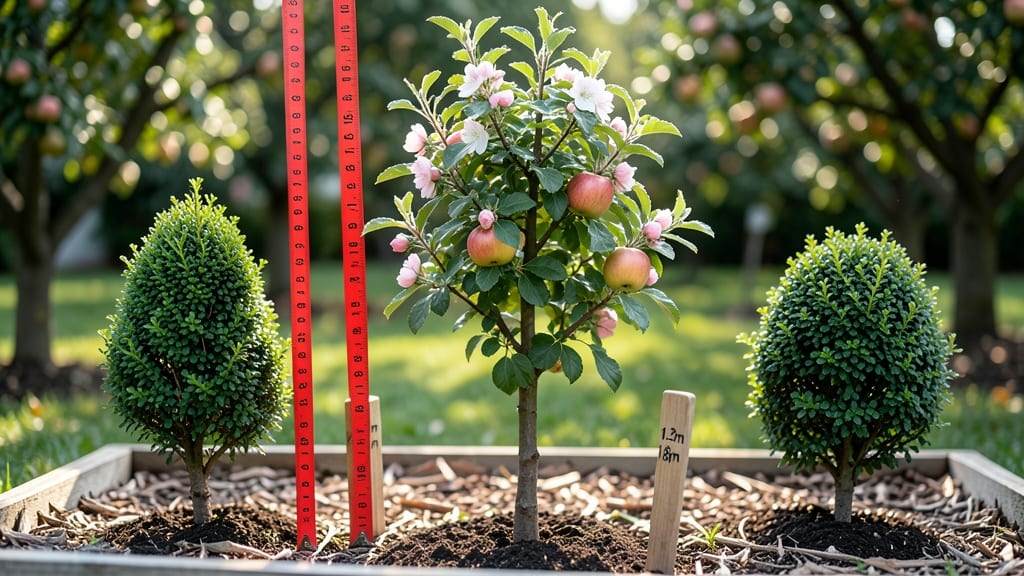
A dwarf apple tree 🍎 how tall does a dwarf apple tree grow at maturity, typically between 6 and 12 feet, making it the ideal choice for small gardens, balconies, or even large containers.
If you dream of growing fresh apples but lack space for a full-sized tree, dwarf apple varieties offer the perfect solution—packing big flavor into tiny footprints.
But how much space do you really need? The answer depends on the variety, pruning habits, and growing conditions. Some stay as short as 4 feet with aggressive pruning, while others reach 12 feet without intervention.
Below, I break down the exact height ranges for popular dwarf varieties, how to control their growth, and why they might outproduce larger trees in the same space.


Exact height ranges of dwarf apple tree varieties by type
Choosing a dwarf apple tree means trading a 20-foot giant for a compact fruit producer that fits patios, small yards, or even large containers. But not all dwarf varieties grow the same height—some stay under 6 feet, while others reach 12 feet at maturity.
The difference? Rootstock type and cultivar genetics determine whether your tree will be a bushy bush or a tall column.
Standard apple trees can tower 20–30 feet, but dwarf varieties—grafted onto dwarfing rootstock—stay manageable. Semi-dwarf varieties bridge the gap at 12–18 feet, while true dwarfs rarely exceed 8 feet.
Columnar varieties are the exceptions, growing 10–15 feet tall but only 1–2 feet wide, making them ideal for tight spaces. Your choice depends on space constraints, pruning goals, and whether you prioritize easy harvesting or ornamental appeal.
| Variety Type | Mature Height (ft) | Rootstock | Spreading Width (ft) | Top Cultivars |
|---|---|---|---|---|
| True Dwarf | 6–8 ft | M.9 or B.9 | 4–6 ft | 'Red Delicious', 'Fuji', 'Gala' |
| Semi-Dwarf | 12–18 ft | MM.106 or MM.111 | 8–12 ft | 'Granny Smith', 'Honeycrisp', 'Pink Lady' |
| Columnar | 10–15 ft | M.9 or M.26 | 1–2 ft | 'Columnar Red Delicious', 'Columnar Fuji' |
| Standard (Comparison) | 20–30 ft | Seedling | 15–20 ft | 'Golden Delicious', 'Jonathan' |
The rootstock is the secret sauce behind a dwarf apple tree’s size. M.9 rootstock produces the smallest trees (6–8 feet), while MM.106 creates semi-dwarfs (12–18 feet). Columnar varieties use M.9 or M.26 to stretch vertically but stay narrow, perfect for small gardens or urban balconies.
If you’re short on space, columnar types are my top pick—they produce abundant fruit with minimal width.
Let’s talk top 10 cultivars and their ideal spacing. The 'Gala' on M.9 rootstock matures at 6–7 feet and thrives in 5x5-foot squares. Meanwhile, 'Honeycrisp' on MM.106 reaches 12–15 feet and needs 10 feet of clearance for airflow.
Columnar 'Fuji' stays under 12 feet but only needs 2 feet of width, making it a space-saving superstar.
Pruning plays a huge role in controlling height. Summer pruning encourages bushier growth, while winter pruning keeps trees taller and narrower. For columnar varieties, minimal pruning is key—they naturally grow upright.
If you’re growing 'Pink Lady' on MM.111, expect 15 feet of height but prune aggressively to keep branches harvest-friendly.
One common mistake? Assuming all dwarf trees stay under 8 feet. Semi-dwarfs can easily hit 18 feet if left unchecked, while columnars might need staking to prevent flopping in windy areas.
Always check the rootstock-cultivar combo—a 'Granny Smith' on M.9 will stay small, but the same cultivar on MM.106 will grow twice as tall.
For container growing, stick to true dwarfs (M.9 rootstock) in
How to control dwarf apple tree height through pruning and training
Dwarf apple trees are a gardener's dream—they produce full-sized fruit on a compact frame, making them perfect for small yards or containers. But even these space-savers need guidance to stay at your desired height.
The key lies in pruning techniques and training methods that shape growth while maximizing fruit production. Whether you prefer a bushy shape or a vertical espalier, understanding when and how to prune makes all the difference.
Your pruning strategy should align with your tree's growth cycle. Winter pruning, done during dormant season, removes dead wood and shapes the tree's structure. Summer pruning, however, focuses on fruit production and fine-tuning height by trimming new growth.
Both methods require the right tools—whether you opt for organic pruning saws or conventional bypass pruners—to keep cuts clean and promote healthy regrowth.
Step-by-Step Guide to Pruning and Training
- Step 1: Choose Your Pruning Season
- Winter (Dormant Season): Best for structural pruning—remove dead branches and shape the tree's framework.
- Summer (Growing Season): Focus on height control by trimming new shoots and thinning fruit clusters.
- Step 2: Select the Right Tools
- Organic Tools: Use sharp bypass pruners or a hand saw for clean cuts; sterilize with rubbing alcohol to prevent disease.
- Conventional Tools: Choose high-quality pruning shears with ergonomic handles for comfort during extended pruning sessions.
- Step 3: Train for Height Control
- Espalier Method: Guide branches horizontally along a trellis or fence to limit vertical growth while increasing fruit exposure.
- Central Leader: Maintain a single main trunk and prune side branches to encourage upward growth.
- Step 4: Prune for Optimal Fruiting
- Remove water sprouts (vertical shoots) to redirect energy to fruit-bearing branches.
- Thin out crowded branches to improve air circulation and reduce disease risk.
- Step 5: Know When to Stop
- Stop pruning 6-8 weeks before harvest to avoid stressing the tree.
- Limit summer pruning to 25% of new growth to prevent stunted fruit development.
One of the most effective ways to control height is through espalier training, a method that trains branches to grow flat against a support structure. This not only limits vertical growth but also makes harvesting easier and increases fruit production by maximizing sunlight exposure.
Start training young trees by gently tying branches to the trellis with soft jute twine, adjusting as they grow. For container-grown trees, espalier is especially useful, as it keeps the tree's footprint small while still yielding abundant fruit.
Timing is everything when it comes to pruning. Winter pruning should focus on removing dead, diseased, or crossing branches to open up the tree's canopy. Aim to prune during dry, cold weather to minimize stress. In contrast, summer pruning is about fine-tuning.
Trim back excessive new growth to maintain your desired height, but avoid heavy pruning in late summer, as this can delay fruiting the following year. Always use sterilized tools to prevent bacterial or fungal infections from spreading.
If you're growing a columnar variety like 'Columnar Red Delicious,' height control is simpler because these trees naturally grow tall and narrow. However, even columnar trees benefit from annual pruning to remove suckers at the base and thin out fruit clusters.
For bush-type dwarfs, like 'Golden Delicious' on M.9 rootstock, prune to create an open-center shape with a few main branches radiating from the center. This encourages airflow and easier fruit access.
Remember, the goal isn't just to keep your dwarf apple tree small—it's to optimize its health and productivity. With the right pruning and training techniques, you can enjoy bountiful harvests without sacrificing garden space.
Start with a clear plan, use the right tools, and adjust your approach as your tree grows. Your mini orchard will thank you with juicy, homegrown apples every season! 🍏✂️