
How To
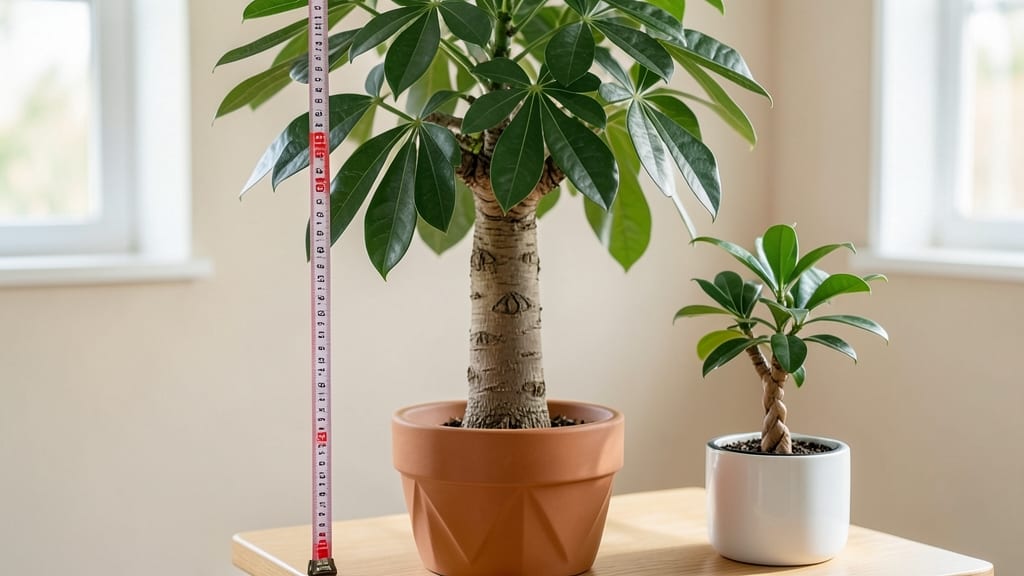
A money tree can grow up to 10 feet tall indoors 🌿—but most varieties stay between 3 and 6 feet with proper care.
Watching your money tree (Pachira aquatica) stretch toward the ceiling isn’t just about aesthetics—it’s a direct reflection of its care, variety, and growing conditions. But how tall should it grow? And can you control its height?
Standard varieties reach 6 to 10 feet when happy, while dwarf types max out at 3 to 5 feet. The key? Light, pot size, and pruning.
Too little light or a cramped container slows growth, while overwatering or neglect can send it shooting upward in a desperate bid for survival.
In this guide, I’ll break down the indoor growth limits by variety, how to train your money tree for the perfect height, and the 3 biggest mistakes that make them grow too tall (or too slow). Let’s get started!


Money tree growth height limits by variety: what to expect indoors
Your money tree (Pachira aquatica) can grow into a stunning indoor statement piece, but its final height depends entirely on its variety and care conditions. Unlike outdoor tropical trees, indoor money trees grow slower due to limited space and controlled environments.
Understanding the height limits by variety helps you set realistic expectations and plan for its long-term care.
The standard money tree variety is the tallest, often reaching 6–10 feet indoors with proper care, while dwarf varieties stay compact at just 3–5 feet. Even within these ranges, factors like pot size, light exposure, and pruning habits can significantly influence how tall your money tree grows over time.
🌿 Key Takeaway: Most money trees grow 1–2 feet per year indoors, but their mature height is primarily determined by genetics (variety) and your care routine.
A standard money tree can easily reach ceiling heights in 5–7 years if left unpruned, while braided varieties typically grow slightly slower due to the extra care needed for their distinctive trunks.
The dwarf and mini varieties are bred specifically to stay shorter, making them ideal for apartments or offices where space is limited.
Your money tree’s pot size plays a huge role in its height. A smaller pot (10–12 inches) restricts root growth, which naturally slows vertical expansion. Conversely, a large pot (18+ inches) encourages faster growth—sometimes too fast if you’re not ready for a towering plant.
I recommend starting with a pot that’s 2–3 inches larger in diameter than the root ball and upgrading gradually.
Light exposure is another critical factor. Money trees thrive in bright, indirect light, which promotes steady growth. Placing yours near an east or west-facing window ensures it gets enough light without risking leaf burn from direct sun.
In low-light conditions, growth slows significantly, and the tree may stretch awkwardly toward the light—a condition called etiolation.
Pruning is your best tool for controlling height. By pinching back new growth tips in spring or summer, you encourage bushier growth rather than a single tall stem. For braided varieties, pruning also helps maintain the braid’s integrity.
I suggest pruning 2–3 times per year to keep your money tree at your desired height while maintaining its health and shape.
If you’re wondering whether your money tree will grow taller indoors than outdoors, the answer is usually no. Outdoor money trees in tropical climates can reach 20–30 feet, but indoor conditions limit their growth.
However, with optimal care—bright light, proper watering, and regular fertilization—your indoor money tree can still thrive and reach its variety’s full potential height.
Remember, patience is key! A money tree’s first year of growth is often the slowest, with most varieties adding just 6–12 inches. By year three, you’ll see more noticeable height increases if conditions are ideal.
With the right variety and care, your money tree can become a stunning, long-lived centerpiece in your home.
🪴 Pro Tip: Use a moisture meter to monitor soil conditions—overwatering or underwatering can both stunt growth and affect your tree’s height potential.
How to control money tree height: pruning, training, and care tips
Your money tree (Pachira aquatica) doesn’t have to become a ceiling fixture—with the right techniques, you can shape its growth to fit your space.
Whether you want a compact bush or a trained braided trunk, controlling height starts with understanding its natural growth habits and how to guide them. The key lies in pruning, light management, and supportive training, all while keeping its tropical roots happy.
Money trees grow 6–10 feet tall indoors under ideal conditions, but their height is highly influenced by your care routine. A dwarf variety might stay between 3–5 feet, while standard types can reach 10 feet or more if left unchecked.
The good news? You can prune back overgrowth, train braided trunks, and adjust light exposure to slow or encourage growth as needed. Let’s dive into the practical steps to manage your money tree’s height like a pro.
Step-by-Step Guide to Pruning and Training
- 🌱 Choose the right time: Prune in spring or early summer when your money tree is actively growing. Avoid pruning in winter when growth slows.
- ✂️ Identify growth points: Look for leaf nodes (where leaves meet the stem). These are ideal spots to cut for bushier growth.
- 📏 Measure your goal: Decide how tall you want your money tree to be. Use a tape measure to mark the desired height on the stem.
- 🪴 Prune for bushiness: Cut just above a leaf node at a 45-degree angle to encourage new branches. This promotes a fuller shape instead of a tall, leggy plant.
- 🌿 Train braided trunks: For braided varieties, use soft ties or stakes to weave the stems. Reposition every 2–3 months to maintain the braid.
- ☀️ Adjust light exposure: Move your money tree to bright, indirect light to slow rapid growth. Too much light can speed up height, while low light can stunt growth entirely.
- 💧 Monitor watering: Overwatering can cause rapid, weak growth. Water only when the top inch of soil is dry to keep growth steady and healthy.
Pruning isn’t just about cutting back—it’s about encouraging the right growth pattern. When you prune above a leaf node, you trigger the growth of new branches, creating a denser, bushier plant instead of a tall stalk. For braided money trees, patience is key.
The braiding process can take 6–12 months to fully develop, but using soft plant ties and gentle adjustments will keep the trunks aligned. If your money tree starts to lean, it’s a sign it needs more light or a sturdier support stake.
Light plays a huge role in controlling height. Money trees thrive in bright, indirect light, such as near an east or west-facing window. If your plant stretches toward the light, it’s etiolating—a sign it needs more illumination.
On the flip side, if it grows too slowly, it might be underwatered or in low light. Balancing these factors ensures your money tree grows at a steady, manageable pace.
Fertilizing also impacts height. During the growing season (spring and summer), use a balanced fertilizer (10-10-10) every 4–6 weeks to promote healthy growth. However, over-fertilizing can lead to rapid, weak growth.
In fall and winter, reduce or stop fertilizing entirely, as the plant enters a dormant phase. This natural slowdown helps maintain a controlled height.
With these techniques, you can keep your money tree at your desired height while ensuring it stays healthy and vibrant. Whether you prefer a compact bush or a tall, braided statement piece, the key is consistency in pruning, training, and care. Happy growing! 🌿