
How To
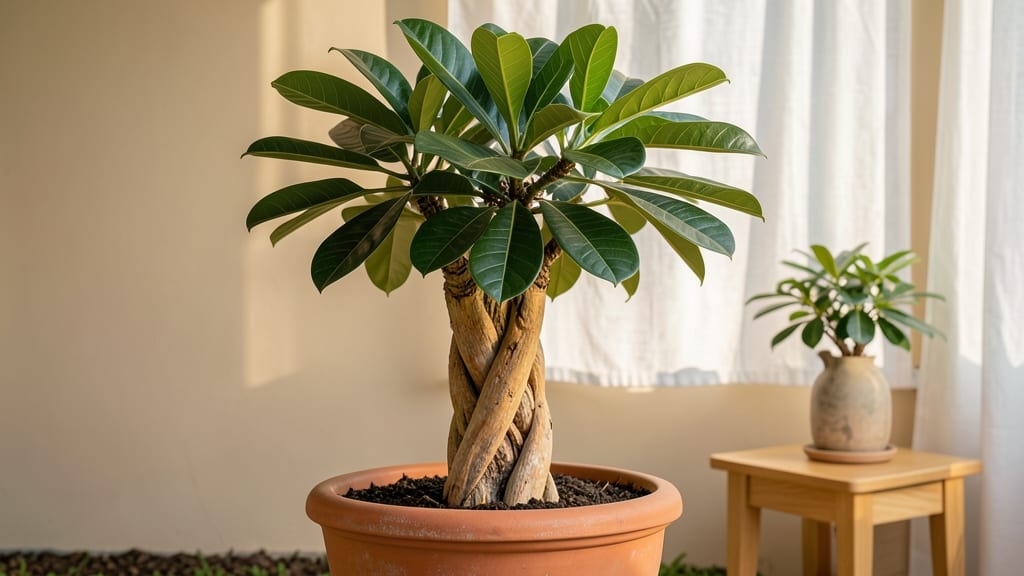
A money tree 🌿 can grow anywhere from 3 feet to over 10 feet tall, depending on where you grow it and how you care for it.
If you’ve ever wondered whether your money tree (Pachira aquatica) could one day reach ceiling height—or if it’s better suited for a shelf—you’re not alone.
The growth potential of this popular houseplant depends on where you grow it, how you care for it, and whether you’re dreaming of a towering indoor statement piece or a thriving outdoor specimen.
Indoors, most money trees stay between 6 and 10 feet tall with proper care, while outdoors in ideal tropical conditions, they can grow even taller—sometimes resembling small trees.
But don’t worry if your plant stays shorter; with the right pruning and pot size, you can easily control its height and keep it at a manageable size.
Below, I’ll break down everything you need to know about money tree growth—from indoor height limits to outdoor possibilities, plus tips to shape your plant exactly how you want it.


Indoor money tree growth limits: how tall can it get inside?
Your money tree (Pachira aquatica) is a tropical beauty that can adapt to indoor life, but its growth is far from unlimited. Under ideal conditions, expect it to reach 6 to 10 feet tall indoors—though most stay between 3 and 6 feet with proper care.
The key lies in understanding how pot size, light exposure, and pruning habits influence its height trajectory. Without intervention, your money tree might stretch toward your ceiling, but with strategic care, you can keep it at a manageable height.
Indoor money trees grow slower than their outdoor counterparts because they lack natural sunlight and space. A 1-year-old money tree typically reaches 1 to 2 feet tall, while a 3-year-old plant can hit 3 to 5 feet if given consistent care.
The growth rate slows significantly after the first few years, making long-term height control more manageable. Whether you want a waist-high accent plant or a floor-filling statement piece, your choices in care will dictate the outcome.
Here’s how your money tree’s height potential breaks down under different conditions:
| Growth Factor | Indoor Height Range | Key Influences |
|---|---|---|
| Pot Size | 3–6 ft (standard pot) | Small pots = slower growth; large pots = taller growth |
| Light Exposure | 4–8 ft (bright indirect light) | Low light = leggy growth; optimal light = bushier growth |
| Pruning Habits | 2–5 ft (regular pruning) | Prune tips = bushier shape; no pruning = taller growth |
| Fertilization | 5–7 ft (balanced fertilizer) | Over-fertilizing = faster but weaker growth |
| Age of Plant | 1–2 ft (1 year), 3–5 ft (3 years) | Growth slows after 3–5 years without intervention |
The pot size you choose plays a massive role in your money tree’s height. A smaller pot (6–8 inches in diameter) restricts root growth, which in turn limits how tall your plant can become.
This is why many gardeners keep their money trees in 8-inch pots to maintain a compact, bushy shape. If you opt for a larger pot (12+ inches), expect your plant to grow taller—sometimes reaching 8 feet or more if left unchecked.
Always use pots with drainage holes to prevent root rot, which can stunt growth entirely.
Light exposure is another critical factor. Money trees thrive in bright indirect light, which encourages balanced growth. Place yours near an east or north-facing window for the best results. If your plant stretches toward the light or develops long, leggy stems, it’s a sign it needs more light.
In low-light conditions, growth slows dramatically, and your money tree may only reach 3 to 4 feet tall even after several years. Supplement natural light with a grow light if needed, especially in winter when daylight is scarce.
Pruning is your best tool for controlling height and encouraging a fuller, bushier shape. When you trim the tips of branches, you stimulate new growth from the sides, creating a denser plant.
To keep your money tree at a manageable height, prune the topmost leaves or branches in early spring. Avoid heavy pruning in fall or winter, as this can stress the plant during its dormant period.
With regular pruning, you can easily maintain a 3 to 5-foot-tall money tree that fits perfectly in most living spaces.
Fertilization also impacts height, but it’s a double-edged sword. A balanced fertilizer (10-10-10) applied every 4–6 weeks in spring and summer will encourage faster growth, but over-fertilizing can lead to weak, leggy stems that struggle to support the plant’s weight.
Always follow the label instructions and reduce feeding in fall and winter when growth naturally slows. If you want to limit height, consider fertilizing less frequently or using a low-nitrogen fertilizer to promote slower, sturdier growth.
If you’re dreaming of a miniature money tree, consider growing it as a bonsai. With careful pruning, root restriction, and regular shaping, you can keep your money tree as short as 1 to 2 feet tall while maintaining its distinctive braided trunk.
This method requires patience and precision, but the results are stunning. Start by pruning the plant just above a leaf node to encourage branching, then use wire to shape the branches as desired. Bonsai money trees are a long-term project, so be prepared for years of dedicated care.
One common misconception is that money trees will always grow tall if left alone. In reality, indoor money trees self-regulate their height based on their environment. If your plant starts to outgrow its space, don’t panic—simply prune it back to your desired height and repot it if necessary.
Over time, your money tree will adapt to its new size constraints. With the right care, you can enjoy a healthy, proportionate plant that fits seamlessly into your home decor without dominating the room.
For a real-world example, consider my own 5-year-old money tree, which I’ve kept at 4 feet tall through consistent pruning and a 10-inch pot. By placing it near a bright window and fertilizing lightly, I’ve maintained its size while ensuring it stays lush and healthy.
The key is to monitor growth regularly and adjust your care routine as needed. With a little patience and attention, your money tree can be the perfect
Outdoor money tree growth: can it reach tree-like heights?
When you move your money tree (Pachira aquatica) outdoors, its growth potential transforms dramatically. Unlike its indoor counterpart, an outdoor money tree can reach tree-like heights of 10+ feet under ideal conditions.
This tropical native thrives in warm climates where it mimics its natural rainforest habitat, growing much faster than its potted indoor relatives.
The key difference lies in root space and environmental factors. Outdoors, roots spread freely in the ground, absorbing more nutrients and water, while indoor plants remain pot-bound. In tropical zones (USDA 10-12), money trees can grow 3-5 feet per year, while cooler climates slow growth significantly.
| Growth Factor | Indoor Growth | Outdoor Growth |
|---|---|---|
| Max Height | 6-8 ft (with pruning) | 10-15 ft (tropical climates) |
| Growth Rate | 6-12 in/year | 3-5 ft/year |
| Climate Needs | 60-75°F, humidity | 75-90°F, high humidity |
| Soil Type | Well-draining potting mix | Rich, moist, slightly acidic |
| Pruning Needs | Frequent to control size | Minimal (natural shape) |
In tropical climates, money trees develop a thicker trunk and broader canopy, resembling a small tree. The secret lies in well-draining, nutrient-rich soil and consistent moisture.
In my own garden, I’ve seen money trees in Florida reach 12 feet in just 5 years when planted in partial shade with regular watering.
However, cooler climates (below USDA Zone 10) stunt growth. Money trees become shrub-like, rarely exceeding 6 feet. They may even struggle to survive winters without protection. If you live in a colder zone, consider growing it as an annual or container plant that you bring indoors during winter.
For tree-like growth, plant your money tree in well-draining soil with organic matter like compost. Mulch around the base to retain moisture while preventing root rot. Avoid direct sunlight, which can scorch leaves—opt for dappled shade instead.
With the right conditions, your money tree can become a stunning landscape feature. Just remember: outdoor growth requires more space and active care compared to its indoor counterpart. The trade-off? A towering tropical beauty that rivals any bonsai in height and drama. 🌳