
How To
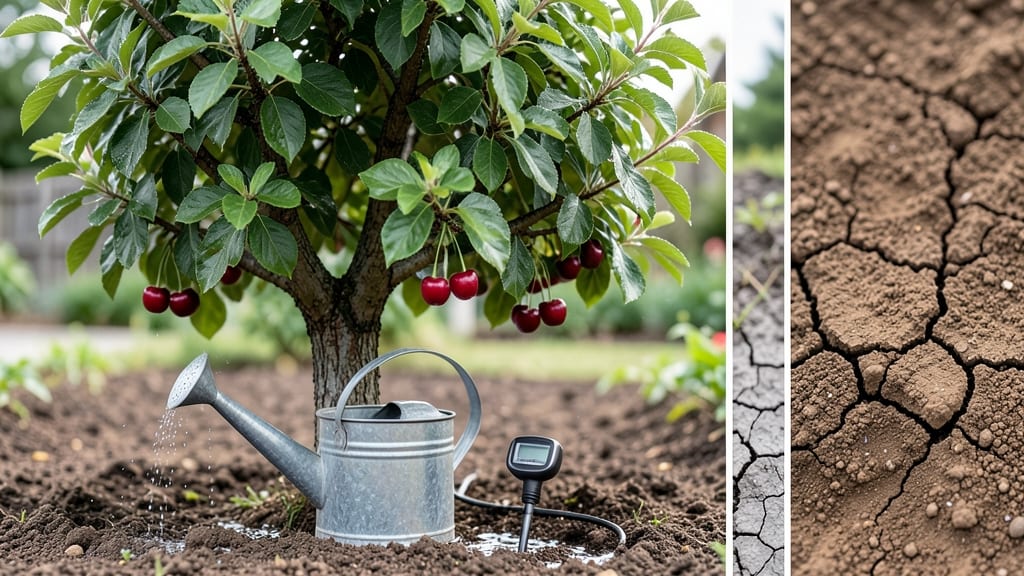
How much water does a cherry tree need? is the question every grower must answer to unlock a healthy, fruit-bearing tree—too little and your harvest suffers, too much and roots rot.
Struggling to keep your cherry tree thriving? Overwatering can drown roots while underwatering stresses the tree—both lead to poor fruit production. Discover the precise watering schedule tailored to your cherry tree’s age, season, and climate to ensure a bountiful harvest every year.
Young saplings need consistent moisture, but mature trees in Zone 6a can handle deeper, less frequent watering once established. Summer heat demands extra attention, while winter dormancy means cutting back.
Learn how to read your tree’s thirst cues, adjust for soil type, and avoid common mistakes that waste water or damage roots. By the end, you’ll know exactly how much water a cherry tree needs to grow strong and fruit well.
Seasonal watering schedule for cherry trees: monthly breakdown by tree age
Watering a cherry tree isn’t one-size-fits-all—it depends on whether you’re nurturing a 1-year-old sapling or a 10-year-old orchard staple. Young trees need frequent, shallow watering to establish roots, while mature trees thrive with deep, infrequent soaks.
The key is balancing moisture without drowning roots or stressing the plant during summer droughts or winter dormancy. Let’s break down the ideal schedule month by month.
First, test your soil’s moisture level before watering. Stick your finger 4-6 inches deep—if it feels dry, it’s time to water. For sandy soil, water more often but less deeply, while clay soil holds moisture longer, requiring less frequent watering.
Always water at the base of the tree in the morning to prevent fungal diseases and reduce evaporation.
For young cherry trees (1-3 years), focus on keeping the soil consistently moist during the first two years. In spring and summer, water deeply once a week, applying 10-15 gallons per session.
Use a garden hose with a soaker nozzle to deliver water slowly at the base. During heatwaves, increase frequency to every 3-5 days but avoid wetting the leaves to prevent powdery mildew.
Mature trees (4-10 years) need less frequent but deeper watering. In spring, water every 10-14 days with 20-30 gallons to encourage root growth and fruit development.
During summer, switch to 7-10 day intervals, increasing to 30-40 gallons per session. Always water in the early morning to minimize evaporation and fungal risks.
Established orchards (>10 years) have deeper root systems and can handle longer dry spells. Water every 14-21 days in spring with 40-50 gallons, and every 10-14 days in summer with <
How to adjust watering for different cherry tree varieties and soil types
Not all cherry trees are created equal when it comes to water needs. Sweet cherries like Bing or Rainier require consistent moisture to develop their signature flavor, while sour cherries such as Montmorency are slightly more drought-tolerant.
Understanding these differences—and how your soil type affects water retention—can mean the difference between a thriving tree and one struggling with root rot or fruit drop.
The soil composition in your yard plays a critical role. Sandy soil drains quickly, requiring frequent watering (every 3-5 days in summer), while clay soil holds moisture longer, needing water only every 7-10 days.
Even the mulch type matters: Straw mulch breaks down faster and needs replenishing, while wood chips retain moisture longer but may compact over time.
Container-grown cherry trees add another layer of complexity. Their root-bound conditions mean they dry out 3x faster than in-ground trees.
If you’re growing a dwarf variety like Stella in a pot, you’ll need to water daily during heatwaves and monitor soil moisture with your finger—if the top 2 inches feel dry, it’s time to water.
| Variety/Type | Soil Type | Watering Frequency (Summer) | Mulch Recommendation | Special Notes |
|---|---|---|---|---|
| Sweet Cherries (Bing, Rainier) | Sandy | Every 3-4 days (15-20 gallons) | Straw (2-3 inches) | Prone to cracking if underwatered. |
| Sweet Cherries (Bing, Rainier) | Clay | Every 7-10 days (10-15 gallons) | Wood chips (3-4 inches) | Risk of root rot if overwatered. |
| Sour Cherries (Montmorency) | Sandy | Every 5-7 days (10-15 gallons) | Straw or pine needles | More drought-tolerant than sweet varieties. |
| Sour Cherries (Montmorency) | Clay | Every 10-14 days (8-12 gallons) | Wood chips (avoid compacting) | Prefers well-draining clay. |
| Container-Grown (Stella, Lapins) | Any (potted mix) | Daily in heat (2-3 gallons) | Coco coir or peat moss | Check moisture twice daily in summer. |
For young cherry trees (under 3 years old), focus on deep watering to encourage root growth. Use a soaker hose or drip irrigation to deliver water slowly to the root zone, avoiding wetting the leaves to prevent fungal diseases like cherry leaf spot.
Mature trees, on the other hand, benefit from a wide watering radius—spread water out to the drip line (the edge of the tree’s canopy) to mimic natural rainfall patterns.
Pro tip: Test your soil’s moisture level by sticking your finger 4-6 inches deep. If it feels dry, water thoroughly until moisture reaches 12 inches down. In container gardens, lift the pot—if it’s light, the tree needs water.
Adjust your schedule based on weather forecasts: reduce watering if rain is expected, but increase it during heatwaves or drought conditions.
Remember, mulching isn’t just decorative—it’s a game-changer for water retention. A 3-inch layer of mulch can reduce water evaporation by up to 30%. For sandy soil, opt for organic mulch like shredded leaves or grass clippings, while wood chips work best for clay-heavy soils.
Just keep mulch 6 inches away from the tree trunk to prevent rot.