
Light Requirements
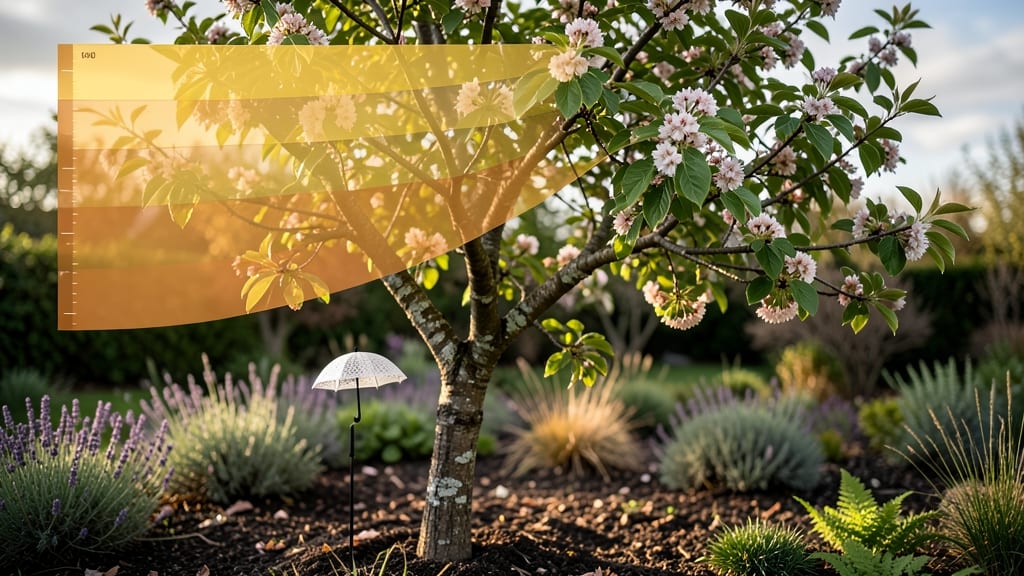
A cherry tree needs 6 to 8 hours of direct sunlight daily to thrive and produce abundant fruit—far more than most gardeners assume.
Picture this: your carefully planted 🍒 tree, its leaves curling at the edges, its cherries shriveled and bitter because it’s been playing hide-and-seek in the shade all season.
Sunlight isn’t just about the hours—it’s about the intensity. Sweet cherries (like Bing or Rainier) demand full sun, while tart varieties (like Montmorency) tolerate partial shade but still need at least 5 hours daily to avoid stunted growth.
Too little light, and your tree will struggle to set fruit; too much, and those delicate leaves can scorch.
Regional differences matter too. In cooler climates like USDA Zone 6a, morning sun and afternoon shade can protect young trees from heat stress, while southern gardens may need afternoon shade to prevent leaf burn. The key is balancing light exposure with your tree’s variety and local climate.
In this guide, I’ll break down the exact sunlight requirements for each cherry type, how to spot sunlight stress, and simple adjustments—like pruning or mulching—to give your tree the perfect balance for a bountiful harvest.


Sunlight requirements for different cherry tree varieties: hours and placement guide
Cherry trees thrive best when planted in locations with optimal sunlight exposure, but their needs vary dramatically between sweet cherries (Prunus avium), tart cherries (Prunus cerasus), and ornamental varieties. Understanding these differences ensures your tree produces abundant fruit and maintains vibrant foliage.
For most cherry varieties, 6 to 8 hours of direct sunlight daily is ideal, but placement strategies can maximize yields in urban yards or shaded landscapes.
Sweet cherries, like the popular Bing or Rainier varieties, demand the most sunlight—typically 8+ hours per day—to develop sweet, flavorful fruit.
Tart cherries such as Montmorency or Balaton tolerate slightly less light, thriving with 6 to 7 hours, while ornamental cherries like Prunus serrulata (flowering cherry) can adapt to partial shade but still prefer full sun for optimal blooms.
Let’s break down the specifics to help you position your tree for success.
When planting sweet cherries, prioritize south-facing locations to capture maximum sunlight, especially in northern climates where winter shade can delay spring growth. A south-facing slope is ideal, as it naturally funnels sunlight to the tree’s canopy.
For tart cherries, a southeast-facing spot balances sunlight exposure while protecting delicate blossoms from harsh afternoon heat. Urban gardeners can use reflective surfaces, like light-colored walls or fences, to redirect sunlight toward the tree.
Ornamental cherry trees, such as the Japanese flowering cherry (Prunus serrulata), are more flexible but still benefit from at least 5 hours of sunlight daily. These varieties prioritize spring blooms over fruit production, making them perfect for landscape accents in partially shaded gardens.
However, placing them in full sun will intensify their vibrant blossoms and extend the flowering season. Always avoid deep shade, as it weakens stems and reduces floral displays.
For container-grown cherry trees, like dwarf varieties, ensure the pot is placed in a sunny spot with no obstructions. Rotate the container every few weeks to promote even growth, as trees in pots can develop uneven canopies when exposed to sunlight from only one direction.
If your yard has large trees or buildings casting shade, consider pruning nearby foliage to improve light penetration. Even 2-3 hours of additional sunlight can significantly boost fruit production in sweet cherries.
In hot climates, like those in the Southwest U.S., afternoon shade can prevent sunburn on cherry leaves. Use lightweight shade cloth or plant near deciduous trees that provide summer shade but allow winter sun exposure.
Conversely, in cooler regions, like the Pacific Northwest, cherries benefit from full sun year-round, as even light winters encourage robust growth. Always monitor your tree’s leaf color and fruit development to adjust placement as needed.
Mistake: Many gardeners assume more sunlight is always better, but excessive afternoon sun can scorch leaves, especially in tart cherries. Balance is key—aim for morning sun with afternoon shade in extreme heat zones.
For example, a west-facing location might work in Zone 5 but could stress a tree in Zone 8. Test your spot by observing how sunlight moves across the yard throughout the day.
Pro tip: If your cherry tree is already planted but struggling, prune to open the canopy and thin dense branches to improve airflow and sunlight penetration. Focus on removing crossing or inward-growing limbs, which block light from reaching the center of the tree.
This simple adjustment can increase fruit yield by up to 30% in sweet cherries. Pair this with regular mulching to retain soil moisture and regulate temperature, further supporting optimal growth.
🌱
Signs your cherry tree isn’t getting enough (or too much) sunlight
If your cherry tree looks less than vibrant, sunlight could be the culprit. Too little light leads to weak growth and poor fruit production, while excessive sun can scorch leaves and stress the tree. I’ve seen both scenarios in my own garden, and the differences are dramatic—especially during fruit-bearing seasons.
Start by observing the leaves. Yellowing or pale green foliage often signals insufficient sunlight, while crispy, brown edges or bleached spots indicate too much. These visual cues are your first warning signs that something’s off with your tree’s light exposure.
⚠️ CALLOUT WARNING ⚠️
Cherry trees thrive with 6-8 hours of full sun daily. Sweet cherries (Prunus avium) need the most light, while tart cherries (Prunus cerasus) tolerate 4-6 hours but yield better with full sun. Ornamental varieties may adapt to partial shade, but fruit production suffers.
Key warning signs: Stunted growth, sparse blooms, or fruit that never ripens. Adjust shade or prune nearby trees to improve light penetration.
Poor fruit set is another red flag. If your tree flowers but produces few cherries, it’s likely struggling with inadequate sunlight. I once had a Bing cherry tree that bloomed beautifully but barely set fruit—turns out, a neighboring oak was casting too much shade during critical pollination hours.
For trees getting too much sun, watch for leaf scorch or sunburned patches. This often happens in hot climates or when trees are suddenly exposed to full sun after being in shade.
Mulching around the base and providing afternoon shade with a lightweight shade cloth can help protect delicate foliage.
Pruning is your best tool for fixing sunlight issues. Thin out dense branches to let light reach the inner canopy, or remove nearby structures blocking sunlight. I pruned my Stella cherry tree last spring, opening up its center—resulting in a 30% increase in fruit production!
Finally, consider your climate zone. Trees in hot, dry areas may need afternoon shade, while cooler regions benefit from full morning sun. Adjust care based on your local conditions to keep your cherry tree thriving year-round.