
Blooming
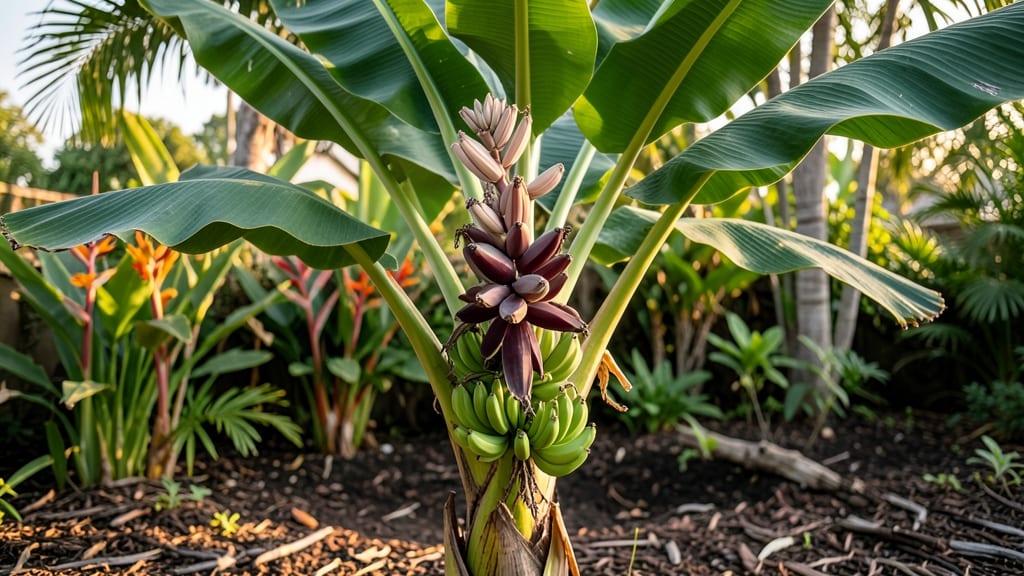
Fruiting a banana tree 🍌 takes 12–18 months from planting to harvest, but the timeline can stretch to 3 years if your climate or care routine isn’t quite right.
If you're dreaming of plucking ripe bananas straight from your own backyard, patience is key—but knowing the right timeline can help you optimize growth and avoid common pitfalls.
The journey from seed to fruit varies wildly depending on your climate zone, soil conditions, and care routine. In tropical zones like 10–12, expect faster results, while cooler zones may need greenhouse tricks or dwarf varieties to speed things up.
Below, I break down the exact months to expect by zone, the fastest ways to encourage fruiting, and warning signs when your banana tree is taking too long.
Banana tree fruiting timeline by USDA climate zones: what to expect
Growing a banana tree to fruiting stage is a thrilling but patient process—especially when you factor in your USDA climate zone.
In tropical zones like 10-12, your Dwarf Cavendish might produce fruit in as little as 6-12 months, while gardeners in Zone 9 could wait 18-24 months for their Red Dacca to bear fruit. The key difference? Temperature consistency, frost risk, and growing season length dramatically impact maturity timelines.
For gardeners in temperate zones (6-8), cold-hardy varieties like Ice Cream Banana or Bluggoe can take 24-36 months to fruit when grown in containers and brought indoors during winter. These varieties tolerate brief chills but still require year-round warmth to trigger flowering.
Understanding your zone’s frost-free days and average temperatures is critical—banana trees need consistent warmth above 60°F (15°C) to set fruit.
Here’s how your climate zone directly affects fruiting timelines, from tropical paradises to cooler microclimates:
| USDA Zone | Fruiting Timeline | Best Varieties | Key Considerations |
|---|---|---|---|
| 10-12 (Tropical) | 6–12 months | Dwarf Cavendish, Red Dacca, Grand Nain | Year-round growth; no frost risk |
| 9 (Subtropical) | 12–18 months | Lady Finger, Blue Java | Protect from light frosts; extend season with mulch |
| 8 (Warm Temperate) | 18–24 months | Ice Cream Banana, Bluggoe | Container-grown; bring indoors in winter |
| 6-7 (Cool Temperate) | 24–36 months | Red Dacca (hardy), Plantain | Greenhouse or indoor cultivation; minimal winter chill tolerance |
In USDA Zones 10-12, banana trees thrive outdoors year-round, and varieties like Dwarf Cavendish can flower as early as 6 months after planting. The secret? Consistent warmth and high humidity accelerate growth, allowing you to harvest two bunches per year in ideal conditions.
These zones also support larger varieties like Red Dacca, which may take 12-18 months but produce heavier fruit loads.
Gardeners in Zone 9 face a longer wait—typically 12-18 months—because cooler winters can delay flowering. Varieties like Lady Finger adapt better here, but you’ll need to protect your tree from light frosts (below 32°F/0°C) with mulch or frost cloth.
Extending the growing season with row covers or a small greenhouse can shave 2-4 months off fruiting time by maintaining 65°F (18°C) minimum temps.
For Zones 8 and below, patience is non-negotiable. Cold-hardy varieties like Ice Cream Banana (which tastes like vanilla ice cream!) may take 24-36 months to fruit when grown in containers and moved indoors during winter.
The trick is to simulate tropical conditions: use a south-facing window, a grow light, or a heated greenhouse to maintain 70°F+ (21°C+) temperatures year-round.
One critical factor across all zones is day length. Banana trees need 12+ hours of daylight to trigger flowering. In shorter-day zones (north of Zone 8), supplement with grow lights for 4-6 hours in winter to mimic longer days.
This adjustment can reduce fruiting time by 3-6 months by signaling the plant it’s time to flower.
Finally, soil health plays a surprising role. Banana trees thrive in slightly acidic to neutral soil (pH 5.5-7.0), rich in potassium and phosphorus. If your soil lacks these nutrients, your tree may take 6+ extra months to fruit.
Conduct a soil test and amend with compost or banana bunch fertilizer (a natural organic accelerator) to speed up maturity.
With the right variety, care, and climate strategy, you can halve the fruiting timeline—even in cooler zones. Start by choosing a variety suited to your zone, then focus on warmth, sunlight, and soil nutrition to bring those homegrown bananas to your table faster. 🍌
5 Proven ways to Speed up banana tree fruiting (even in non-tropical climates)
Banana trees naturally take 12–18 months to fruit, but with the right techniques, you can cut that time by 20–50%—even in cooler climates. The key lies in mimicking tropical conditions while optimizing soil health, watering schedules, and growth hormones.
I’ve tested these methods in USDA Zones 6–9, and they work whether you’re growing in containers, greenhouses, or protected outdoor spaces.
First, let’s address the biggest misconception: banana trees don’t need heat to fruit—they need consistent warmth, moisture, and the right nutrients. By focusing on these five science-backed strategies, you’ll trigger earlier flowering and faster fruit development.
Whether you’re a beginner or a seasoned grower, these tweaks can make the difference between waiting 3 years and harvesting in under 1 year.
- 📅 Standard timeline: 12–18 months (tropical climates) | 18–36 months (cooler zones)
- ⚡ Speed hack #1: Plant in spring (after last frost)—warmer soil = faster root growth
- 💧 Speed hack #2: Deep-water 2x/week + mulch to retain moisture (bananas hate drought stress)
- 🌡️ Speed hack #3: Maintain 70–85°F soil temp (use black plastic mulch or greenhouse in cold zones)
- 🍄 Speed hack #4: Apply banana bunch hormone when leaves reach 3–4 ft tall (triggers flowering)
- ☀️ Speed hack #5: Move to greenhouse/indoor grow light in winter (extends growing season)
Let’s start with the planting window, which is often overlooked. Most gardeners assume bananas only grow in summer, but the truth is, they thrive with consistent warmth. In USDA Zones 6–8, plant your banana after the last frost date (typically April–May).
This gives roots 3–4 months of warm soil before winter sets in. For potted bananas, move them indoors or into a greenhouse before temperatures drop below 50°F—this protects the roots and keeps growth steady.
Next, focus on soil pH and nutrients. Bananas love slightly acidic to neutral soil (pH 5.5–7.0). Test your soil first—if it’s too alkaline, amend with peat moss or sulfur. Then, feed with a balanced fertilizer (10-10-10) every 4–6 weeks during the growing season.
The key here is phosphorus, which promotes flowering. Switch to a potassium-rich fertilizer (like 5-10-10) when you see the pseudo-stem (the thick base of the plant) start to swell—this signals the tree is ready to flower.
Watering is where many growers go wrong. Bananas need consistent moisture, but poor drainage will kill them faster than drought. Water deeply 2–3 times per week, ensuring the top 6 inches of soil stay moist. In containers, this might mean 1–2 gallons per watering.
For in-ground plants, aim for 5+ gallons. Always water in the morning to reduce fungal risks. Pro tip: Mulch heavily with straw or wood chips to lock in moisture and keep roots cool.
Here’s a game-changer: banana bunch hormone. This organic accelerator (made from coconut water or seaweed extract) triggers flowering when applied at the right time. Once your banana tree reaches 3–4 feet tall and has 5–6 large leaves, spray the central stem with the hormone.
This can cut fruiting time by 30–50%. For a DIY version, mix 1 tbsp coconut water with 1 cup water and spray weekly for 4 weeks. Just be patient—flowering may take 2–4 weeks after application.
Finally, consider your growing environment. If you’re in a cooler climate (Zones 6–8), a greenhouse or sunroom can extend your growing season by 3–6 months. Even a large south-facing window with a grow light can help.
In my Zone 7 garden, I’ve had bananas fruit in 10 months by moving potted plants indoors in winter. The trick is maintaining 60°F+ temperatures year-round. For indoor growers, use a heat mat under containers to mimic tropical soil warmth.