
Pests and Diseases
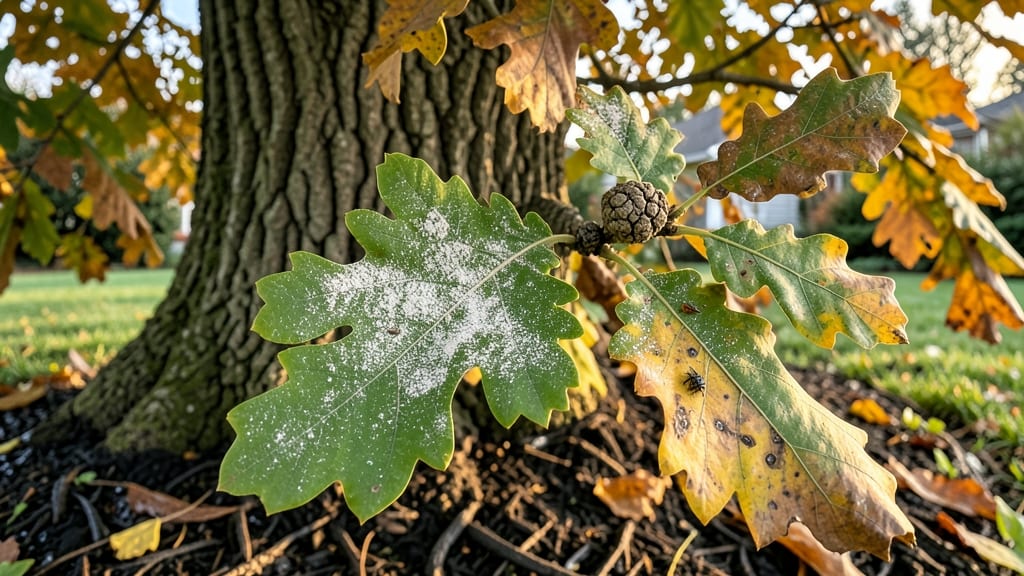
That fuzzy green growth on oak tree leaves isn’t just dirt—it’s either harmless lichen or a fungal blight that could weaken your tree. 🌿 I’ve spent years tracking what grows on my mature oak, and the difference between lichen (which just loves moisture) and powdery mildew (which signals trouble) is key to keeping your tree healthy.
Lichen looks like tiny gray or green tufts and won’t hurt your tree, but fungal growth—like powdery mildew—appears as white or gray powdery patches that spread quickly. The real giveaway?
Healthy leaves with lichen stay firm, while infected leaves often yellow or drop prematurely. I’ve seen both on the same tree, so knowing the difference saves time and stress.
For lichen, you can gently brush it off when leaves dry out, but fungal blight needs prevention: improve airflow around the tree, water at the base (not overhead), and apply neem oil if you spot early signs.
A monthly check during spring and fall keeps both issues in check before they take over.
Oak trees handle lichen like a champ, but fungal infections need quick action. The key is acting before the growth spreads—whether you’re dealing with moss, mildew, or something in between. Let’s get your tree back to its strong, leafy self.
Root Causes Behind Leaf Growth
Understanding why unusual growth appears on oak tree leaves starts with recognizing the interplay between environmental stress, microbial activity, and tree health. Unlike harmless natural variations (like seasonal discoloration), abnormal growths—whether fungal, bacterial, or insect-related—signal deeper issues.
Below, we break down the key triggers behind these disturbances, from microscopic invaders to broader ecological factors.
Fungi thrive in moist, shaded conditions and often appear as fuzzy patches, powdery coatings, or crusty growths on oak leaves. These pathogens disrupt the leaf’s ability to photosynthesize, leading to stunted growth or premature leaf drop.
- Anthracnose (Colletotrichum spp.) - Why it happens: This fungal disease exploits wounded leaves (from hail, pests, or physical damage) and spreads via splashing rain or windborne spores.
Oak trees weakened by drought or poor soil nutrition are especially vulnerable. - Visual clues: Dark, sunken lesions with pink or salmon-colored spore masses (especially on younger leaves). - Actionable fix: Prune infected branches in dry weather, apply copper fungicide (follow label rates), and improve air circulation around the tree.
- Powdery Mildew (Erysiphe spp.) - Why it happens: Fungal spores germinate in humid conditions (60–80% humidity) and form a white, powdery film on leaf surfaces.
Unlike blights, powdery mildew doesn’t kill tissue outright but blocks sunlight, weakening the leaf. - Visual clues: White, talcum-like patches on upper leaf surfaces; leaves may curl or yellow. - Actionable fix: Reduce overhead watering (water at the base instead) and spray with neem oil or sulfur-based fungicide (reapply every 7–10 days).
- Leaf Spot Fungi (e.g., Cercospora, Septoria) - Why it happens: These fungi infect through stomata (leaf pores) and thrive in prolonged leaf wetness (e.g., morning dew on dense canopies).
Poor sanitation (leaving fallen leaves) worsens outbreaks. - Visual clues: Brown or black spots with yellow halos; spots may have tiny black dots (fungal fruiting bodies). - Actionable fix: Rake and remove fallen leaves in autumn, and apply baking soda spray (1 tbsp baking soda + 1 gallon water + a drop of dish soap) as a preventative.
Some "growths" aren’t fungi at all but insect byproducts or galls—abnormal plant tissue formed in response to insect feeding or egg-laying. While often harmless to the tree’s long-term health, severe infestations can stress oaks.
- Gall Wasps (e.g., Andricus spp.) - Why it happens: Female wasps inject eggs into leaf tissue, triggering the oak to grow hard, swollen galls (often round or spiny) as a defense.
These galls don’t spread but can distort leaf shape. - Visual clues: Raised, warty growths (1/4"–1" wide) on leaf edges or veins; may resemble tumors. - Actionable fix: Prune heavily infested branches in late winter/early spring (before wasps emerge). Avoid pesticides—wasps are beneficial pollinators for other plants.
- Scale Insects & Mealybugs - Why it happens: These sap-sucking insects excrete honeydew, a sticky residue that fosters sooty mold (a black, fuzzy fungus).
While the mold itself isn’t harmful, it blocks light and weakens the tree. - Visual clues: Sticky leaves, black mold patches, and tiny white/cottony clusters (mealybugs) or shell-like bumps (scale). - Actionable fix: Blast off insects with water spray (disrupts their protective coatings), or apply horticultural oil in dormant season.
Not all growths are biological. Oak trees under stress may produce unusual tissue responses, such as fawn spots, edge necrosis, or even tumor-like growths, due to:
- Nutrient Deficiencies (e.g., magnesium or zinc deficiency) → Interveinal chlorosis (yellowing between veins) or stunted leaf growth.
- Soil Compaction or Poor Drainage → Root asphyxiation leads to leaf curling and abnormal tissue as the tree struggles to transport water.
- Herbicide Drift or Air Pollution → Bleached or distorted leaf edges, mimicking disease symptoms.
Actionable fix:
- Test soil pH/nutrients (aim for 6.0–7.0 pH for oaks) and amend with compost or chelated iron if deficient.
- Aerate compacted soil with a garden fork in early spring.
- Avoid broadleaf herbicides near oaks (even "organic" vinegar sprays can cause damage).
While some growths are harmless (e.g., lichen, which doesn’t harm the tree), aggressive spread, rapid leaf drop, or oozing sap signal a serious issue.
If you spot: - Large, spreading lesions (fungal blight). - Wilting or blackened stems (bacterial infection). - Dieback in multiple branches (possible oak wilt or hypoxylon canker).
Act fast: Consult a certified arborist or submit samples to your local cooperative extension service for diagnosis. Early intervention can save your oak from decline.
Quick Fixes for Leaf Growth Issues
When you spot unusual growth on your oak tree leaves—whether it’s fuzzy spots, blackened patches, or strange discoloration—acting fast can save your tree. Below are practical, step-by-step solutions tailored to the most common causes, plus prevention tips to keep your oak healthy long-term.
Fungal infections like anthracnose, powdery mildew, or leaf blight thrive in damp conditions. Here’s how to tackle them:
🔥 Remove Infected Leaves Immediately
- Why? Fungi spread quickly—don’t let them multiply.
- How?
- Wear gloves and prune shears (clean with rubbing alcohol first).
- Snip off only the affected leaves (don’t over-prune—this stresses the tree).
- Drop them in a sealed bag (not your compost) to prevent spores from spreading.
👨🍳 Apply Fungicide (Organic or Chemical)
- Best options:
- Neem oil (1 tsp + 1 quart water + a drop of dish soap) – Spray evenly on both leaf sides.
Reapply every 7–10 days until new growth appears. - Copper fungicide (like Bordeaux mixture) – Effective for anthracnose but use only in dry weather (it can burn leaves if too humid). - Baking soda spray (1 tbsp baking soda + 1 quart water + a few drops of soap) – A gentle, DIY option for powdery mildew.
🌡️ Improve Airflow & Reduce Moisture
- Thin out dense branches to let sunlight and air circulate.
- Water at the base (not overhead) to keep leaves dry.
- Avoid mulch piles touching the trunk—this traps moisture.
✨ Pro Tip: Early morning is the best time to spray—leaves stay wet longer, boosting fungicide effectiveness.
If insects (like scale, mites, or caterpillars) are the culprit, they’ll leave honeydew, webbing, or chewed edges. Here’s how to evict them:
🔪 Blast Off Pests with Pressure
- Strong water spray (hose on gentle setting) can knock off soft-bodied pests like aphids or spider mites.
- Do this in the early morning—pests are sluggish then.
🍳 Use Insecticidal Soap or Oil
- Insecticidal soap (like Safer® Brand) – Spray directly on pests (not just leaves). Reapply every 5–7 days.
- Horticultural oil (dormant oil) – Best for scale insects or overwintering eggs.
Apply when temps are above 40°F but below 90°F.
🎯 Introduce Natural Predators
- Ladybugs (buy them online!) – Devour aphids and mites.
- Parasitic wasps – Target caterpillars and sawfly larvae.
- Bird feeders – Attract robins and blue jays, which snack on pests.
💡 Pro Tip: If you see yellowing leaves + sticky residue, it’s honeydew—wipe it off with a damp cloth to prevent sooty mold (a secondary fungus).
If the "growth" is just sun scorch, nutrient deficiency, or environmental stress, the fix is simpler:
🥗 Feed Your Oak the Right Way
- Test soil pH (oaks prefer slightly acidic, 5.0–7.0). Amend with sulfur (to lower pH) or lime (to raise it).
- Fertilize in early spring with a slow-release, oak-specific fertilizer (high in iron and manganese if leaves are yellow between veins).
🌞 Shield from Harsh Conditions
- Morning sun? Prune to reduce direct sunlight on thin leaves.
- Drought stress? Deep-water once a week (1–1.5 inches per week) during dry spells.
- Compacted soil? Aerate the root zone with a manual soil aerator or gypsum (breaks up clay).
✨ Pro Tip: Mulch properly—keep it 2–4 inches deep and 6 inches away from the trunk to retain moisture without suffocating roots.
| Problem | Prevention Step | When to Do It |
|---|---|---|
| Fungal infections | Prune for airflow + water at the base | Spring & Fall |
| Pest infestations | Install yellow sticky traps (early season) | April–May |
| Nutrient deficiency | Apply compost or organic fertilizer | Early Spring |
| Sun scorch | Thin canopy to allow dappled shade | Late Winter (dormant season) |
Final Reminder: Always monitor your tree weekly after treatment. If symptoms worsen in 2–3 weeks, consult a certified arborist—some issues (like oak wilt) require professional intervention.
Now grab your tools and get that oak back to its glorious, pest-free green! 🌳💚
Frequently asked questions about oak tree leaf growth
Is lichen on my oak tree leaves harmful?
No, lichen is completely harmless! It’s actually a symbiotic organism made of algae and fungi that thrives on moisture and shade. You can safely brush it off during dry periods if you prefer a cleaner look, but it won’t damage your tree.
How can I tell if the growth is fungal or just dirt?
Fungal growth appears as white powdery patches (powdery mildew), dark spots with yellow halos (leaf spot), or fuzzy textures (anthracnose). Dirt typically washes off easily and doesn’t spread. If you see these symptoms, it’s time for treatment.
When should I be concerned about leaf growth?
Act quickly if you notice rapid spread, leaf yellowing or dropping, or oozing sap—these are red flags for serious fungal infections or pests. Early intervention with fungicides or pruning can prevent long-term damage to your oak.
Can I use household items to treat fungal growth?
Yes! A baking soda spray (1 tbsp baking soda + 1 quart water + soap) works well for powdery mildew, and neem oil (1 tsp per quart of water) is effective against many fungal issues. Just apply in the early morning for best results.
Why does my oak tree get more growth in wet seasons?
Fungi and moss thrive in high humidity and prolonged moisture—perfect conditions for wet seasons. To prevent issues, water at the base (not overhead) and improve airflow by pruning dense branches during dry periods.