
Pruning
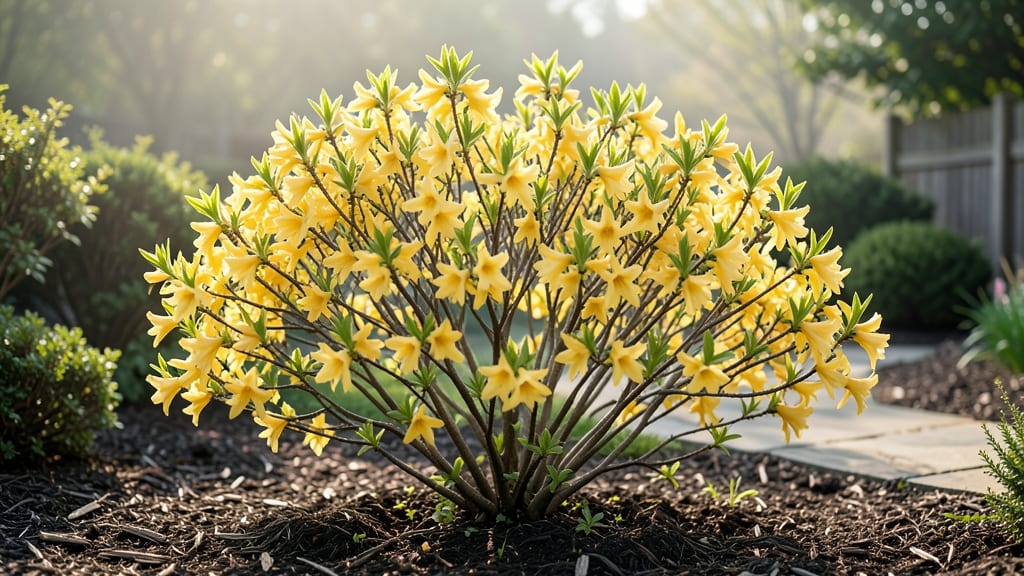
Creating a forsythia tree form transforms your garden from ordinary to showstopping, with its bold yellow blooms arching like nature’s own chandelier. 🌸 I’ve shaped mine into a graceful standard tree, and the difference in winter structure—plus those early spring bursts of color—makes it worth every pruned branch.
The key lies in understanding how to guide its natural growth while keeping it healthy, whether you want a towering focal point or a low, sprawling border.
Forsythias thrive in three main forms: the classic standard tree (single trunk with layered branches), a multi-stem shrub (fuller, bushier look), or even an espaliered wall climber for vertical drama. My favorite? The standard tree—it adds height and structure to small gardens while still delivering those eye-catching blooms.
Prune in late winter or early spring before new growth starts, and always cut just above a bud or branch junction to encourage strong regrowth.
What you’ll end up with is a year-round garden statement piece—sturdy branches in winter, vibrant blooms in spring, and lush green foliage in summer. Pair it with early bloomers like dwarf daffodils or heuchera for a cohesive look, and place it where its arches frame a path or doorway.
The best part? Forsythia’s forgiving nature means even pruning mistakes won’t ruin the show.
Works for any landscape, from formal gardens to casual cottage yards. Once you’ve shaped it, you’ll wonder why you didn’t start sooner—it’s that easy to turn a shrub into a star. Let’s get pruning!
📚 In This Guide
- What you need
- Instructions
- Tips and common mistakes
- Wrapping up and next steps
What you need
- ● Pruning shears: Bypass pruners (sharp, clean, and 5-7 inch blades for precision cuts). Pro tip: 💡 Sanitize with rubbing alcohol before and after use to prevent disease!
- ● Loppers: 8-10 inch handles for thicker branches (up to 2 inches in diameter).
- ● Hand saw: Pruning saw with 7-8 teeth per inch for stubborn, woody stems.
- ● Gloves: Heavy-duty gardening gloves (cut-resistant for safety).
- ● Ladder: Sturdy, extendable ladder (12-16 ft) if your forsythia exceeds 6 feet.
- ○ Disposable pruning bags: 10-gallon capacity to collect clippings (optional but tidy!).
- ● Weather: Prune on a dry, overcast day (avoid frost or extreme heat).
- ○ Safety gear: Safety glasses (optional but recommended for debris-prone areas).
- ● Clean workspace: Lay down a tarp or old sheet to catch fallen leaves/clippings.
- ● Reference: Sketch or photo of your desired forsythia tree form (e.g., multi-stemmed shrub, arched standard, or espalier).
- ● Pruning sealant: For large cuts (1+ inch diameter) to prevent disease entry.
- ● Tree tie or twine: To secure branches during training (e.g., for espalier shapes).
- ● Spray bottle with water: To dampen saw blades and reduce dust.
- ● Notebook: Track pruning dates and growth patterns for future reference.
Step-by-Step guide to shaping a forsythia tree for year-round structure
Here's how to transform a forsythia from wild shrub to sculpted tree with lasting beauty.
🪴 Step 1: Select and Prepare Your Forsythia Base
Start with a healthy, established forsythia shrub that has multiple strong stems emerging from the base. Look for a central leader—one upright stem that naturally stands taller than the others. This will become your tree trunk. If your shrub lacks a dominant stem, choose the straightest, most vigorous one and train it upward.
Prune away any competing stems at ground level using clean, sharp pruners. Make cuts just above a outward-facing bud to encourage new growth in the right direction. The goal is to create a single trunk with lateral branches emerging above. Forsythias bloom on old wood, so avoid heavy pruning during the growing season—wait until late winter or early spring before buds swell.
✂️ Step 2: Establish the Trunk and Main Branches
Once you've identified your central leader, begin shaping the trunk by removing any lower branches that grow below your desired trunk height. Aim for a clear trunk of at least 3-4 feet before the first major branch. Use a 3:1 ratio when cutting: remove 3 parts of old growth for every 1 part of new growth you want to encourage.
For the first year, focus on developing 3-5 main scaffold branches. These should emerge from the trunk at 45-60 degree angles and be spaced evenly around the trunk. Select branches that are well-attached and show strong growth potential. If needed, gently tie them to stakes to guide their growth direction until they establish properly.
☀️ Step 3: Refine the Canopy for Seasonal Interest
After establishing your main branches, shape the canopy to create graceful arches that will showcase the forsythia's signature yellow blooms. In late winter, before buds break, prune to encourage an open, airy structure. Remove any crossing branches or those growing inward to prevent future rubbing and disease.
To create natural arches, select vigorous lateral branches and gently bend them outward while they're still flexible. Secure them with soft plant ties if needed, but avoid being too aggressive—forsythias respond well to natural shaping. The goal is to create a multi-layered canopy where sunlight can penetrate to the lower branches, ensuring blooms throughout the tree's structure.
🌿 Step 4: Maintain Year-Round Structure and Bloom
Forsythias bloom on old wood, so all major pruning should occur after flowering. In late winter or early spring, remove any dead or weak branches and thin out crowded growth to improve air circulation. For a tree form, continue to remove any suckers that emerge from the base to maintain your single trunk.
Light annual pruning keeps the tree's natural shape while encouraging abundant blooms. Focus on removing about 10-20% of the previous year's growth each year to maintain vigor. The result should be a tree with a clear trunk, well-spaced branches, and a canopy that arches gracefully—showcasing those vibrant yellow flowers against a backdrop of glossy green foliage year-round.
Tips & tricks for perfect forsythia tree form
Transforming a forsythia into a graceful tree requires patience and precision—here's how to elevate your pruning game.
Pruning Timing: The late winter to early spring window (just before buds swell) is critical for shaping your forsythia tree. This timing ensures you're working with dormant wood while avoiding the risk of cutting off potential blooms. I've learned the hard way that pruning during the growing season can significantly reduce next year's flowers since forsythias bloom on old wood. Mark your calendar for February or March in most climates—this is when forsythias are most responsive to shaping.
Branch Angle Secrets: When establishing your main scaffold branches in Step 2, aim for that 45-60 degree angle from the trunk. This creates natural structural strength while allowing sunlight to reach all parts of the canopy. I use a small protractor tool to verify angles—it's worth the investment for that professional look. Remember, branches growing at sharper angles (less than 45 degrees) are more prone to breaking under snow or wind loads, while those growing too upright (over 60 degrees) can become weak and prone to splitting.
Canopy Architecture: The multi-layered canopy you create in Step 3 should have branches spaced about 6-12 inches apart vertically. This spacing allows sunlight to penetrate to lower branches, ensuring blooms throughout the tree's structure. Think of it like a forest canopy—each layer should have its own light source. I often sketch a simple diagram before pruning to visualize how branches will interact once they mature. This prevents that "bushy" look and creates that elegant, layered appearance.
Tool Maintenance: Your pruners are more important than you might think. Clean and sharpen your pruning tools before each use to make clean cuts that heal properly. Dull blades crush stems instead of cutting cleanly, which can lead to disease entry points. I keep a small file and rubbing alcohol handy for quick maintenance between pruning sessions. Proper tool care means less stress on your plant and better healing responses—your forsythia will thank you with healthier growth and more abundant blooms.
Pro Tips for Forsythia Tree Form
- Transforming a forsythia into a graceful tree requires patience and precision—here's how to elevate your pruning game.
- Pruning Timing: The late winter to early spring window (just before buds swell) is critical for shaping your forsythia tree.
- Branch Angle Secrets: When establishing your main scaffold branches in Step 2, aim for that 45-60 degree angle from the trunk.
Frequently asked questions
Got questions about shaping and caring for your forsythia’s tree form? Here are answers to the most common ones—so you can keep those golden blooms looking their best year after year!
What’s the best time to prune forsythia for a tree-like shape?
Prune forsythia immediately after flowering (late April to early May) to avoid cutting off next year’s blooms. For dramatic tree forms, do a second pruning in late summer (August) to refine shape and encourage denser growth. Never prune in fall or winter—it stresses the plant!
How do I encourage a single-trunk tree form instead of a bushy clump?
Start by selecting 3–5 strong, upright stems in early spring. Remove all other growth at ground level, then tie the chosen stems to a stake for support. Over time, prune lower branches to create a clear trunk. Be patient—it may take 2–3 years to see a defined tree shape!
Can forsythia survive heavy pruning? Will it bloom less?
Forsythia is highly resilient and can handle hard pruning (even back to 12 inches) without permanent damage. However, heavy cuts may reduce blooms that year since flowers form on old wood. For a tree form, gradual shaping (10–20% of growth per year) keeps blooms abundant while refining the structure.
What if my forsythia’s branches are too leggy or sparse?
Leggy growth often means too much shade or over-pruning. Move it to full sun (6+ hours/day) and prune back overly long branches by ⅓ in late summer. For sparse areas, pinch back new growth in spring to encourage bushier side shoots. A light fertilizer (balanced 10-10-10) in early spring can also help.
Are there dwarf forsythia varieties better for small yards or containers?
Yes! Try ‘Little Gold’ (3–4 ft tall) or ‘Spring Glow’ (4–5 ft), both perfect for containers or tight spaces. For a true tree form, grafted varieties like ‘Gold Tassel’ (6–8 ft) are ideal. Pro tip: Dwarf types still need annual pruning to maintain shape!
Wrapping up and next steps
Transforming your forsythia into a stunning, year-round architectural centerpiece is easier than you think! With the right tools, timing, and techniques, you can shape its graceful arches while keeping it healthy and vibrant. Remember, patience and consistency are key—every trim brings you closer to that dreamy, blooming landscape.
Ready to take the next step? Start small:
- 🌱 Observe your tree’s natural growth patterns before pruning.
- 📅 Mark your calendar for late winter/early spring—pruning season!
- 🎨 Sketch a rough design to visualize your ideal form.