
Pruning
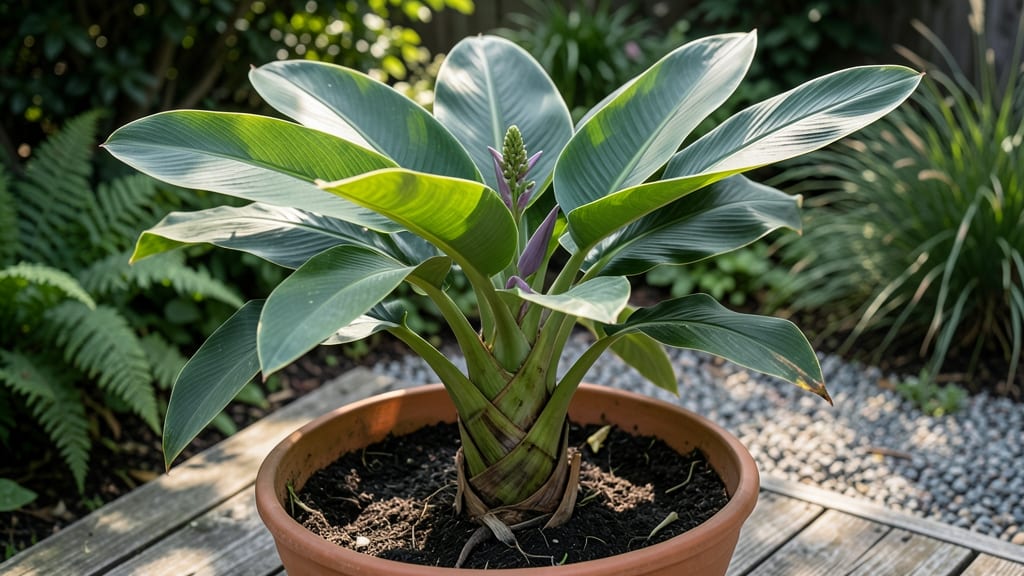
Your dwarf banana tree could stay under 6 feet—if you prune it right. 🌱 I’ve watched mine grow from a curious sapling to a lush, manageable shrub by controlling height through strategic cuts, and the secret isn’t complicated: timing, technique, and a little patience.
Most gardeners overlook how pruning affects both size and fruit production, but once you master it, your banana tree becomes a compact, high-yielding powerhouse.
Sunlight and soil play just as big a role as your pruners. Too much sun or rich soil can send your dwarf variety shooting up like a standard banana tree, while consistent pruning keeps it in check.
I’ve seen ‘Dwarf Cavendish’ reach 4-5 feet with proper care—half the height of its wild cousins—while still producing dozens of fingers. The key is balancing growth hormones by trimming back old fronds before new ones emerge, which signals the plant to focus energy on fruit rather than height.
By late summer, you’ll notice something magical: your tree stays neat, bushy, and productive instead of towering over your patio. The leaves stay vibrant, the trunk thickens, and you get more harvests per season.
Even in small spaces, a well-pruned dwarf banana thrives—no more apologizing for a banana tree that’s outgrown its welcome. The best part? You’ll never have to choose between size control and fruit again.
This works for containers, in-ground beds, or even indoor setups—just adjust your pruning schedule for seasonal shifts. Whether you’re growing ‘Red Dwarf’ or ‘Ice Cream,’ the same principles apply. Let’s get those fronds under control without sacrificing those sweet, creamy bananas.
Root Causes of Stunted Growth
Understanding why your dwarf banana tree isn’t reaching its expected height starts with examining the hidden factors controlling its growth. Banana trees (especially dwarf varieties like Musa acuminata ‘Dwarf Cavendish’) rely on a delicate balance of genetics, environment, and care.
When something disrupts this balance, growth stalls—often leaving you scratching your head. Let’s break down the top culprits behind a dwarf banana tree’s lack of height, with clear science-backed explanations and actionable insights.
Not all banana trees are created equal—and neither are their growth expectations. Dwarf banana varieties are genetically bred to stay compact, typically maxing out at 10–15 feet (vs. giant varieties like Musa ‘Grand Nain,’ which can tower over 20 feet).
If your tree is struggling to exceed 6–8 feet, it might simply be hitting its natural ceiling.
Why it happens:
- Stunted stature genes (like dwarfing genes in Musa balbisiana hybrids) suppress stem elongation.
- Short pseudostems (the "trunk" made of leaf sheaths) are a hallmark of dwarf varieties—they’re built for compactness, not height.
- Slow-maturing cultivars (e.g., Musa ‘Red Dwarf’) prioritize fruit production over vertical growth.
Actionable fix: ✅ Check your variety—consult a nursery or botanical database to confirm if your "dwarf" banana is a true dwarf or a mislabeled variety. ✅ Embrace the design—dwarf bananas thrive in small spaces (patios, containers) and produce fruit faster than their tall cousins.
Banana trees are heavy feeders, and their roots demand nutrient-rich, well-draining soil to fuel rapid growth. If the soil is lacking, the tree diverts energy to survival instead of height.
Why it happens:
- Nitrogen deficiency 🟡 → Leads to yellowing leaves (chlorosis) and stunted stems. Nitrogen is the growth hormone for vertical expansion.
- Compacted or waterlogged soil 💦 → Roots suffocate, starving the plant of oxygen and nutrients. Bananas hate "wet feet."
- Low potassium or phosphorus 🧪 → Weakens structural development, making stems brittle and slow-growing.
- pH imbalance (ideal: 5.5–7.0) → Too acidic or alkaline soil locks out essential nutrients like magnesium and calcium.
Actionable fix: 🔹 Test your soil—use a DIY kit or send a sample to a lab. Amend with:
- Compost or aged manure (for organic nitrogen).
- Perlite or sand (to improve drainage).
- Balanced fertilizer (e.g., 10-10-10 or banana-specific blend) every 4–6 weeks during growing season.
💡 Pro tip: Dwarf bananas in containers need fresh potting mix annually—old soil depletes nutrients fast!
Banana trees are tropical sun-worshippers, but too little (or too much) light can stunt growth. Temperature swings also play a role—these plants are sensitive to cold and thrive in warmth.
Why it happens:
- Insufficient sunlight (⚠️ <6 hours/day) → Leads to etiolation (long, weak stems stretching toward light). The tree wastes energy searching for sunlight instead of growing strong.
- Extreme heat (🌡️ >95°F/35°C) → Causes leaf scorch and metabolic stress, slowing growth.
- Cold drafts or frost ❄️ → Damages meristem tissue (growth points) at the crown or pseudostem, halting height increase.
- Shade from competing plants → Competes for light, starving your banana of energy.
Actionable fix: 🌞 Position for full sun—place in a sheltered, south-facing spot (or use a greenhouse in cold climates). 🌡️ Monitor temps—keep above 60°F/15°C (use mulch or row covers in winter). 🌿 Prune nearby plants to ensure your banana gets unobstructed light.
Bananas need consistent moisture, but watering mistakes can severely limit growth. Roots need oxygen to absorb nutrients—too much or too little water disrupts this balance.
Why it happens:
- Underwatering 💧 → Leaves curl and wilt, and the tree conserves energy, stunting new growth.
- Overwatering 🌊 → Root rot (Phytophthora fungus) sets in, cutting off nutrient uptake. The tree focuses on survival, not height.
- Inconsistent moisture → Causes stress cycles, where the tree grows in spurts and then halts.
Actionable fix: 💧 Water deeply 2–3 times per week (adjust for climate—drought = more water; humidity = less). 🌱 Use mulch (straw or wood chips) to retain moisture and regulate soil temp. ⚠️ Check drainage—pots should have holes, and garden soil should never pool water.
Pests and pathogens steal nutrients, damage leaves, and weaken the plant’s ability to grow tall.
Common culprits include: - Banana aphids 🐜 → Suck sap, causing yellowing leaves and stunted shoots. - Nematodes 🐛 → Attack roots, reducing water/nutrient absorption. - Fungal diseases (e.g., Sigatoka leaf spot) → Discolor leaves, limiting photosynthesis.
Why it happens:
- Weakened immune system (from poor care) makes the tree vulnerable.
- Overcrowded planting spreads pests/diseases faster.
- Lack of fungicide/neem oil prevents outbreaks.
Actionable fix: 🛡️ Inspect leaves weekly for holes, spots, or sticky residue (aphid honeydew). 🌿 Spray neem oil (natural pesticide) every 2 weeks as a preventative. 🔪 Remove infected leaves immediately to stop spread.
Dwarf bananas in small pots or root-bound conditions will stop growing when their roots outgrow their space. Unlike tall varieties, dwarfs are more sensitive to root restriction.
Why it happens:
- Potted roots circle the container (🌀 root-bound), competing for nutrients instead of expanding.
- Shallow pots limit deep root growth, which anchors the plant and fuels height.
- Lack of repotting (every 1–2 years) starves the plant of fresh nutrients.
Actionable fix: 🏺 Upgrade pots gradually—move to a 5–10 gallon container if your banana is mature. 🌱 Repot in spring with fresh, well-draining mix (coconut coir + perlite). 💡 Pro tip: If repotting isn’t an option, top-dress with compost to feed roots without disturbing them.
How to Keep Your Dwarf Banana Tree Compact
Now that you understand why your dwarf banana tree might be growing taller than expected, it’s time to take action! With the right techniques, you can maintain its ideal height while keeping it healthy and productive.
Below are practical, step-by-step solutions tailored to common causes—plus prevention tips to avoid future struggles.
🔥 Cause: Lack of Pruning (Uncontrolled Growth)
Fix: Prune Strategically to Encourage Bushiness Dwarf banana trees grow best when pruned to redirect energy into lateral shoots rather than just height. Here’s how:
- 🍳 Identify the Right Time
- Prune in early spring (before new growth) or late summer (after fruiting).
- Avoid heavy pruning in winter—it stresses the plant.
- 👨🍳 Trim the Leader Shoot
- Locate the central stem (leader shoot)—this is the main vertical growth.
- Cut it back by ⅓ to ½ of its height using clean, sharp pruners (sterilized with rubbing alcohol).
- Pro Tip: 💡 If the leader is too long, make the cut just above a leaf node (where leaves grow out) to encourage branching.
- 🥘 Encourage Side Shoots
- After trimming the leader, your tree will send out lateral shoots from the base or lower stem.
- Let 2-3 of the strongest side shoots grow while pruning back weaker ones to 6-8 inches tall.
- ⏰ Maintain Regular Maintenance
- Every 4-6 weeks, check for new vertical growth and prune aggressively to keep the tree under 5-6 feet.
- Remove suckers (pups) unless you want a new plant—these drain energy from the main tree.
Fix: Adjust Fertilizer for Compact Growth
| Issue | Solution | Prevention Tip |
|---|---|---|
| Too much nitrogen | Switch to a balanced fertilizer (e.g., 10-10-10 or 8-3-9) with lower nitrogen. | 🎯 Test soil every 3 months—bananas thrive in slightly acidic (pH 5.5-6.5) soil. |
| Over-fertilizing | Reduce feeding to every 6-8 weeks in growing season; none in winter. | ✨ Use compost or banana peels for organic slow-release nutrients. |
| Lack of potassium | Add potassium-rich fertilizer (like wood ash or banana fertilizer) to strengthen stems. | 💪 Mix in crushed eggshells for calcium to prevent weak, leggy growth. |
Fix: Optimize Light Exposure Without Burning Leaves
- 🔥 Move to a Sunnier Spot
- Dwarf bananas need 6+ hours of direct sunlight daily.
- If indoors, place near a south-facing window or use grow lights (12-14 hours/day).
- 🌡️ Gradual Transition (Avoid Shock)
- If moving from shade to sun, acclimate over 1-2 weeks to prevent leaf scorch.
- Start with morning sun only, then increase exposure.
- 🌱 Rotate the Pot (Even Growth)
- Turn the pot quarter-turn weekly so all sides get equal light.
- Pro Tip: 🌿 If outdoors, group plants in a windbreak—strong breezes can weaken stems.
Fix: Repot or Prune Roots for Better Balance
- 🔪 Check Root Health
- Gently remove the tree from its pot and inspect roots.
- If roots are circling or packed tightly, it’s time to repot.
- 🍳 Repotting Steps
- Choose a pot only 2-3 inches larger in diameter (bananas hate big spaces).
- Use well-draining soil mix (60% potting soil + 30% perlite + 10% compost).
- Trim 10-20% of the roots if they’re overly dense.
- ⏰ Post-Repotting Care
- Water lightly for 1 week to avoid root shock.
- Hold off on fertilizing for 4-6 weeks.
- 🌱 Mulch Properly: Use straw or wood chips to retain moisture and regulate soil temp.
- 💧 Water Deeply but Infrequently: Let the top 2 inches of soil dry between waterings to prevent leggy growth.
- 🍌 Harvest Early: Pick bananas when small and green to encourage more flowering cycles (prevents overgrowth).
- 🌿 Support Weak Stems: Use bamboo stakes or cages to train growth if your dwarf banana gets top-heavy.
By following these targeted fixes, your dwarf banana tree will stay short, bushy, and productive—without sacrificing health or fruit yield. 🍌✨ Start with one or two adjustments, monitor progress, and tweak as needed!
Frequently asked questions
How tall do dwarf banana trees typically grow?
Most dwarf banana varieties like 'Dwarf Cavendish' or 'Red Dwarf' reach 4-6 feet at maturity—about half the height of standard banana trees. With proper pruning, you can keep them even shorter (3-4 feet) while maintaining fruit production. The key is regular trimming of the central stem to encourage bushier growth.
Can I grow a dwarf banana tree indoors?
Yes! Dwarf banana trees thrive indoors near south-facing windows with 6+ hours of sunlight daily. Use grow lights (12-14 hours/day) if natural light is insufficient. Choose a 5-10 gallon pot with drainage holes and repot every 1-2 years to prevent root-bound stress.
Why is my dwarf banana tree growing taller than expected?
Overgrowth usually means too much nitrogen fertilizer or insufficient pruning. Reduce fertilizer to a balanced blend (10-10-10) and trim the central stem by ⅓ to ½ in early spring. Also check for root-bound conditions—repot if roots are circling the container.
How do I prune to control height?
Focus on the leader shoot (main vertical stem). Cut it back by ⅓ to ½ in early spring or late summer, just above a leaf node. This redirects energy to side shoots, creating a bushier, shorter plant. Remove weak suckers unless you want new plants.
Will pruning reduce fruit production?
Not if done correctly! Pruning the leader shoot actually boosts fruit production by encouraging more flowering cycles. Just avoid heavy pruning during fruiting season. A well-pruned dwarf banana can produce 2-3 harvests per year while staying compact.