
Pruning
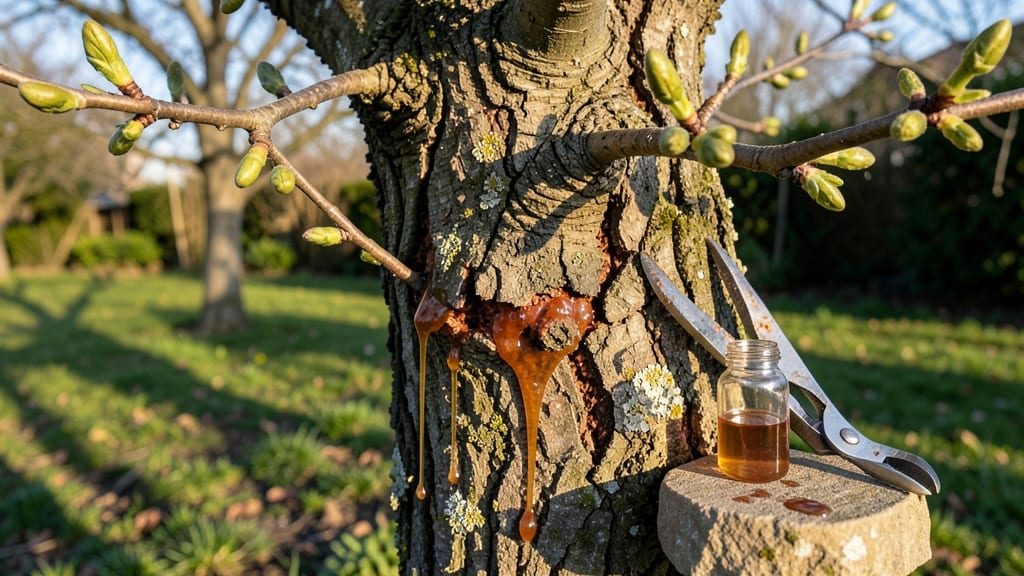
Your cherry tree’s leaking sap is a cry for help—not just an eyesore. 🌳 Whether it’s sticky amber drips or white foam-like ooze, this is your tree’s way of signaling stress from pests, disease, or injury.
The good news? Most cases respond to simple fixes if you catch them early, before the tree weakens.
First, identify the culprit: black stains around sap often mean borers, while mushy bark suggests fungal rot. Physical damage—like a cracked trunk from winter storms—can also trigger this defensive ooze. I’ve seen trees recover completely after just one targeted treatment, but ignoring it risks long-term harm.
You’ll start by cleaning wounds with a 10% bleach solution, sealing them with pruning paint, and monitoring for pests. For borers, neem oil or systemic insecticide works best; fungal issues need copper-based fungicide. Most trees show improvement within 2-4 weeks of consistent care.
When in doubt, consult an arborist—especially if sap flows from large cracks or the tree shows wilting leaves. Early action saves trees; I’ve nursed back multiple "hopeless" cases with patience and the right approach.
Root Causes Of Sap Bleeding
When your cherry tree starts oozing sap like a maple in spring, it’s usually a sign of natural—or sometimes stress-related—processes at work. Understanding these triggers can help you address the issue effectively.
Below, we break down the most common reasons why sap leaks from cherry trees, backed by science and practical insights.
Cherry trees, like many deciduous trees, undergo a seasonal phenomenon called sap bleeding or sapweeping, particularly in late winter or early spring. This occurs when:
- Temperature fluctuations create pressure in the tree’s xylem vessels. As the ground thaws, water is drawn upward, but the tree’s dormant state can’t yet regulate the flow efficiently. This pressure forces sap—rich in sugars, nutrients, and water—to escape through weak points in the bark.
- Root pressure builds as the tree prepares to push new growth. This hydraulic pressure can exceed the tree’s structural limits, leading to leaks, especially in younger or thinner-barked trees.
- Species-specific traits: Some cherry varieties (e.g., Prunus avium) are more prone to sap bleeding due to their bark composition and growth habits.
Actionable insight: If the sap is clear or pale yellow and occurs in late winter/early spring, it’s likely natural. Monitor the tree—this process usually resolves as leaves emerge and the tree enters active growth.
Any disruption to the bark or cambium layer (the tree’s growth engine) can trigger sap leakage. Common culprits include:
| Cause | How It Happens | Signs to Watch For |
|---|---|---|
| Pruning wounds | Improper cuts leave jagged edges or damage the collar, exposing the cambium. Large wounds or multiple cuts in one season increase risk. | Sap oozing from pruning sites, especially if cuts were made during active growth (not dormant season). |
| Animal activity | Squirrels, rabbits, or deer gnaw on bark, while insects (e.g., bark beetles) bore holes. Rodents may also strip bark for nesting material. | Irregular holes, chewed bark, or sawdust-like frass near the leak. |
| Mechanical injury | Lawnmowers, weed whackers, or even leaning ladders can scrape or puncture the trunk. | Linear scrapes or punctures with sap seeping from the damage. |
| Tools or stakes | Improperly installed tree ties, stakes, or even bird feeders rubbing against the trunk can create abrasions. | Reduced bark thickness or grooves with sap accumulation. |
Actionable insight: Clean wounds with a pruning sealant (like Tanglefoot Tree Wound Pruning Sealer) to protect the tree from pests and disease. For animal damage, install tree guards or mesh wraps around the trunk.
Sap leaks can signal an underlying infestation or infection. Here’s how pests and pathogens contribute:
- Bark beetles or borers: These insects tunnel into the cambium, disrupting the tree’s vascular system. Their presence forces sap to leak as the tree attempts to “flood” the invaders.
- Fungal infections: Pathogens like Nectria or Cytospora canker create cankers (sunken, dead areas) that ooze sap, gum, or resin. These are often accompanied by black or brown fungal fruiting bodies.
- Scale insects or aphids: While they don’t burrow, their feeding can weaken the tree, leading to secondary stress responses like sap leakage.
Visual clues to identify pests/disease:
- ✅ Dark, sticky sap (often with a foul odor) may indicate fungal activity.
- ✅ Sawdust-like frass near the leak suggests borers.
- ✅ Wilting leaves or dieback (brown, dead branches) often accompany severe infestations.
Actionable insight: If you suspect pests, inspect the trunk and branches with a flashlight. For fungal cankers, prune out infected tissue (sterilize tools between cuts!) and apply a copper-based fungicide. Consult a local arborist for severe cases.
Extreme or rapid changes in the tree’s environment can push it into overdrive, leading to sap leaks. Key stressors include:
- Temperature swings: Freeze-thaw cycles in early spring can cause the tree’s cells to expand and contract violently, rupturing the bark.
- Drought or overwatering:
- Drought forces the tree to pull water aggressively, sometimes exceeding the root system’s capacity, leading to leaks.
- Overwatering can suffocate roots, reducing their ability to regulate water uptake.
- Poor soil drainage: Waterlogged soil starves roots of oxygen, causing stress responses like sap bleeding.
- Salt or chemical exposure: Road salt, herbicides, or fertilizers can burn the bark or roots, triggering leaks.
Actionable insight:
- 💡 Mulch properly: Apply 2–4 inches of organic mulch (wood chips) around the base to regulate soil temperature and moisture.
- 💡 Water deeply but infrequently: Aim for 1–1.5 inches of water per week, especially during drought.
- 💡 Test soil pH: Ideal range for cherry trees is 6.0–7.0. Adjust with lime (to raise pH) or sulfur (to lower it) if needed.
Pro tip: If sap leaking coincides with unusual weather (e.g., late frost after buds swell) or recent landscaping changes, environmental stress is likely the culprit. Give the tree time to recover—most adapt within a season.
Fixing Sap Leaks Fast
Leaky sap from your cherry tree isn’t just messy—it can stress the tree and attract pests if ignored. The good news? Most causes have simple fixes. Below, we’ll match the likely culprit to the right solution, plus tips to prevent future drips.
Signs: Oozing sap from rough bark, pruning cuts, or storm injuries. Why it happens: Exposed wood invites bacteria and fungi, triggering sap flow as the tree’s defense mechanism.
How to fix it:
- Clean the wound 🧼
- Use a sharp knife or pruning shears to trim away damaged bark and tissue, cutting back to healthy wood. Slope the cut slightly to shed water.
- Pro tip: 💡 Sterilize your tools with rubbing alcohol to avoid spreading disease.
- Apply a wound dressing 🩹
- Coat the area with pruning sealant (like Tanglefoot Tree Wound Pruning Sealer) or beeswax-based paste. Avoid asphalt-based sealants—they can smother the tree.
- For small wounds: A dab of petroleum jelly works in a pinch (yes, really!).
- Monitor for infection 🌡️
- If sap turns dark or smells foul, the tree may be infected. Prune out affected branches entirely and treat with copper fungicide (follow label instructions).
Prevention:
- Prune in late winter/early spring (when the tree is dormant) to minimize stress.
- Avoid heavy pruning—never remove more than 25% of the tree’s canopy at once.
- Protect young trees with tree guards to prevent bark damage from lawn equipment.
Signs: Sap leaks after heavy pruning, drought, or transplant shock. Why it happens: Stress forces the tree to "bleed" as it redirects energy to heal.
How to fix it:
- Water deeply 💦
- Soak the root zone (1–2 feet deep) with slow-release irrigation (drip hoses work best). Repeat every 7–10 days if no rain.
- Pro tip: 🌱 Mulch around the base (2–3 inches of wood chips) to retain moisture and reduce stress.
- Fertilize lightly 🌿
- Apply a balanced fertilizer (10-10-10 or 20-20-20) in early spring, but avoid high-nitrogen blends—they can worsen stress.
- For slow release: Use compost or worm castings instead of synthetic fertilizers.
- Avoid further pruning ⏰
- Let the tree recover for at least 6 months before trimming again. Focus on structural pruning (removing dead or crossing branches) rather than cosmetic cuts.
Prevention:
- Prune gradually—space out cuts over 2–3 years if heavy shaping is needed.
- Water during droughts, even if leaves look healthy (cherry trees hate dry roots).
- Transplant carefully—dig a wide hole, loosen roots, and water immediately after moving.
Signs: Sap leaks paired with sawdust-like frass (pest droppings), holes in bark, or fungal growth (mushrooms, mold).
Common culprits:
- Boring insects (emerald ash borer, flatheaded borers).
- Fungal infections (canker diseases, silver leaf fungus).
How to fix it:
- Identify the pest/disease 🔍
- Snap a photo and compare it to [your local extension service’s pest guide](https://www.extension.org). Or, send a sample to a lab for confirmation.
- Treat borers 🪰
- Manual removal: Drill holes into the bark and inject benzyl alcohol or soapy water to kill larvae.
- Systemic treatment: Apply imidacloprid granules (follow label rates) to the soil for root uptake.
- Fight fungal infections 🍄
- Prune infected branches 6 inches below the visible damage.
- Spray with copper fungicide (e.g., Bordeaux mixture) or neem oil every 2–3 weeks during wet seasons.
Prevention:
- Inspect trees regularly—catch pests early when they’re easier to control.
- Encourage natural predators (ladybugs, birds) by planting diverse shrubs nearby.
- Improve airflow by thinning dense foliage to reduce humidity (fungi love damp conditions).
Signs: Sap leaks after ice storms, heavy winds, or hail, often with split bark or broken branches.
How to fix it:
- Remove broken branches 🪓
- Use clean cuts (as described above) to avoid further damage. If branches are large, hire an arborist to avoid tearing the bark.
- Support weak structures 🌳
- If the tree is leaning dangerously, install tree cables or braces (available at garden centers). Avoid over-tightening—they should only provide temporary support.
- Protect from future storms 🌪️
- Thin the canopy to reduce wind resistance.
- Stake young trees during high-wind seasons (but remove stakes after 1–2 years to avoid girdling).
Prevention:
- Plant wind-resistant varieties (e.g., ‘Stella’ or ‘Montmorency’ cherries tolerate cold better).
- Mulch heavily in winter to insulate roots from freeze-thaw cycles.
Final Tip: 🎯 If sap leaks persist after 2–3 months or the tree shows wilting, yellowing leaves, or dieback, consult an arborist—your cherry tree might need professional care.
Most leaks stop within weeks of proper treatment, so don’t panic! With a little TLC, your tree will be back to blooming beautifully.
Frequently asked questions about cherry tree sap leaks
Is leaking sap always a sign my cherry tree is dying?
Not necessarily! Clear or pale yellow sap in late winter/early spring is often normal sap bleeding from temperature fluctuations. However, dark sap with foul odors or accompanied by wilting leaves usually signals stress from pests, disease, or injury. Monitor for other symptoms like holes in bark or fungal growth.
What's the fastest way to stop sap from dripping onto my patio?
For immediate relief, place a tarp or cardboard under the leak and clean the wound with a 10% bleach solution (1 part bleach to 9 parts water). Then seal with pruning sealant. Address the root cause (pests, injury) within 24-48 hours to prevent recurrence.
Can I use regular duct tape to seal sap leaks?
No—duct tape is too harsh and can smother the tree. Instead, use beeswax-based pruning sealant or petroleum jelly for small wounds. Asphalt-based products (like some commercial sealants) can block oxygen exchange. Always clean the wound first with sterilized tools.
How long should I wait before treating a sap leak?
Act within 24 hours for best results. Sap leaks attract pests and fungi, so don't wait for "perfect conditions." Start by cleaning the wound, then identify the cause (pests, injury, etc.). Most trees show improvement within 2-4 weeks of proper treatment.
Will my cherry tree recover if I ignore the sap leak?
Maybe, but it depends on the cause. Minor leaks from seasonal sap bleeding may resolve on their own. However, persistent leaks from pests or disease can weaken the tree over time, leading to dieback or even death. Early intervention saves 90% of cases—don't gamble with your tree's health!