
Pruning
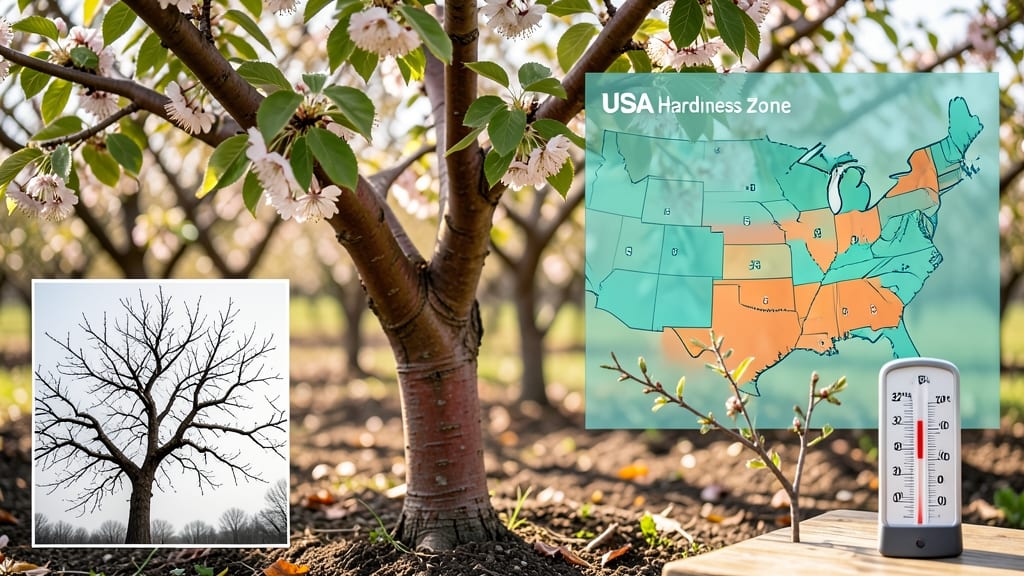
Planting a cherry tree in the wrong climate zone means watching it struggle—or worse, die—before it ever bears fruit. 🌳 I learned this the hard way when my first sour cherry tree wilted through a brutal Midwest winter, despite being labeled "hardy."
The secret to success lies in matching your tree to your USDA hardiness zone, chilling hours, and summer heat tolerance—not just the label on the nursery tag.
Most sweet cherries (like Bing or Stella) thrive in zones 5-7, while sour cherries (Montmorency, Meteor) handle zones 3-6. But don’t stop there—check your local chilling hours (300-1,000+ for most varieties) and summer heat tolerance.
A tree that survives winter might melt in a 100°F heatwave. Microclimates matter too: a south-facing slope warms faster than a shaded valley spot.
You’ll know you’ve picked the right zone when your tree flowers on schedule, sets fruit reliably, and grows strong year after year. The payoff? Juicy cherries for decades—no more guessing games.
Start by checking your zone on the USDA map, then verify with your local cooperative extension office for hyper-local insights.
Pro tip: If you’re on the edge of a zone, opt for a more cold-hardy variety or plant near a south-facing wall for extra warmth. And always ask for the tree’s exact chilling hour range—it’s the detail that separates thriving orchards from sad, leafless stumps.
📚 In This Guide
- What you need
- Instructions
- Tips and common mistakes
- Wrapping up and next steps
What you need
- ● Cherry tree sapling or bare-root tree: 1 sweet cherry (Prunus avium) or sour cherry (Prunus cerasus) variety (check blank">USDA Plant Hardiness Zone compatibility)
- ● Size: 1-3 gallons container or bare-root (for mature trees, consider 15-25 gallons)
- ● Pruning tools: 1 pair bypass pruners (for small branches, 5-8" blades)
- ● 1 pair loppers (for medium branches, 18-24" cutting capacity)
- ● 1 pruning saw (for thick branches, 8-10" blade)
- ● Planting supplies: 1 shovel (round-point or digging shovel)
- ● 1 garden fork (for loosening soil)
- ● 1 wheelbarrow (for moving soil/amendments)
- ● 2-3 gallons of well-draining potting mix (for container planting) or native soil amended with 3-4 inches of compost
- ● 1 mulch (3-4 inches of wood chips or straw)
- ● Safety gear: 1 pair gloves (cut-resistant for pruning)
- ● 1 safety glasses (to protect from debris)
- ● Soil testing kit (to check pH and nutrient levels; ideal pH: 6.0-6.5 for cherries)
- ● Tree stakes & ties (for young saplings in windy areas)
- ● Fungicide (copper-based for disease prevention in humid zones)
- ● Drip irrigation system (for consistent moisture, especially in dry climates)
- ○ Tree wound dressing (optional for large pruning cuts; skip for small cuts)
- ● ✅ Know your climate zone: Verify your blank">USDA Hardiness Zone (e.g., Zones 5-8 for most cherries) and microclimate (sunlight, wind, soil drainage).
- ● ✅ Right timing: Plant in late fall or early spring (avoid extreme heat). Prune in late winter/early spring (before buds swell).
- ● ✅ Space requirements: Dwarf varieties: 8-12 feet apart
- ● Standard trees: 20-30 feet apart (or 30+ feet for full-size varieties)
- ● ✅ Soil prep: Cherry trees thrive in well-draining, slightly acidic soil. Amend heavy clay or sandy soil with organic matter.
How to select the perfect climate zone for your cherry tree
Let’s match your region with the ideal cherry tree variety—because the right climate zone makes all the difference.
☀️ Step 1: Determine Your USDA Hardiness Zone
Start by finding your USDA Hardiness Zone using the USDA Plant Hardiness Zone Map. Most cherry trees thrive in zones 5-8, but sweet cherries (like Bing or Rainier) prefer zones 5-7, while tart cherries (like Montmorency) handle zones 3-8. Check your exact zone number—it’s usually a decimal like 6a or 7b—to narrow down your options.
If you’re unsure, look up your ZIP code or city on the map. For example, Portland, Oregon, is zone 8, while Minneapolis, Minnesota, is zone 4. This step ensures you pick a variety that won’t freeze to death in winter or wilt in summer heat.
🌱 Step 2: Match Your Zone to the Right Cherry Type
Sweet cherries need warmer winters (zones 5-7) and cool summers to set fruit properly. Tart cherries, on the other hand, are tougher—they handle colder winters (zones 3-4) and hotter summers (zones 7-8). If you’re in zone 8 or higher, stick with tart cherries or dwarf varieties, as sweet cherries may struggle with summer heat.
Pro tip: Check the chilling hour requirements for your zone. Most cherries need 500-1,000 hours below 45°F yearly. If you’re in a mild-winter zone (like Southern California), choose low-chill varieties like Stella or Lapins—they still produce fruit without extreme cold.
🌿 Step 3: Adjust for Microclimates and Local Conditions
Your yard’s microclimate matters just as much as your zone. A south-facing slope can add 2-3 zones of warmth, while a low-lying area may feel 1-2 zones colder. If your zone is borderline (like zone 7b), plant near a sunny, sheltered wall or heat-retaining stone to give your tree a survival boost.
Watch for late spring frosts—cherry blossoms bloom early, and a 28°F freeze after flowering can ruin your crop. If this is a risk, choose late-blooming varieties like Black Republican or plant near a windbreak to delay frost exposure.
⏰ Step 4: Plan for Long-Term Climate Shifts
Climate change is pushing zones northward—some areas may soon be 1-2 zones warmer than today. If you’re planting for the future, opt for heat-tolerant varieties like Rainier (sweet) or Montmorency (tart), which handle rising temperatures better than others.
Keep an eye on local weather trends—if your zone is warming fast, consider container-growing dwarf cherries for flexibility. You can move them to cooler spots in summer or bring them indoors during extreme heat waves.
🌡️ Step 5: Test Soil and Sun Before Planting
Cherry trees need well-draining soil and full sun (6+ hours daily)—but not scorching afternoon heat in zones 9+. Amend heavy clay with compost or sand to prevent root rot, and mulch with wood chips to regulate soil temperature. In hotter zones, provide afternoon shade during peak summer to protect young trees.
Dig a hole twice as wide as the root ball but no deeper—planting too deep suffocates roots. Water deeply after planting, then monitor soil moisture. Cherries hate wet feet, so ensure your site has good drainage or plant on a mound if needed.
Tips & tricks for planting cherry trees in the right climate zone
Here's what nobody tells you about making sure your cherry tree thrives where you live.
Zone-Specific Variety Selection: Don't just pick any cherry tree—your zone dictates your options. In zones 3-4, stick with hardy tart cherries like Montmorency that can handle cold winters. For zones 5-7, sweet cherries like Bing or Rainier will thrive with their cooler summer needs. Remember, the 500-1,000 chilling hours requirement is non-negotiable for most varieties—if your area doesn't meet this, choose low-chill types like Stella.
Microclimate Mastery: Your yard's specific conditions can shift your effective zone by 2-3 points. A south-facing slope in zone 7b might actually feel like zone 9 during summer—perfect for heat-tolerant varieties. Conversely, a low-lying area might feel like zone 5 even if you're officially in zone 7. Use this to your advantage by positioning your tree where it gets the right balance of sun and shelter.
Frost Protection Strategy: Cherry blossoms are delicate—those 28°F late spring frosts can wipe out your crop before it even forms. If you're in a frost-prone area, plant near a windbreak or choose late-blooming varieties like Black Republican. You can also install frost cloths or even a small irrigation system that releases water overnight to create insulating ice around the tree.
Future-Proofing Your Planting: Climate change is making zones shift faster than we can keep up. If you're planting for the long term, consider container-growing dwarf varieties that you can move to cooler spots during heat waves. Heat-tolerant types like Rainier or Montmorency are smart choices for areas that might soon be too warm for traditional varieties.
Pro Tips for Cherry Tree Climate Zone
- Here's what nobody tells you about making sure your cherry tree thrives where you live.
- Zone-Specific Variety Selection: Don't just pick any cherry tree—your zone dictates your options.
- Microclimate Mastery: Your yard's specific conditions can shift your effective zone by 2-3 points.
Frequently asked questions
Got questions about growing cherry trees in your climate zone?
You’re not alone! Here are answers to the most common queries to help you plant with confidence.
What are the best climate zones for cherry trees?
Cherry trees thrive in USDA Hardiness Zones 5 through 8, depending on the variety. Sweet cherries prefer Zones 5–7, while tart cherries (like Montmorency) do well in Zones 4–8. Always check your local microclimate—coastal areas may extend their range slightly!
When is the best time to plant a cherry tree in my region?
Plant in early spring or fall (4–6 weeks before the first frost) for optimal root establishment. In warmer zones (like Zone 8), avoid summer planting—heat stress can stunt growth. Pro tip: Water deeply after planting to reduce transplant shock!
Can I grow cherry trees in colder climates (Zone 3 or 4)?
Yes! Choose cold-hardy varieties like ‘Stella’ or ‘Montmorency’ tart cherries, which tolerate down to -30°F (-34°C). Use windbreaks and mulch heavily to protect roots. Dwarf varieties may also fare better in tight spaces.
Why isn’t my cherry tree fruiting in Zone 6?
Common culprits: poor pollination (plant two compatible varieties), late frosts (choose late-blooming types), or nutrient deficiencies. Test soil pH (ideal: 6.0–6.5) and fertilize with low-nitrogen, high-potassium blends in early spring.
Are there low-maintenance cherry tree alternatives for small spaces?
Consider dwarf or columnar varieties like ‘Compact Stella’ (tart) or ‘Black Tartarian’ (sweet). These grow 10–15 ft tall and need minimal pruning. Bonus: They’re great for containers in milder zones (Zone 7+). Just ensure they get 6+ hours of sun daily!
Wrapping up and next steps
Choosing the right cherry tree climate zone is the first step to growing a thriving, fruit-bearing tree! Whether you're in the mild coastal regions of USDA Zones 7-9 or the colder Zones 4-6, understanding your local conditions ensures success.
With the right care—like proper pruning, soil prep, and variety selection—you’ll enjoy sweet cherries for years to come.
🌱 Ready to plant? Start by selecting a cherry tree variety suited to your zone, then gather your tools and dive in! Happy gardening—your future harvest awaits! 🍒