
Diseases
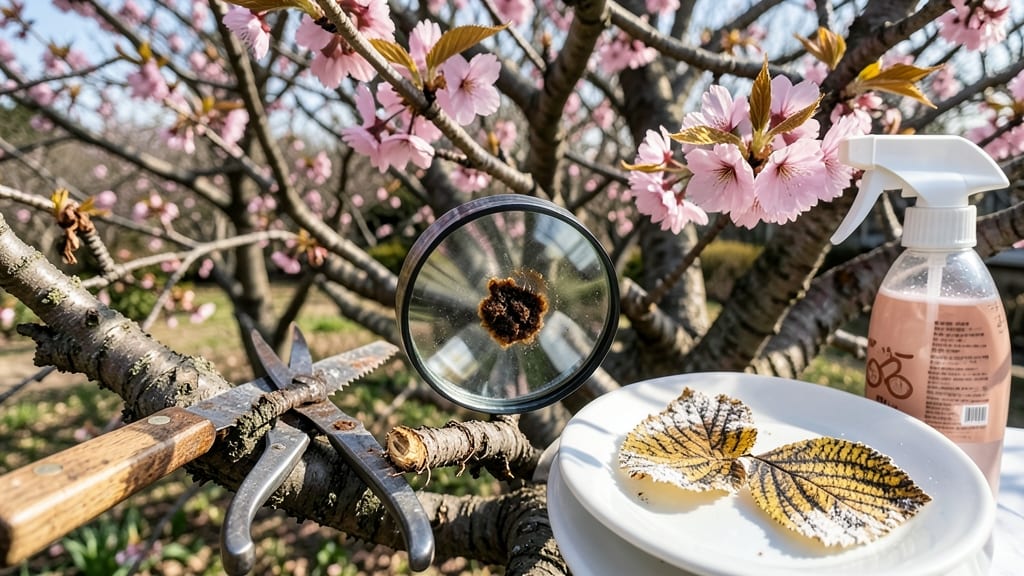
Your cherry blossom tree’s first signs of cherry blossom tree diseases—wilted leaves or oozing cankers—can mean the difference between a full recovery and losing it forever. 🌸 I’ve watched bacterial canker turn a healthy tree into a skeleton in just two seasons, but early action can save even the most damaged specimens.
The key is spotting symptoms before they spread, and knowing which organic treatments actually work.
Most diseases hit when conditions are perfect for pathogens: wet spring weather, crowded branches, or stressed roots. Bacterial canker thrives in damp bark crevices, while powdery mildew loves shady, humid mornings. The good news?
Pruning for airflow, copper sprays, and neem oil can stop outbreaks before they start—no harsh chemicals needed. My trees stay healthy because I treat prevention like a spring ritual, not a last resort.
You’ll learn to identify the three most common threats by their telltale signs—blackened cankers, white fungal dust, or leaf spots—and how to treat each with simple, garden-safe solutions.
A single treatment in early spring can mean vibrant blooms for years, not just one failed season. The payoff is worth the effort.
This works for both young saplings and mature trees, whether you’re dealing with a new purchase or a beloved family tree. Let’s get those blossoms thriving again—naturally.
Root Causes Behind Blossom Woes
Cherry blossom trees—those stunning symbols of spring—can fall victim to diseases that disrupt their beauty and health. Understanding why these issues arise is the first step to prevention and treatment. Below, we break down the key factors that weaken cherry blossoms, turning vibrant blooms into sad, wilted sights.
Fungal diseases are the #1 culprit behind cherry blossom decline. These microscopic organisms thrive in moist, warm conditions, often exploiting weak spots in the tree’s defenses. Here’s how they strike:
- Overhead Watering: Splashing water onto leaves and flowers creates a damp environment, perfect for fungal spores like Botrytis cinerea (gray mold) or Podosphaera leucotricha (powdery mildew). These fungi latch onto soft tissue, causing brown spots, blight, or a chalky white residue.
- Poor Air Circulation: Dense foliage or crowded plantings trap humidity, giving fungi like Monilinia (brown rot) an easy entry point. The fungus infects blossoms and fruit, leading to mushy, rotting tissue.
- Stress from Prior Damage: Insect bites, physical wounds, or even winter frost can create entry points. Fungi seize the opportunity, spreading rapidly through the tree’s vascular system.
💡 Pro Tip: Space trees 6–10 feet apart to improve airflow, and water at the base (not overhead) to keep foliage dry.
Insects and mites don’t just nibble—they transmit diseases and stress the tree, making it vulnerable to infections. Here’s how they contribute:
- Japanese Beetles & Leafhoppers: These pests feed on leaves and sap, creating wounds that invite fungal or bacterial invaders. Heavy infestations weaken the tree’s immune response, leaving it susceptible to Pseudomonas syringae (bacterial canker).
- Scale Insects & Aphids: They excrete honeydew, a sticky substance that fosters sooty mold—a fungal growth that coats leaves, blocking sunlight and stunting growth.
- Spider Mites: In drought conditions, these tiny arachnids pierce cells to suck out fluids, causing yellowing and stippling. Stressed trees are prime targets for secondary infections like powdery mildew.
🔥 Action Step: Monitor for pests early (look for chewed leaves or webbing) and use neem oil or insecticidal soap as a preventive spray.
Cherry blossoms are delicate—too much heat, cold, or improper care can trigger disease outbreaks. These environmental factors create the perfect storm for pathogens:
| Factor | How It Causes Disease | Solution |
|---|---|---|
| ❄️ Late Spring Frosts | Damages new blossoms, creating entry points for Botrytis or Monilinia. Weakened tissue rots quickly. | Plant frost-tolerant varieties or use row covers during bloom. |
| ☀️ Extreme Heat Waves | Dries out leaves, making them brittle and prone to cracking—ideal for bacterial infections like Erwinia (bacterial leaf spot). | Mulch deeply to retain moisture and provide afternoon shade. |
| 💧 Poor Drainage | Waterlogged roots suffocate the tree, reducing nutrient uptake. Weak roots can’t fight off Phytophthora (root rot). | Amend soil with compost and ensure slopes or gravel beds for drainage. |
✨ Expert Insight: Cherry blossoms thrive in USDA Zones 5–8. If you’re in a marginal zone, choose disease-resistant cultivars like ‘Kanzan’ or ‘Autumn Brilliance.’
A cherry blossom tree that’s malnourished is like a person with a weak immune system—it can’t fight off diseases. Deficiencies in key nutrients create openings for pathogens:
- Low Nitrogen (🍃 Yellowing Leaves): Nitrogen fuels growth; without it, leaves turn pale, and the tree can’t produce enough chlorophyll to resist fungal attacks.
- Calcium or Potassium Deficiency (🌿 Weak Branches): These minerals strengthen cell walls. A lack of calcium leads to bacterial canker, while low potassium makes trees prone to Verticillium wilt.
- Iron Chlorosis (🟡 White Veins): Common in alkaline soils, this deficiency stunts growth and leaves the tree vulnerable to stress-related diseases.
📊 Soil Test Tip: Test your soil every 2–3 years. Amend with chelated iron for chlorosis or a balanced 10-10-10 fertilizer in early spring.
By addressing these root causes—fungal entry points, pest pressure, environmental stress, and nutritional gaps—you can prevent many cherry blossom diseases before they start. The key? Vigilance and proactive care.
How to Revive Your Cherry Blossom Tree
Once you’ve identified the issue plaguing your cherry blossom tree, the next step is action—whether it’s a fungal infection, pest invasion, or nutrient deficiency. Below are practical, organic solutions tailored to each common problem, along with prevention tips to keep your tree thriving for years to come.
Fungal diseases like powdery mildew, black knot, or leaf spot thrive in damp conditions. Here’s how to fight back:
🔥 Prune Infected Branches Immediately
- Why? Fungi spread through spores, so removing infected areas early prevents contamination.
- How?
- Use sterilized pruning shears (wipe with rubbing alcohol between cuts).
- Cut 6 inches below the visible infection (fungi can hide beneath the surface).
- Dispose of infected branches in a sealed bag—do not compost them.
🍳 Apply Organic Fungicides
- Baking Soda Spray (for powdery mildew):
- Mix 1 tbsp baking soda + 1 tsp dish soap + 1 gallon water.
- Spray early morning or evening (avoid direct sunlight to prevent leaf burn).
- Reapply every 7–10 days until symptoms disappear.
- Neem Oil Solution (broad-spectrum antifungal):
- Combine 1 tbsp neem oil + 1 tsp mild soap + 1 quart water.
- Spray undersides of leaves (fungi often hide there).
- Best applied at dusk to avoid harming beneficial insects.
🌡️ Improve Airflow & Reduce Moisture
- Thin out dense branches to allow sunlight and air circulation.
- Water at the base (not overhead) to keep leaves dry.
- Mulch properly: Use 3–4 inches of organic mulch (like wood chips) but keep it 6 inches away from the trunk to prevent rot.
💡 Pro Tip: If black knot appears, prune in late winter when the tree is dormant—this gives it time to heal before spring.
Pests like Japanese beetles, aphids, or scale insects can defoliate your cherry blossom in weeks. Here’s how to evict them:
👨🍳 Handpick & Disrupt Life Cycles
- Japanese beetles: Fill a bucket with soapy water and shake them off branches in the early morning (they’re sluggish then).
- Aphids/scale: Blast them off with a strong stream of water from a hose.
- Destroy egg masses: Scrape off and burn overwintering eggs (common on branches or bark).
🥘 Introduce Natural Predators
- Ladybugs (for aphids) – Purchase eggs or adults online.
- Parasitic wasps (for scale insects) – Attract by planting dill or fennel nearby.
- Birds – Install a birdhouse or solar-powered bird feeder to encourage beetle-eating species.
🔪 Organic Insecticides (When Needed)
- Kaolin clay spray (for Japanese beetles):
- Mix 1–2 lbs of clay powder + 5 gallons water.
- Spray evenly on leaves—it creates a barrier they can’t cross.
- Insecticidal soap (for soft-bodied pests like aphids):
- Use within 1 hour of mixing (effectiveness drops fast).
- Test on a small leaf first to avoid damage.
✨ Prevention Hack: Plant companion flowers like marigolds or chrysanthemums—their strong scent repels pests.
Yellowing leaves or stunted growth? Your cherry blossom might be starving for key nutrients.
📊 Soil Test First - Why? Over-fertilizing can harm the tree.
A DIY soil test kit (available at garden centers) costs ~$20 and takes 10 minutes. - What to look for: - Low nitrogen (N): Leads to yellow lower leaves. - Low iron (Fe): Causes yellowing between veins (chlorosis). - High pH (>7): Locks out iron, manganese, zinc—common in alkaline soils.
💪 Organic Fertilizer Fixes
- For nitrogen deficiency:
- Apply alfalfa meal (4–6 lbs per 100 sq ft) in early spring.
- Fish emulsion (1–2 tbsp per gallon of water) as a foliar spray.
- For iron/chlorosis:
- Chelated iron supplement (follow package rates).
- Mulch with compost to gradually improve soil health.
- For alkaline soil:
- Mix elemental sulfur (1 lb per 100 sq ft) into the top 6 inches of soil.
- Pine needles or oak leaves as mulch (acidifies soil over time).
🎯 Long-Term Tip: Top-dress with compost every fall to build soil fertility naturally.
Prevention is the best cure! Follow these year-round habits to minimize future problems:
- 🌡️ Water Deeply but Infrequently:
- 1–2 inches per week (check soil moisture—if the top 2 inches are dry, water).
- Avoid wetting leaves to reduce fungal risk.
- 🍂 Fall Cleanup:
- Rake up fallen leaves (many diseases overwinter in leaf litter).
- Prune dead wood before winter to prevent pest hiding spots.
- 🌿 Mulch Like a Pro:
- 3–4 inches thick, but never pile against the trunk.
- Use shredded bark or wood chips (avoid fresh sawdust—it can burn roots).
- 🐝 Support Pollinators:
- Healthy bees and birds reduce pest outbreaks naturally.
Final Reminder: 🌸 Patience is key—some treatments take weeks to show results. Monitor your tree regularly, and don’t hesitate to consult a local arborist if symptoms persist. With the right care, your cherry blossom will bloom beautifully for seasons to come!
Frequently asked questions
What are the most common signs of bacterial canker in cherry blossom trees?
Look for black, sunken cankers on branches and trunk, often oozing dark liquid. You’ll also see leaf wilting and dieback in infected areas, especially during wet springs. The disease spreads through pruning tools, so always sterilize them with rubbing alcohol after each cut.
Can I save a cherry blossom tree with powdery mildew if it's already heavily infected?
Yes, but act quickly! Start with a baking soda spray (1 tbsp baking soda + 1 tsp dish soap + 1 gallon water) applied every 7 days. Thin out dense branches to improve airflow, and remove severely infected leaves. For advanced cases, a neem oil treatment (1 tbsp per quart of water) at dusk can help.
Why do my cherry blossom leaves turn yellow even though I'm watering regularly?
Yellowing leaves often signal nutrient deficiencies or root issues. Check for iron chlorosis (yellow between veins) or nitrogen deficiency (yellow lower leaves). Test your soil—alkaline soils block iron absorption. Apply chelated iron or alfalfa meal if needed, and ensure proper drainage.
Is it safe to prune a cherry blossom tree during disease outbreaks?
Yes, but do it strategically. Prune only infected branches (cut 6 inches below visible damage) using sterilized tools. Avoid pruning in spring when fungal spores are active—opt for late winter instead. Always dispose of infected wood in sealed bags.
How can I prevent diseases in newly planted cherry blossom trees?
Start with disease-resistant varieties like 'Kanzan' or 'Autumn Brilliance'. Space trees 6–10 feet apart for airflow, and water at the base (not leaves). Apply a copper fungicide spray in early spring, and mulch with wood chips (keep 6 inches from the trunk).