
Trees
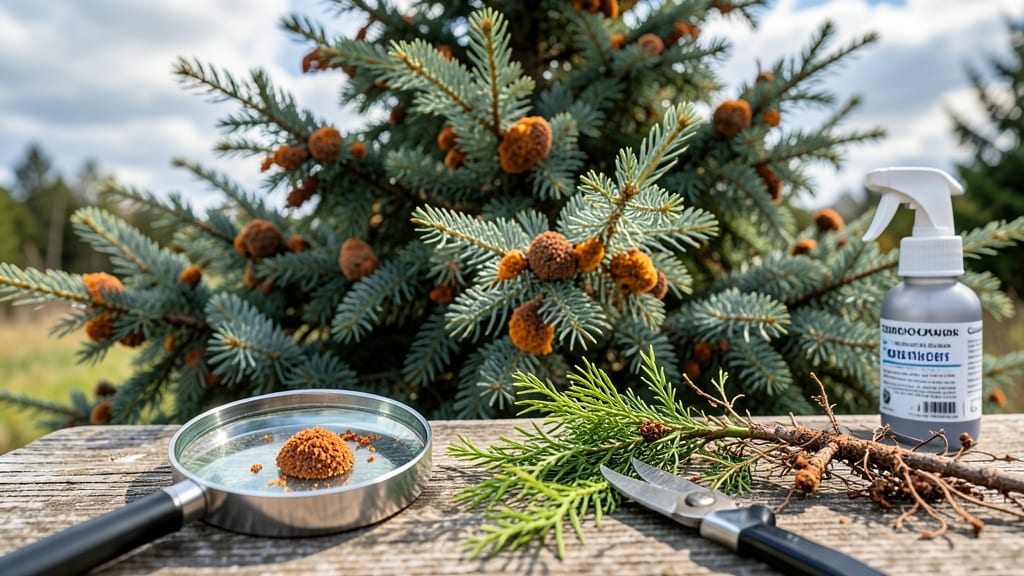
Your cedar trees are covered in bright orange pustules, and you're wondering if they're doomed. 🌲 Cedar tree rust isn't fatal, but it’s unsightly—and I’ve treated enough infected trees to know exactly how to stop it in its tracks.
The key is early action with copper spray, proper pruning, and a few other tricks that keep your trees healthy and looking their best.
This fungal disease thrives in damp conditions, and those telltale orange spots? They’re actually the fungus’s spore-producing structures. Left unchecked, it weakens branches and makes trees more vulnerable to other pests.
But here’s the good news: copper fungicides (like Bordeaux mixture) are highly effective, and pruning infected branches in late winter or early spring can drastically reduce next year’s outbreaks.
By the time you’re done treating, your cedars will be on the mend—no more rusty spots, just strong, vibrant foliage. The best part? These methods work for both junipers and true cedars, and they’re safe for pets and wildlife once fully dried.
You’ll see a noticeable improvement within just a few weeks of consistent treatment.
If your trees are large or heavily infected, don’t hesitate to call an arborist—they can handle the heavy lifting while you learn the long-term prevention strategies. Trust me, once you’ve tackled this, your cedars will be the envy of the neighborhood.
The Hidden Triggers Behind Tree Rust
Cedar tree rust isn’t just a random fungal nuisance—it’s the result of a complex, often invisible dance between pathogens, environmental conditions, and tree health. Understanding why this disease takes hold helps you spot it early and stop it before it spreads.
Let’s break down the key culprits behind cedar tree rust, from microscopic invaders to weather patterns that create the perfect breeding ground.
The primary cause of cedar tree rust is Gymnosporangium fungi, a group of plant pathogens that thrive on junipers (including cedars) and alternate between two hosts—cedar trees and nearby fruit trees (like apple, hawthorn, or pear). Here’s how it works:
- Alternate Hosts: The fungus spends part of its life cycle on cedar trees (causing rust symptoms) and part on fruit trees (producing spore-producing structures called telial horns). When these horns release spores in spring, they drift on wind or rain to infect cedar trees.
- Spore Germination: Spores need moisture (like dew or rain) to germinate and penetrate cedar needles. Dry conditions halt their spread, while humid, rainy springs create ideal conditions for outbreaks.
- Overwintering: Fungal spores can survive on fallen needles, bark, or even infected fruit tree leaves for years, waiting for the right conditions to reactivate.
💡 Pro Tip: If you notice orange, gelatinous telial horns on nearby fruit trees (especially in late winter), your cedars are at high risk—these are the fungus’s spore factories!
Cedar tree rust doesn’t just appear—it waits for the right weather. These conditions create the ideal environment for fungal growth:
| Factor | Why It Matters | Risk Level |
|---|---|---|
| 🌧️ High Humidity + Rain | Fungal spores thrive in moist conditions. Rain splashes spores onto needles, while humidity keeps them active for longer. | ⚠️ High risk (spring/fall) |
| 🌡️ Mild Winters | Cold winters can kill fungal spores, but mild winters allow them to survive and multiply, leading to bigger outbreaks the next year. | ⚠️ High risk (regions with short winters) |
| 🍃 Warm, Wet Springs | The fungus’s spores germinate best in temperatures between 50–70°F (10–21°C). Prolonged spring rains = more infections. | 🔥 Extreme risk (ideal conditions) |
| 🌬️ Still, Windless Days | Without wind, spores linger near infected trees, increasing the chance of reinfection. Conversely, strong winds can reduce spread by drying spores out. | ⚠️ Moderate risk (depends on humidity) |
🌡️ Key Insight: If your area had a wet spring followed by a dry summer, you’re likely seeing rust because the fungus had plenty of time to establish itself before conditions dried up.
A healthy cedar tree can resist rust to some degree, but stress weakens its natural barriers. Common stressors that make trees vulnerable:
- 💧 Drought or Overwatering: Cedars need well-draining soil. Too little water causes wilting, while too much leads to root rot—both scenarios stress the tree and make it easier for fungi to invade.
- ☀️ Poor Light Exposure: Cedars planted in shady spots grow slowly and develop weak, thin needles—perfect entry points for spores.
- 🔪 Physical Damage: Broken branches, improper pruning, or construction injuries create open wounds where fungi can sneak in.
- 🐛 Pest Infestations: Bugs like cedar bark beetles or spider mites weaken trees, making them more susceptible to fungal infections.
- 🌱 Poor Soil Health: Compacted, nutrient-poor soil limits root growth. A stressed root system can’t support the tree’s immune response.
✨ Actionable Fix: If your cedar looks thirsty, wilted, or yellowing, it’s already compromised. Focus on deep watering (1–2 inches per week), mulching, and pruning dead branches to boost resilience.
Here’s the kicker: cedar tree rust almost never occurs alone. It’s part of a two-host cycle involving nearby fruit trees (like apple, hawthorn, or pear). How this plays out:
- 🍎 Fruit Trees → Cedar Trees: In spring, infected fruit trees release telial horns (those orange, spore-filled tubes). Wind carries spores to cedars, causing rust.
- 🌲 Cedar Trees → Fruit Trees: Later in the year, cedar trees produce aecial spores, which infect fruit trees, completing the cycle.
If you have both cedars and fruit trees in your yard, you’re dealing with a perfect rust ecosystem. Even if your cedars look fine, check fruit trees for:
- Orange, gelatinous growths on leaves or stems (telial horns).
- Yellowing or curling leaves (early signs of infection).
🎯 Solution: If possible, remove or treat infected fruit trees to break the cycle. Otherwise, focus on copper fungicides (like the ones we’ll cover next) to protect your cedars.
Fixing Fungal Spots Naturally
Fungal infections like cedar tree rust can feel overwhelming, but with the right approach, you can restore your tree’s health and prevent future outbreaks. Below are practical, step-by-step solutions tailored to the root causes—whether it’s overcrowded branches, poor air circulation, or an existing fungal presence.
Start with the issue that matches your tree’s symptoms, then follow the prevention tips to keep rust at bay for good.
Cause: Overgrown or crossing branches trap moisture, creating the perfect breeding ground for rust spores.
How to Fix It:
- 🔪 Prune strategically – Use sterilized pruning shears (wipe with rubbing alcohol between cuts) to remove all infected branches, including those with orange pustules or distorted growth. Cut 6–12 inches below the visible damage to ensure spores don’t linger.
- 🗑️ Dispose properly – Do not compost infected clippings. Seal them in a plastic bag and throw them in the trash to prevent spore spread.
- 🌿 Thin the canopy – If branches are too dense, open up the tree by removing 10–20% of the smallest, inner branches to improve airflow.
💡 Pro Tip: Prune on a dry, sunny day—moisture worsens spore dispersal. If rust appears in spring, wait until late summer or early fall to prune, as spores are less active then.
Cause: Existing fungal spores or weak tree defenses allow rust to take hold.
How to Fix It:
- 🛡️ Choose the right spray – Use a copper fungicide (like copper sulfate or copper hydroxide) labeled for cedar rust. These disrupt fungal cell walls without harming the tree.
- 🍳 Mix and apply correctly – Follow label instructions, but generally:
- Mix 1–2 tbsp of copper fungicide per gallon of water.
- Spray thoroughly on both sides of leaves and branches, focusing on new growth where rust often starts.
- Apply early morning or late evening to avoid leaf burn from sunlight.
- ⏰ Schedule treatments – Spray twice a year:
- First application: Just before buds swell in early spring (prevents initial infection).
- Second application: After heavy rains or if you spot new pustules (usually late summer).
⚠️ Warning: Avoid copper sprays if your soil is already copper-rich (test with a soil kit). Overuse can harm beneficial microbes.
Cause: Compacted soil or poor water management stresses trees, making them rust-prone.
How to Fix It:
- 🌱 Aerate the soil – Use a garden fork to loosen soil around the tree’s drip line (the edge of its canopy). Add 2–3 inches of organic mulch (like wood chips) to retain moisture without suffocating roots.
- 💦 Water deeply but less often – Overwatering encourages fungal growth. Instead:
- Water once a week (or less in rainy seasons) with 1–2 inches of water.
- Water at the base, not the leaves, to avoid wetting foliage.
- 🌿 Space trees properly – If planting new cedars, keep them at least 10 feet apart to reduce humidity and improve airflow.
🌡️ Quick Fix: If your tree is in a shady, damp area, consider pruning nearby trees or installing a small fan (on low setting) near the base to dry leaves faster.
Cause: Weak or nutrient-deficient trees are easier targets for rust.
How to Fix It:
- 🍄 Feed with organic fertilizer – Use a balanced, slow-release fertilizer (like 10-10-10) in early spring. Avoid high-nitrogen fertilizers, which promote soft, rust-susceptible growth.
- 💊 Add micronutrients – Rust thrives when trees lack zinc or manganese. Apply a chelated micronutrient spray (like Sea90) every 3 months for extra protection.
- 🌱 Support with compost tea – Brew compost tea (steep compost in water for 24–48 hours) and spray it on leaves. This introduces beneficial microbes that outcompete fungi.
✨ Bonus: Introduce rust-resistant cedar varieties like Thuja occidentalis ‘Emerald Green’ if replanting is an option.
To keep cedar rust from returning, combine these habits: - Inspect trees every 2 weeks in spring and fall for early signs (yellowing leaves, small orange dots). - Clean up fallen leaves around the tree—rust spores overwinter in debris. - Avoid wounding trees—use sharp tools when pruning to prevent tears that invite infection. - Monitor nearby junipers—cedar rust often jumps from juniper hosts to cedars.
Treat junipers with copper spray too if they’re infected.
Final Thought: Cedar tree rust is manageable with consistent care—think of it like a long-term garden project, not a crisis. Start with pruning and copper sprays, then layer in soil and nutrient fixes for lasting protection.
Your tree will thank you with lush, rust-free foliage in no time! 🌿✨
Frequently asked questions
What do those orange spots on my cedar tree actually look like?
The classic cedar tree rust symptoms appear as bright orange-yellow pustules on the undersides of needles, often clustered together. In spring, you might also spot gelatinous, horn-like structures on nearby fruit trees—these are the fungus’s spore factories! The infected needles may turn yellow or brown and drop prematurely.
Can I use homemade remedies like baking soda or neem oil for cedar rust?
While baking soda (1 tsp per gallon of water) and neem oil can help with some fungal issues, they’re not reliably effective against cedar rust. Copper fungicides are the gold standard because they directly disrupt the fungus’s cell walls. For best results, use a copper-based spray (like Bordeaux mixture) combined with proper pruning.
How long does it take to see improvement after treating cedar rust?
With consistent treatment, you’ll typically see noticeable improvement within 4–6 weeks. New growth should appear healthier, and existing pustules may darken and fall off. For severe cases, it may take a full growing season to see complete recovery. Regular inspections and retreatment (especially after rains) are key to long-term success.
Will cedar rust kill my tree if I don’t treat it?
Cedar rust is rarely fatal, but it can weaken your tree over time by reducing its ability to photosynthesize. Severe infections may cause branch dieback or make the tree more vulnerable to other pests. Left untreated, the tree may become unsightly and less resilient. Early intervention with copper sprays and pruning prevents long-term damage.
Why does my cedar tree get rust every year, even after treatment?
This usually happens because the two-host cycle isn’t broken—nearby fruit trees (like apple or hawthorn) are likely still infected. The fungus alternates between cedars and fruit trees, so you’ll need to treat both hosts. Also, check if you’re applying copper sprays too late—early spring is critical for prevention.