
Trees
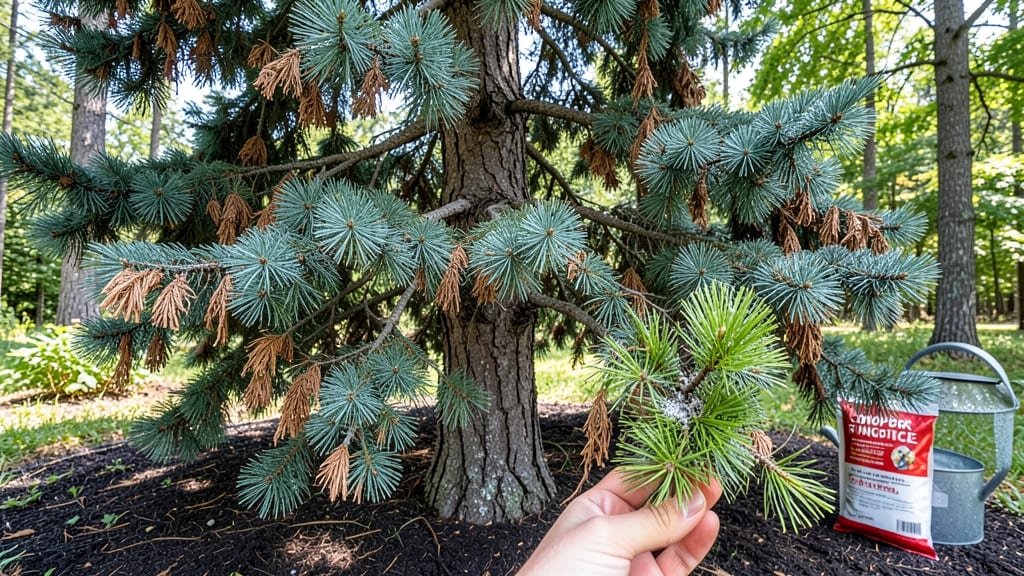
Your cedar tree’s leaves turning brown aren’t just an eyesore—they’re a warning sign. 🌲 Fungal blight, environmental stress, or pests could be attacking your evergreen, and ignoring it means losing branches (or worse, the whole tree). The good news? Most issues are fixable with the right approach.
First, diagnose the problem: check for dry, crunchy needles (fungal blight), yellowing before browning (nutrient issues), or tiny holes (pests). Overwatering or poor drainage often worsens the problem, so assess the soil and root zone. I’ve seen cedars recover completely when treated early—don’t wait until half the tree looks dead.
Prune affected branches 6 inches below the browning, then apply a copper-based fungicide if blight is suspected. For drought stress, deep water once a week (not daily) and mulch to retain moisture. These steps can restore your cedar’s vibrant green in 4-6 weeks—if you act now.
Prevention is key: improve airflow around the tree, avoid overhead watering, and fertilize in early spring. A healthy cedar should hold its needles for 2-3 years—if yours isn’t, it’s time to investigate. Let’s get your tree back to its showstopping evergreen glory.
Root Causes Of Discoloration
When your cedar tree’s leaves start turning brown, it’s often a distress signal from the tree itself. Understanding the why behind this change is the first step toward restoring its health.
Below, we break down the most common culprits—each with a clear scientific explanation and actionable insights to help you diagnose the issue accurately.
Fungal diseases like cedar blight (caused by Phomopsis junipers) or needle cast (often from Lophodermium or Rhizosphaera species) are among the top reasons cedar leaves brown and drop prematurely. These fungi thrive in moist, humid conditions, especially during spring and fall.
🔬 How it works: Fungal spores land on needles, germinate, and create lesions that disrupt the tree’s photosynthetic pathways. Over time, the infected needles turn brown, brittle, and eventually fall off. Unlike healthy cedars, infected trees may also exhibit:
- ✔️ Dark brown or black spots on needles (early sign of blight).
- ✔️ Premature needle drop (needles falling in clumps rather than gradually).
- ✔️ Twisted or stunted new growth (a sign of systemic infection).
💡 Pro Tip: Fungal spores spread via wind, rain, and even pruning tools. If you suspect a fungal issue, sterilize tools with 70% rubbing alcohol before and after use to prevent cross-contamination.
Cedars are hardy, but extreme environmental conditions can push them over the edge. Brown leaves often signal drought stress, sun scorch, or winter burn, all of which disrupt the tree’s ability to retain moisture and nutrients.
🔬 How it works:
- Drought Stress: Cedars have shallow root systems. When soil moisture drops below 30-40%, the tree can’t absorb enough water, leading to plasmolysis (cell dehydration). Needles curl, turn brown at the tips, and may crisp.
- Sun Scorch: Intense afternoon sun (especially after winter dormancy) can overheat needles, causing them to bleach or brown. This is common in newly planted cedars or those recovering from stress.
- Winter Burn: Cold, dry winds desiccate needles in winter, turning them brown by spring. This is more likely in exposed locations or after a sudden temperature drop.
🌡️ Quick Test: Gently tug a brown needle. If it snaps dry and brittle, it’s likely environmental stress. If it pulls out easily, a fungal or pest issue may be at play.
While cedars are pest-resistant, bagworms, spider mites, and cedar bark beetles can still cause brown needles by disrupting nutrient flow or injecting toxins into the tree.
🔬 How it works:
- Bagworms: These caterpillars web and defoliate branches, leaving behind skeletonized needles (brown, chewed remnants). Heavy infestations can kill branches entirely.
- Spider Mites: Tiny pests that pierce needles to suck sap, causing stippling (white/yellow dots) that turn brown. Severe cases lead to needle drop.
- Bark Beetles: While less common in cedars, these beetles bore into bark, disrupting the phloem (sap transport system). Infested trees may show pitch tubes (sap oozing) and brown, wilted needles.
🔍 Look Closer: Shake a branch over a white sheet. Tiny bag-like cocoons (bagworms) or specks of webbing (mites) confirm the culprit.
Cedars are evergreens, meaning they rely on a steady supply of nutrients year-round. A deficiency in nitrogen, iron, or magnesium can cause chlorosis (yellowing) that progresses to brown as the tree weakens.
🔬 How it works:
Nutrient
Deficiency Signs
Why It Causes Browning
Nitrogen (N)
Older needles turn yellow, then brown and crispy.
Nitrogen is critical for chlorophyll production. Without it, photosynthesis halts, leading to cell death.
Iron (Fe)
Yellowing between veins (chlorosis), then browning.
Iron is essential for electron transport in photosynthesis. Deficiency stalls energy production, causing oxidative stress.
Magnesium (Mg)
Brown patches between veins (older needles first).
Magnesium is the center of chlorophyll molecules. Lack of it leads to photosynthetic failure.
💡 Soil Test Tip: If you suspect a deficiency, test your soil’s pH (ideal: 6.0–7.0 for cedars). Acidic soil (pH <5.5) locks out iron and magnesium, even if they’re present.
🚨 Red Flag: If browning appears suddenly on multiple branches or is accompanied by oozing sap, wilting, or dieback, the issue may be systemic (e.g., root rot, vascular disease). In this case, consult a certified arborist immediately.
Revive Your Cedar Tree Now
Brown leaves on your cedar tree aren’t just an eyesore—they’re a sign your evergreen needs help. The good news? Most issues have simple fixes. Below, we break down cause-specific solutions to restore your tree’s vibrant green health, plus prevention tips to keep it thriving.
Let’s get your cedar back to its lush, disease-free glory!
Fungal infections like cedar blight (often caused by Seiridium cardinale or Phomopsis) thrive in damp, warm conditions. If your tree’s needles are turning brown in patches or falling prematurely, act fast.
🔥 Step 1: Prune Infected Branches
- 👨🍳 Cut out all brown, dead, or wilting branches 12 inches below the affected area (fungus lives in the bark).
- ⏰ Do this in dry weather—wet tools can spread spores.
Sterilize pruners with 70% isopropyl alcohol between cuts. - 🗑️ Bag and dispose of infected branches in the trash (not compost).
🍄 Step 2: Apply Fungicide
- Use a copper-based fungicide (like Copper Sulfate) or a propiconazole spray (e.g., Alamo or Ortho Fungicide).
- 🌡️ Spray in the morning on a dry, wind-free day for best absorption.
- ✨ Repeat every 2–4 weeks until new growth appears.
💡 Prevention Tips
- 🌧️ Improve airflow: Thin out dense branches to reduce humidity.
- 💦 Water at the base (not overhead) to keep foliage dry.
- 🌿 Mulch properly: Keep mulch 3–4 inches deep but 6 inches away from the trunk to prevent fungal growth.
If your cedar’s leaves are dry, crispy, and brown (especially on the tips), it’s likely thirsty. Evergreens need consistent moisture—even in winter.
💧 Step 1: Deep Watering
- 👨🍳 Water slowly at the base of the tree (not the canopy) for 1–2 hours, 2–3 times per week.
- 🌊 Use a soaker hose or drip irrigation to avoid runoff.
- ⏰ Early morning is best—water evaporates less quickly.
🌡️ Step 2: Check Soil Moisture
- 📊 Stick your finger 2–3 inches into the soil—if it’s dry, water again.
- 🌿 Amend heavy clay soil with compost or pine bark to improve drainage.
💡 Prevention Tips
- 🌧️ Mulch heavily (3–4 inches) with wood chips or pine straw to retain moisture.
- 🌿 Group cedars together—they create a microclimate that holds humidity.
- 🚫 Avoid overwatering—soggy roots invite root rot!
Cedar trees are magnets for bagworms, spider mites, and scale insects. If leaves look speckled, webbed, or covered in sticky residue, pests are likely the culprit.
🕷️ Step 1: Identify the Pest
| Pest | Signs | Fix |
|---|---|---|
| Bagworms | Small, cone-shaped bags on branches | 🔪 Handpick or spray Bt (Bacillus thuringiensis) |
| Spider Mites | Tiny webs, stippled leaves | 💦 Spray with water or neem oil |
| Scale Insects | White/brown bumps on stems | 🧴 Apply horticultural oil in dormant season |
🍳 Step 2: Treat Infestations
- 🕷️ For bagworms: Spray Bt (organic) or permethrin (synthetic) when bags are small (June–July).
- 🕸️ For mites: 💦 Blast off with water first, then apply neem oil or insecticidal soap.
- 🐛 For scale: 🧴 Dormant oil spray in late fall/winter smothers eggs.
💡 Prevention Tips
- 🌿 Inspect trees twice a year (spring & fall) for early signs.
- 🌳 Encourage natural predators like ladybugs and birds with diverse plantings.
- 🚫 Avoid broad-spectrum pesticides—they kill beneficial insects too!
Brown leaves can also stem from sun scorch, cold damage, or poor soil. Adjusting care can reverse these issues.
☀️ Step 1: Shield from Harsh Conditions
- 🌞 Sun scorch? Plant near other trees for shade or use shade cloth in extreme heat.
- ❄️ Cold damage? 🌿 Mulch heavily and water deeply before winter to protect roots.
🌱 Step 2: Test and Improve Soil
- 📊 Get a soil test—cedars prefer acidic (pH 5.0–6.5), well-draining soil.
- 🌿 Amend with peat moss or sulfur if soil is too alkaline.
- 💪 Fertilize lightly in early spring with a balanced, slow-release fertilizer (10-10-10).
💡 Prevention Tips
- 🌳 Choose the right location: Avoid low spots (waterlogged) and full sun without afternoon shade.
- 🌿 Plant cedars in groups—they support each other’s microclimate.
- 🚫 Skip heavy fertilizers—cedars are low-maintenance and can burn with too much nitrogen!
🎯 Final Pro Tip: Patience is key! Cedar trees are slow to recover, but with consistent care, they’ll bounce back. Monitor progress monthly and adjust treatments as needed. Your tree will thank you with vibrant green needles for years to come!**
Frequently asked questions
Why do cedar tree leaves turn brown in patches rather than all at once?
Patchy browning usually signals a fungal infection like cedar blight or needle cast. These fungi attack specific branches first, creating irregular brown spots. Unlike environmental stress (which affects leaves uniformly), fungal issues spread through spores, targeting weaker areas. Check for dark spots or premature needle drop to confirm.
Can I save my cedar tree if half the leaves are already brown?
Yes, but act fast! Prune affected branches 6 inches below the browning and apply copper fungicide if fungal disease is suspected. For drought stress, deep water once weekly (not daily) and mulch heavily. Most cedars recover in 4-6 weeks with proper care—don’t wait until it’s too late!
Is it normal for cedar tree leaves to turn brown in winter?
Some browning is normal due to winter burn (dry winds desiccating needles), but excessive browning signals stress. Healthy cedars should retain most needles through winter. If you see widespread browning by spring, improve winter care: water deeply before freeze (1 inch per week) and mulch 3-4 inches thick.
How do I tell if brown leaves are from pests vs. disease?
Pests leave physical damage: bagworms create webbed bags, spider mites cause stippled leaves, and scale insects leave sticky residue. Diseases show dark spots, lesions, or premature needle drop. Shake branches over white paper—pests will reveal themselves as tiny creatures or webbing.
Will pruning help if my cedar tree leaves are turning brown?
Prune only infected/diseased branches (cut 6 inches below browning) to remove fungal spores. Never prune in wet weather—sterilize tools with 70% alcohol between cuts. For healthy growth, remove no more than 25% of foliage in one season to avoid shocking the tree.