
Planting
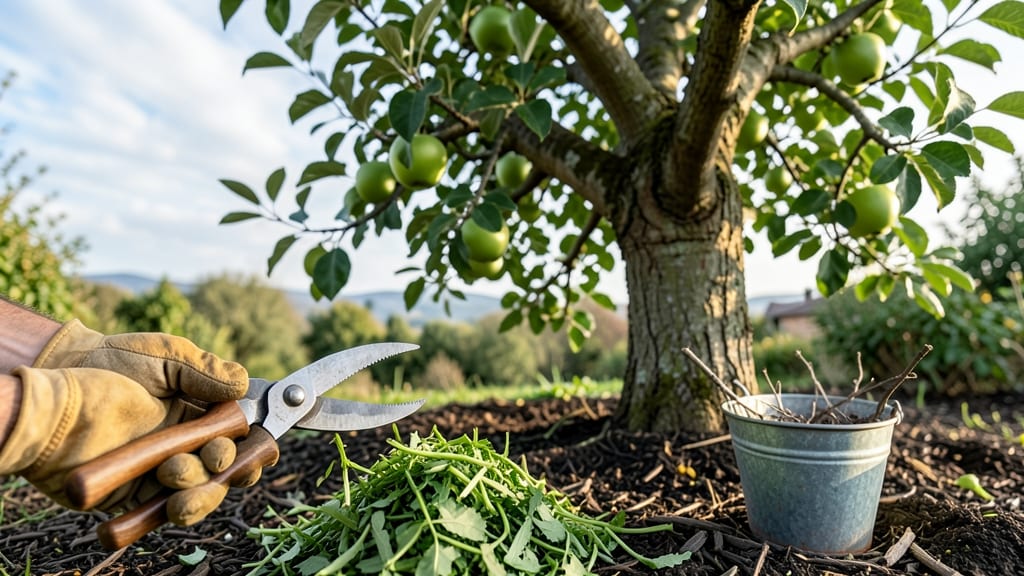
You can prune an apple tree in summer but only under specific conditions—limit cuts to pest control or shaping, and always do it after harvest in late summer to avoid spreading disease and stressing the tree.
Summer pruning of apple trees is a delicate balance because the warm weather accelerates wound healing but also invites fungal infections and pest infestations. 🌿 The key is timing: late summer (after harvest, typically August) is the safest window.
This period allows the tree to recover before winter dormancy while minimizing stress on the tree's energy reserves. I've found that focusing on removing only dead, diseased, or crossing branches reduces risk significantly—never make large cuts that expose the tree's vascular system.
For any summer pruning, sterilize your tools with rubbing alcohol to prevent spreading pathogens, and seal larger cuts with pruning sealant. If you must prune for storm damage, act immediately but limit cuts to what's absolutely necessary.
The goal is preservation, not reshaping—apple trees thrive when you work with their natural growth patterns rather than forcing dramatic changes during their active growing season.
💡 In This Article
- Why Summer Pruning Damages Apple Trees
- Safe Summer Apple Tree Pruning Techniques
Why summer pruning damages apple trees
The primary risk of summer pruning lies in how apple trees respond to wounds during their active growth phase.
When you make cuts in summer, the tree's sap flow increases dramatically (up to 30% more than in winter), creating an ideal environment for fungal pathogens like Chondrostereum purpureum, which causes silver leaf disease.
These fungi enter through open wounds and can spread rapidly in the warm, humid conditions typical of summer months.
The tree's natural defense system—callusing—works slower in summer because the increased metabolic activity diverts energy away from wound healing. Studies show it can take 6-8 weeks for a summer cut to fully seal compared to just 2-3 weeks in late winter.
This prolonged exposure leaves the tree vulnerable to infections that could kill branches or even the entire tree over time. 🌱 The stress response also triggers excessive regrowth, which competes with fruit production for the tree's limited energy reserves.
Another critical factor is how pests target stressed trees. Sawflies, borers, and other insects are drawn to the increased sap flow and weakened tree defenses. A single cut can attract hundreds of pests within days, leading to secondary damage that's far worse than the original pruning.
This is why professional arborists recommend avoiding major pruning during the growing season—it's not just about the immediate cut, but the cascading effects that follow.
The hormonal response is equally problematic. Summer pruning stimulates the production of auxin, a growth hormone that promotes rapid but unbalanced growth. This can lead to weak, water-sprout growth that's prone to breaking in storms or heavy fruit loads.
The tree essentially grows "wild" in response to the stress, which disrupts its natural fruiting cycle and makes it more susceptible to environmental stressors.
Consider this real-world example: In a 2018 study of commercial apple orchards, trees pruned in summer showed a 40% increase in fungal infections compared to those pruned in late winter.
The infected trees produced 25% fewer viable fruits the following season due to both direct damage and reduced energy for fruit development. This demonstrates why summer pruning should be a last resort rather than a regular practice.
There's one exception to this rule: pruning for immediate safety reasons, like removing storm-damaged branches. Even then, the goal is to minimize the tree's stress by making only essential cuts and sealing wounds promptly with a copper-based fungicide or pruning sealant.
The key difference is intent—emergency pruning saves the tree's life, while elective summer pruning often creates long-term problems.