
Pruning
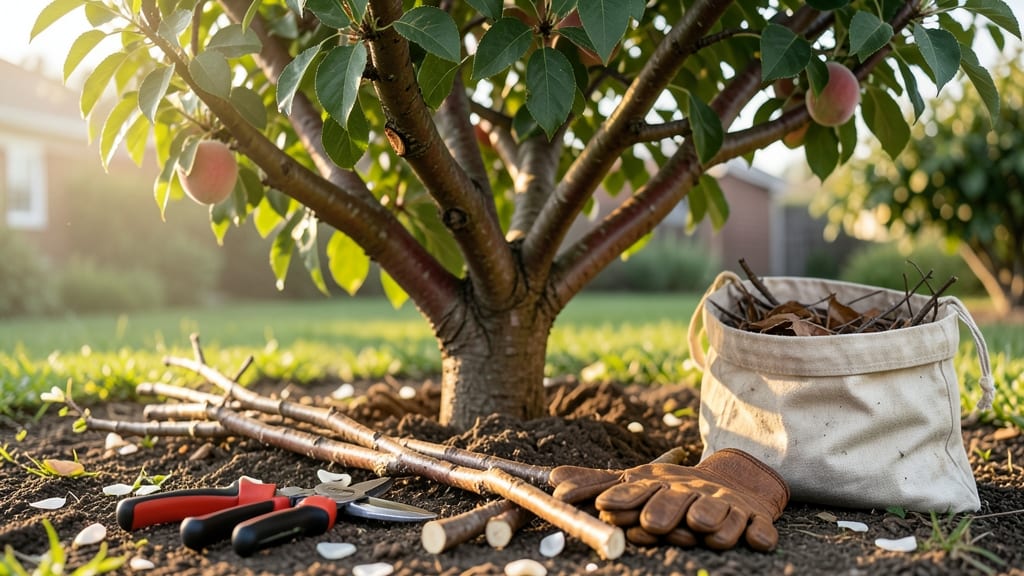
You can prune a peach tree after it blooms only in emergencies—like removing severely diseased branches—to avoid stunting fruit production and weakening next year's bloom cycle. Limit cuts to no more than 20% of the canopy to minimize stress.
Late-season pruning disrupts the tree's natural energy flow, which is already focused on fruit development. 🌿 Peach trees set next year's flower buds during the current growing season, so aggressive trimming after blooming can leave them vulnerable and reduce harvests.
Even small cuts create entry points for pests and diseases, making the tree more susceptible to infections that could spread into the root system.
When absolutely necessary—such as removing dead or infected branches—focus on sanitized tools and precise cuts just above outward-facing buds. This approach maintains the tree's structural integrity while reducing stress. Always prioritize minimal intervention and monitor the tree closely for signs of recovery in the following growing season.
💡 In This Article
- Why Late Pruning Damages Peach Tree Fruit Production
- Safe Late-Season Pruning Techniques for Peach Trees
Why late pruning damages peach tree fruit production
Peach trees rely on a delicate balance of energy between fruit development and preparing for next year’s blooms. When you prune after flowering, you’re interrupting this cycle by removing branches that contain flower buds for the following season.
These buds form during the current growing season, and aggressive cuts can reduce their number by up to 30-40%, directly impacting next year’s harvest. The tree’s energy, which should be focused on ripening existing fruit and storing nutrients for winter, gets diverted to healing wounds instead.
The timing of pruning matters because peach trees are already stressed during fruit development. Removing branches creates open wounds that act like open doors for pests like borers and diseases such as brown rot (Monilinia fructicola).
These pathogens thrive in the moist, nutrient-rich environment of fresh cuts, often spreading to the fruit or even the tree’s vascular system. 🌱 For example, a 6-inch cut on a 2-inch diameter branch can expose 12 square inches of vulnerable tissue, making the tree far more susceptible to infections.
Another critical factor is the tree’s photosynthetic capacity. Leaves are the powerhouses of fruit production, converting sunlight into energy for growth and sugar development. Pruning after blooming removes some of these leaves, reducing the tree’s ability to support the existing fruit load.
Studies show that peach trees pruned after flowering can experience a 20-30% reduction in fruit size due to this energy deficit, even if the number of fruits remains similar.
Even minimal pruning can disrupt the tree’s hormonal balance. Auxins, the plant hormones that regulate growth and fruit development, get redistributed when branches are removed. This hormonal shift can lead to uneven fruit ripening or even premature drop, as the tree struggles to maintain its energy reserves.
For instance, a tree that loses 25% of its canopy after blooming may produce fruit that ripens 1-2 weeks later than usual, making it harder to harvest at peak flavor.
Consider the case of a 5-year-old peach tree with a 10-foot canopy. If you remove 20% of its branches (about 20 square feet of leaf area) after blooming, you’re essentially asking it to support its current fruit load with 20% less energy production capacity.
This stress can also delay the tree’s recovery, making it more vulnerable to winter damage or spring frost, which peach trees are particularly sensitive to.
To mitigate these risks, always prioritize targeted cuts—like removing only diseased or dead wood—rather than reshaping the tree. Even a single 3-inch diameter branch removed at the wrong time can set back the tree’s growth by 1-2 years.
The key is to think of pruning after blooming as a last resort, not a routine practice. 💛