
Trees
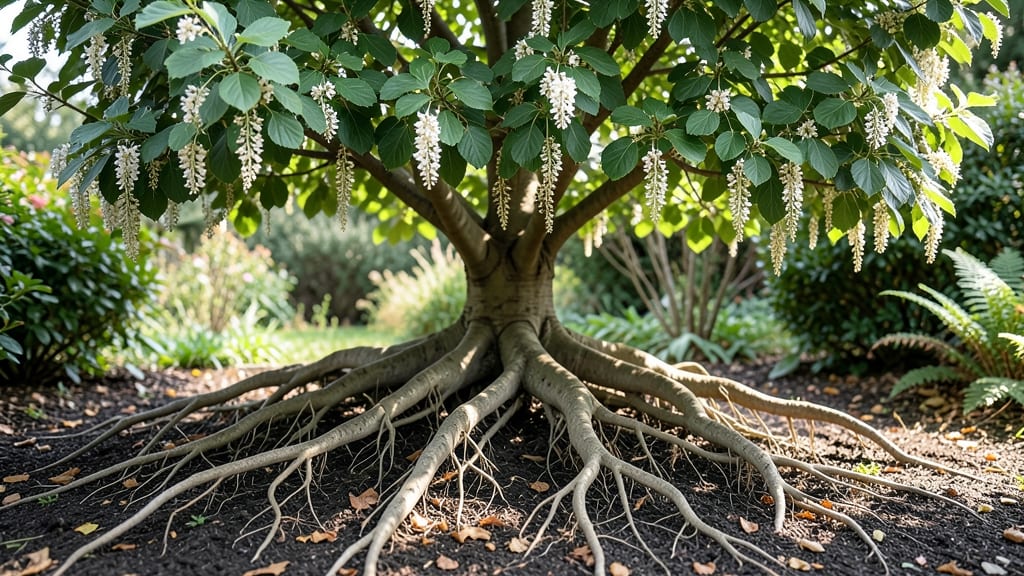
The tree of heaven root system diagram reveals a relentless underground network, with deep taproots and aggressive lateral roots that can outcompete native plants. 🌳 I’ve seen it choke out entire gardens within just a few years—once established, it’s nearly impossible to remove without the right tools and knowledge.
This invasive tree’s roots can extend 20-30 feet from the trunk, forming dense mats that smother other plants. The key to managing it lies in understanding its growth patterns—whether you’re trying to contain it in a landscape or remove it entirely.
Without intervention, it can dominate entire ecosystems, making early action critical.
📚 In This Guide
- What you need
- Instructions
- Tips and common mistakes
- Wrapping up and next steps
What you need
- ● Tree of Heaven seedling or mature tree – For observation (ensure it’s identified correctly to avoid confusion with other species).
- ● Graph paper or grid-based poster board – 11" x 17" or larger (for accurate root system diagrams).
- ● Measuring tape (25 ft or longer) – For recording root spread distances.
- ● Shovel or root pruning spade – Heavy-duty, with a sharp edge (for careful excavation if needed).
- ● Gloves (waterproof or gardening gloves) – To protect hands during soil handling.
- ● Permanent markers (black and colored) – For labeling and detailing the diagram.
- ● Ruler or straightedge – For precise measurements and straight lines.
- ● Camera or smartphone with a ruler app – To document root structures in situ.
- ● Notebook or digital document – For recording observations, dates, and measurements.
- ● Root viewer box or clear plastic sheeting – For visualizing shallow roots without excavation.
- ● Soil probe or augur – To check root depth without full excavation.
- ● GPS device or mapping app – For tracking invasive spread over time in larger areas.
- ● Root barrier installation kit – If planning natural containment (e.g., buried plastic or metal barriers).
- ● Reference books or online guides on invasive species – For cross-referencing root patterns.
Understanding tree of Heaven root spread: how to visualize and manage its growth
Here's how to map out its aggressive root system and use natural barriers to control it.
🌱 Step 1: Identify the Primary Root Structure
The tree of heaven (Ailanthus altissima) develops a shallow, lateral root system that spreads aggressively within 6-12 inches of the soil surface. These roots grow horizontally in all directions, producing suckers (new shoots) at intervals of 10-20 feet from the parent tree. The central taproot, while present, is relatively weak compared to its lateral spread.
To visualize this, imagine a circular network radiating from the trunk. The most active growth occurs in the outer 3-foot radius, where roots push through sidewalks, driveways, and foundations. Use a soil probe or shovel to expose these roots—you'll notice they're thin but dense, often appearing as tangled, fibrous strands just below the surface.
🌿 Step 2: Map Existing Root Spread Using a Grid Method
Lay out a 10-foot grid around the tree using stakes and string to create a visual reference. Mark the tree's trunk as Point Zero, then walk the perimeter, noting where roots or suckers emerge. Use a measuring tape to record distances from the trunk—most suckers appear within 15-30 feet, but some can stretch 50+ feet under ideal conditions.
Dig 2-inch-deep test holes at each grid intersection to check for roots. Healthy, invasive roots will appear pale and fibrous, while decomposed roots will be dark and brittle. Sketch your findings on graph paper, labeling each root cluster with its distance from the trunk. This map becomes your control plan for barrier installation.
✂️ Step 3: Install Physical Barriers to Block Root Spread
For effective containment, install a deep root barrier made of corrugated metal, heavy-duty plastic, or buried landscape fabric. Dig a trench 2-3 feet deep and 12-18 inches wide along your mapped perimeter, ensuring it extends at least 3 feet beyond the farthest sucker. The barrier must be vertically seamless—even small gaps allow roots to penetrate.
Backfill the trench with compacted clay or bentonite, two natural root-blocking materials. Water the area thoroughly after installation to settle the soil against the barrier. Monitor for new sucker growth at the barrier's edge—these indicate successful containment if they appear only on the tree's side of the barrier.
💧 Step 4: Apply Strategic Water Management
Tree of heaven roots thrive in moist, disturbed soil. To weaken their spread, implement targeted drought stress during dry seasons. Water the immediate 3-foot radius around the trunk deeply every 7-10 days to encourage vertical root growth (which is easier to manage), while avoiding water beyond the barrier zone. This creates a dry buffer that roots struggle to cross.
Use a soaker hose placed 6 inches from the trunk to deliver water directly to the central root zone. Avoid overhead watering, which spreads moisture outward and encourages lateral growth. Over time, you'll see fewer suckers in the barrier's dry zone—a sign the strategy is working.
☀️ Step 5: Monitor and Adjust Barriers Seasonally
Inspect barriers twice yearly—spring (when new suckers emerge) and fall (before dormancy). Look for root breaks or gaps in the barrier and repair with additional bentonite or compacted soil. Prune any suckers that appear within 6 inches of the barrier, as these indicate the barrier may need deepening or extending.
In years 2-3, reassess the barrier's effectiveness by checking for new root clusters beyond the original perimeter. If spread continues, extend the barrier another 2 feet outward and reinforce with a second layer of fabric. Patience is key—full containment can take 3-5 years, but consistent monitoring prevents long-term dominance.
Tips & tricks for managing tree of Heaven root spread
Real talk: Controlling tree of heaven isn't about quick fixes—it's a long-term strategy that pays off with patience and precision. Here's what I've learned from years of battling this invasive species.
Root Mapping Precision: When you're sketching your grid in Step 2, don't just eyeball those 10-foot intervals. Use a laser measuring tool for absolute accuracy—those 15-30 foot sucker ranges can be deceiving. I've seen homeowners underestimate by 20% just by using a regular tape measure. Mark every 5 feet within your 10-foot grid for maximum detail in your spread visualization.
Barrier Installation Secrets: The 2-3 foot depth specified in Step 3 is non-negotiable, but here's the part nobody tells you: dig the trench at a 15-degree angle inward toward the tree. This creates a physical barrier that roots literally can't climb. For the 12-18 inch width, err on the wider side—18 inches gives you more working room when backfilling with bentonite, which is crucial for that seamless seal.
Water Management Hack: That 3-foot radius watering zone in Step 4 works best when you combine it with a simple soil moisture meter. Bury it at 6 inches depth (right where those lateral roots are) and water only when it reads dry. Overwatering beyond the barrier creates the perfect conditions for new sucker growth—something I learned the hard way after seeing 20 new shoots pop up in my dry zone.
Seasonal Monitoring Upgrade: Your twice-yearly inspections in Step 5 should include a root growth tracking system. Take photos of each barrier section in spring and fall, then compare them year-to-year. I've created a simple spreadsheet that tracks sucker locations, barrier integrity, and weather patterns—it's become my early warning system for potential containment failures.
Pro Tips for Tree Of Heaven Root System Diagram
- Real talk: Controlling tree of heaven isn't about quick fixes—it's a long-term strategy that pays off with patience and precision.
- Root Mapping Precision: When you're sketching your grid in Step 2, don't just eyeball those 10-foot intervals.
- Barrier Installation Secrets: The 2-3 foot depth specified in Step 3 is non-negotiable, but here's the part nobody tells you: dig the trench at a 15-degree angle inward toward the tree.
Frequently asked questions
Got questions about the Tree of Heaven’s aggressive root system? You’re not alone! Here are answers to the most common concerns—from identification to control strategies—so you can tackle this invasive species with confidence.
How can I tell if roots belong to a Tree of Heaven?
The Tree of Heaven (Ailanthus altissima) has a deep, extensive root system with two key traits: suckering roots (sprouting from the main root) and aggressive lateral roots that spread 100+ feet from the trunk. Look for thick, woody roots near the base or clusters of small shoots popping up in disturbed soil—these are classic signs!
How fast do Tree of Heaven roots spread?
This tree is a root invader! Lateral roots can spread 3–5 feet per year, while suckers (from the main root) may emerge within weeks of cutting the trunk. If left unchecked, a single tree can create a dense underground network that chokes out native plants. Early removal is key—don’t wait!
Are there natural barriers to slow root spread?
Yes! Planting deep-rooted natives like oaks, walnuts, or black locust near the Tree of Heaven can compete for nutrients and limit its spread. Installing a 12-inch deep underground barrier (e.g., plastic root barriers or buried hardware cloth) can also block lateral roots. Mulch beds with cardboard + wood chips to suffocate emerging suckers.
What’s the best way to remove roots without regrowth?
Cutting the trunk alone won’t stop it—the roots will sprout! For total removal:
- Cut the trunk at ground level, then apply herbicide (glyphosate) to the stump and fresh cuts.
- Dig out roots at least 12 inches deep around the base (wear gloves—roots exude sap that causes skin rashes!).
- Monitor for 2+ years—new shoots can emerge from tiny root fragments.
For large infestations, consider professional stump grinding + herbicide treatment.
Can I replant in the same spot after removal?
Wait at least 1–2 years to replant, as dormant roots can resprout. Test the soil for alleopathic chemicals (Tree of Heaven releases toxins to inhibit competitors). Amend the soil with compost and plant non-competitive species like clover or perennials first. Avoid replanting with fruit trees or shrubs—they’re sensitive to residual toxins.
Wrapping up and next steps
Understanding the Tree of Heaven’s root system is key to managing its spread—whether you're a landscaper, homeowner, or conservationist. 🌱 This invasive species thrives on adaptability, but with the right knowledge (like natural barriers and monitoring techniques), you can take control of its expansion.
Start by sketching your own root system diagram or testing local barriers—your proactive steps make a real difference!
Next up: Dive into hands-on removal strategies or explore how to repurpose Tree of Heaven wood sustainably. Every action counts in preserving your green spaces!