
Companion Plants
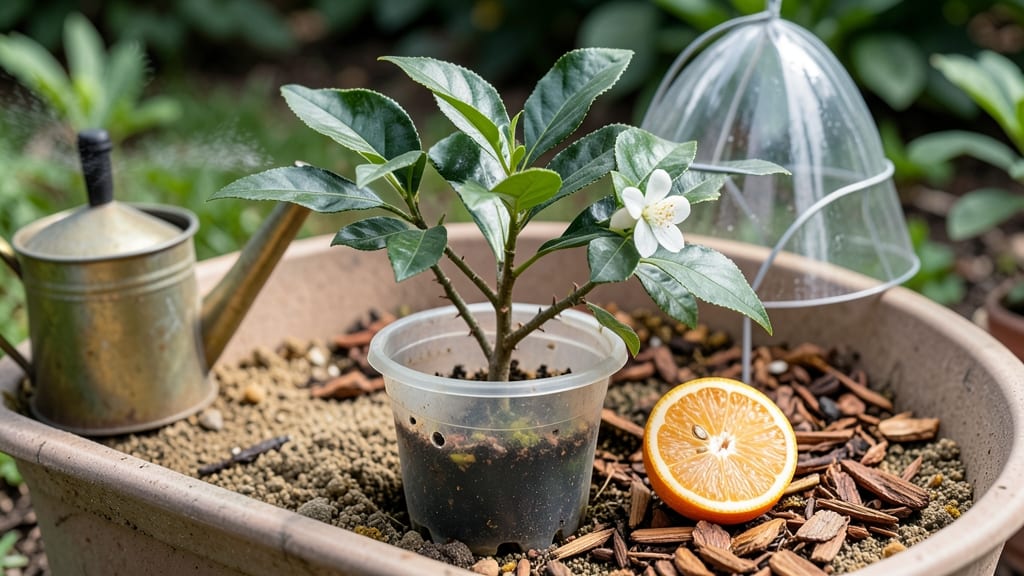
You can grow an orange tree from an orange seed, but the resulting plant will likely produce small, bitter fruit after 5-10 years. For edible oranges, start with a fresh seed, soak it overnight, and plant in well-draining soil for the best chance of germination.
Most citrus trees grown from seeds don't match their parent's flavor or size because they inherit random traits from both parents. 🌱 The sweet, juicy oranges you buy at the store come from grafted trees, where growers attach a desired variety to a hardy rootstock.
If you're patient and lucky, your seedling might eventually bear fruit—but it'll likely taste more like a tart, seedy citrus than the oranges you're used to.
For better results, consider starting with a grafted citrus tree from a nursery. These plants produce fruit much faster and with consistent quality. If you're set on growing from seed, be prepared for years of nurturing before you see any fruit at all.
💡 In This Article
- Why Seed-Grown Orange Trees Rarely Bear Edible Fruit
- Step-by-Step Guide to Germinating Orange Seeds Indoors
Why seed-grown orange trees rarely bear edible fruit
When you plant an orange seed, you're not growing a clone of the parent tree—you're starting a genetic lottery. Citrus trees reproduce sexually through seeds, meaning your seedling inherits a random mix of traits from both the orange's parent and its pollen donor.
This process, called hybridization, explains why store-bought oranges (which come from grafted trees) taste so different from seed-grown ones. The resulting fruit often contains higher levels of limonin, a bitter compound that makes them inedible. 🍊
Most commercial orange varieties, like Valencia or Navel, are carefully bred for sweetness, size, and disease resistance. These traits don't reliably pass to seedlings. For example, a Navel orange tree grown from seed might produce fruit that's only 30-50% as sweet as its parent, with thicker, more bitter membranes.
The tree itself may also stay small—often reaching only 10-15 feet tall—compared to grafted trees that can grow 20-30 feet with proper care.
Grafting is the professional solution to this problem. Nurseries attach a cutting from a desired orange variety (the scion) onto the roots of a hardy citrus rootstock. This ensures the tree produces fruit identical to the parent, while the root system provides disease resistance and vigor.
Without grafting, your seedling's fruit quality depends entirely on chance—like rolling genetic dice every time. 🎲
Even if your seedling does bear fruit, it'll likely take 5-10 years to reach maturity, compared to 2-4 years for grafted trees. The first fruits often appear small (about 1-2 inches in diameter) and contain multiple seeds—another telltale sign of seed propagation.
These "volunteer" trees sometimes produce interesting variations, like Calamondin or Meyer lemon hybrids, but they're rarely as productive as their cultivated counterparts.
For the best chance of edible fruit, start with a grafted tree from a reputable nursery. If you're determined to try seeds, be prepared for years of patience and potential disappointment.
The journey itself can be rewarding—watching a seedling grow into a mature tree teaches valuable lessons about plant genetics and horticulture. Just don't expect that first harvest to taste like your favorite grocery store orange! 🌱
Here's what to watch for in your seedling's early years:
- Leaf shape: Seedlings often have serrated leaves, while grafted trees have smooth-edged foliage
- Growth rate: Slow growth (6-12 inches/year) suggests seed origin
- Thorns: More pronounced thorns can indicate hybrid vigor