
Trees
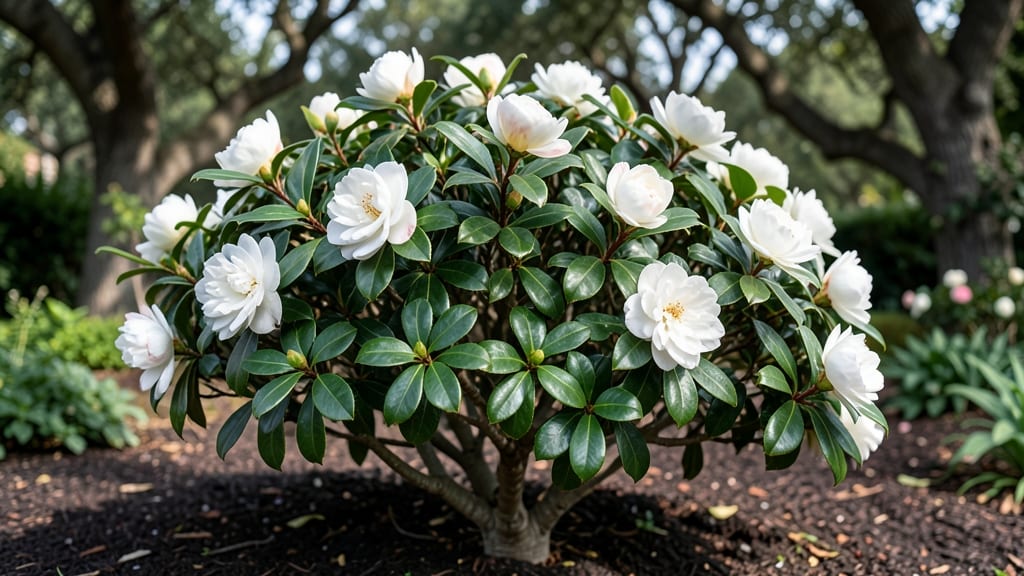
White camellias bloom when others sleep—those stunning winter flowers prove it. 🌸 I’ve grown these elegant trees for years, and the secret to their year-round beauty lies in the right spot, soil, and just enough pruning to keep them happy (not overworked).
They thrive in partial shade where summers aren’t scorching, prefer acidic, well-draining soil, and reward patience with glossy leaves and clusters of pure-white blooms. The key?
Mimic their natural habitat—moist but not soggy soil, a light hand with pruning, and a little winter protection in colder zones. Once established, they’re nearly foolproof.
📚 In This Guide
- What you need
- Instructions
- Tips and common mistakes
- Wrapping up and next steps
What you need
- ● Camellia Tree (White Variety): A healthy Camellia sinensis or Camellia japonica with white flowers (e.g., 'White Cloud' or 'White Rose'). Choose a 1-3 year old sapling for easier establishment.
- ● Well-Draining Soil: 50 lbs of acidic potting mix (pH 5.0–6.5) or garden soil amended with: 20% peat moss or coco coir (for moisture retention).
- ● 10% perlite or sand (for drainage).
- ● 1 cup sulfur (to adjust pH if needed).
- ● Container or Planting Hole: Container: A 15–20 gallon pot with drainage holes (for potted growth).
- ● Garden Bed: A hole twice as wide as the root ball and 6 inches deeper.
- ● Fertilizer: 1 lb of acid-loving plant fertilizer (e.g., 8-3-9 or 10-10-10 with micronutrients).
- ● Mulch: 2–3 inches of pine bark fines or pine needles (to retain moisture and acidity).
- ● Watering Can or Hose: With a gentle spray nozzle for hydration.
- ● Required: Trowel or shovel (for planting).
- ● Gloves (to protect hands from thorns or soil).
- ● Pruning shears (sterilized, for minimal shaping).
- ○ Optional (Nice to Have): Soil pH tester (to monitor acidity levels).
- ● Drip irrigation system (for consistent moisture).
- ● Support stake (if planting in windy areas).
- ● Humidity tray (for indoor or dry-climate growing).
- ● Location: A spot with partial shade (3–6 hours of morning sun) and protection from harsh afternoon rays.
- ● Climate: USDA Zones 7–10 (or indoor growing with grow lights in cooler zones).
- ● Patience: White camellias may take 2–3 years to bloom after planting!
- ● Knowledge: Familiarity with acidic soil care (camellias are diva plants—they demand it!).
Step-by-Step instructions for planting and caring for white camellia trees
Here’s how to grow a stunning white camellia that blooms reliably year-round with just a little attention.
🌱 Step 1: Choose the Perfect Planting Spot
White camellias thrive in partial shade, especially in hotter climates—think morning sun with afternoon shade. A spot with 4-6 hours of indirect light daily keeps blooms vibrant and prevents leaf scorch. I always check the spot’s microclimate by observing how nearby plants fare in summer heat.
Camellias hate soggy roots, so avoid low-lying areas where water pools. Amend heavy clay soil with 3-4 inches of organic compost to improve drainage. Test the soil’s pH—camellias prefer acidic conditions (5.0-6.0). If your soil is alkaline, mix in sulfur or peat moss before planting.
🪴 Step 2: Plant with Care for Long-Term Health
Dig a hole twice as wide as the root ball but no deeper—camellias dislike being buried too deep. Gently loosen the roots if they’re circling the pot, then place the tree in the hole so the top of the root ball sits level with the ground. Backfill with native soil mixed with compost to encourage root spread.
Water deeply right after planting to settle the soil, then mulch with 2-3 inches of pine bark or shredded leaves to retain moisture and regulate temperature. Keep mulch 3 inches away from the trunk to prevent rot. I always water again after mulching to help roots establish quickly.
☀️ Step 3: Water and Feed for Vibrant Blooms
Camellias need consistent moisture, especially during bloom season. Water 1-2 times per week, depending on rainfall, until the top 2 inches of soil feel dry. Overwatering causes yellow leaves, while underwatering leads to bud drop. A drip irrigation system keeps moisture steady without wetting foliage, which prevents fungal diseases.
Feed in early spring with an acid-loving plant fertilizer (like 8-3-9 or 10-10-10) mixed at half-strength. Avoid high-nitrogen fertilizers—they promote leafy growth at the expense of flowers. I also add Epsom salt (1 tablespoon per gallon of water) monthly during bloom season to boost magnesium for stronger blooms.
✂️ Step 4: Prune Strategically for More Flowers
Camellias bloom on old wood, so minimal pruning keeps them healthy. After flowering, trim dead or crossing branches with clean cuts just above a leaf node. Never prune in late summer—you’ll cut off next year’s buds. I also shape lightly in late winter to open the center for better airflow and light penetration.
If your camellia gets leggy, prune selective branches back by one-third to encourage bushier growth. Always sterilize pruners with rubbing alcohol between cuts to prevent disease spread. Avoid heavy pruning—camellias recover slowly, and aggressive cuts can reduce next year’s blooms.
⏰ Step 5: Protect and Maintain Year-Round
In winter, camellias need shelter from harsh winds—their thick leaves can tear easily. If you’re in a cold climate (below 15°F), wrap the trunk with burlap and mulch heavily to protect roots. I also check for scale insects after winter dormancy and treat with neem oil if needed.
Monitor for yellowing leaves—this often signals overwatering or nutrient deficiency. Brown edges on leaves mean low humidity, so mist occasionally in dry climates. With proper care, your white camellia will reward you with lush, fragrant blooms from late fall through spring.
Tips & tricks for perfect white camellia blooms
White camellias are finicky but rewarding—here’s how to avoid common pitfalls and get those stunning flowers year after year.
Light Balance: The 4-6 hours of indirect light in Step 1 is crucial, but don’t assume all morning sun is equal. Observe your spot during summer—if leaves show brown patches by midday, you need more afternoon shade. I’ve seen camellias thrive with just 3 hours of morning sun if the afternoon is deeply shaded by trees or structures.
Soil Prep Secret: Testing your soil’s pH before planting (Step 1) is non-negotiable—camellias turn their backs on alkaline soil. If your test shows pH above 6.0, mix in sulfur or peat moss until you reach 5.5-6.0. I’ve seen plants struggle for years because someone skipped this step. Also, avoid fresh manure—it raises pH over time.
Watering Wisdom: Those 1-2 weekly waterings in Step 3 need precision. Stick your finger 2 inches deep—if it’s dry, water thoroughly until it runs out the bottom of the pot or drainage holes. Overwatering is the #1 killer, but underwatering causes buds to drop before opening. A moisture meter helps if you’re unsure.
Pruning Precision: When trimming dead branches in Step 4, cut just above a leaf node (the bump where leaves grow) to encourage new growth. I’ve seen people cut too close to the trunk, which can leave ugly scars. For leggy branches, prune back by one-third in late winter—this triggers bushier growth without sacrificing next year’s blooms.
Pro Tips for Camellia Tree White
- White camellias are finicky but rewarding—here’s how to avoid common pitfalls and get those stunning flowers year after year.
- Light Balance: The 4-6 hours of indirect light in Step 1 is crucial, but don’t assume all morning sun is equal.
- Soil Prep Secret: Testing your soil’s pH before planting (Step 1) is non-negotiable—camellias turn their backs on alkaline soil.
Frequently asked questions
When is the best time to plant a white camellia tree?
The ideal time to plant your Camellia tree white is in early spring or fall, when temperatures are mild (50–70°F). Avoid planting in extreme heat or frost, as roots need time to establish. If you’re in a warm climate, fall planting (September–November) is often best to encourage root growth before winter.
How much sunlight does a white camellia tree need?
White camellias thrive in partial shade to full shade, especially in hotter climates. Aim for 3–6 hours of morning sun and afternoon shade to prevent leaf scorch. In cooler regions, they can tolerate more sun, but avoid harsh afternoon rays. Pro tip: Observe your tree’s leaves—if they yellow or crisp, it’s getting too much sun!
How often should I water my white camellia tree?
Water your Camellia tree white deeply 1–2 times per week, ensuring the top 6 inches of soil stay moist but not soggy. Newly planted trees need more frequent watering (every 2–3 days). During summer, check soil moisture daily—camellias hate drought stress! Mulch around the base to retain moisture and regulate soil temperature.
Can I grow a white camellia tree in a pot?
Yes! Potted white camellias are a great option for small spaces or renters. Use a large container (at least 15–20 gallons) with drainage holes and acidic, well-draining soil. Repot every 2–3 years and move the pot gradually into more sunlight as the tree matures. Watch out: Potted camellias dry out faster—water more frequently in summer!
Why aren’t my white camellia flowers opening?
Blooms may fail to open due to stress from overwatering, underwatering, or nutrient deficiencies. Check for:
- Bud blast: Fungal disease (like Pestalotiopsis) causes buds to drop. Prune affected branches and improve air circulation.
- Lack of sunlight: Move to a shadier spot if leaves look pale or sparse.
- Cold drafts: Camellias need winter protection if temps drop below 15°F.
Do white camellia trees need much pruning?
Minimal pruning is needed! Trim only to shape the tree, remove dead branches, or open the center for airflow. The best time to prune is right after flowering (late spring). Avoid heavy pruning—camellias bloom on old wood, so over-pruning can reduce flowers. Remember: Prune with clean, sharp shears to prevent disease.
Wrapping up and next steps
Growing a white camellia tree is a rewarding journey that brings elegance and tranquility to any garden with minimal effort! 🌸 With the right soil, sunlight, and occasional pruning, you’ll enjoy stunning year-round blooms that brighten up your outdoor space.
Whether you’re a seasoned gardener or just starting out, this resilient beauty makes it easy to cultivate a picturesque landscape.
Ready to take the next step? Start by selecting your favorite white camellia variety—like ‘White Emperor’ or ‘Silver Moon’—and plant it in a spot that meets its needs. Then, simply enjoy the process of nurturing it into a showstopping centerpiece! 🌿