
Trees
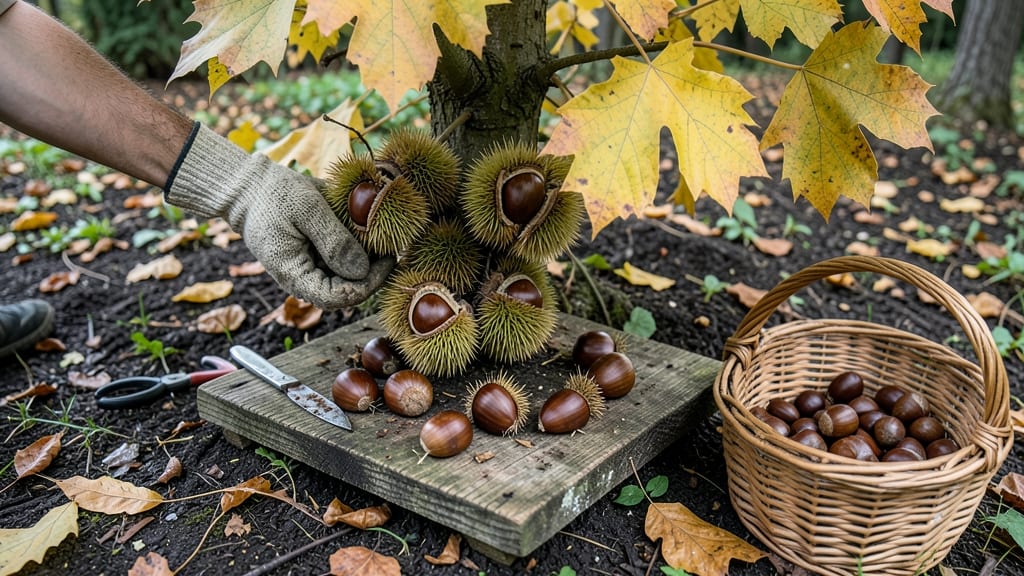
Buckeye tree nut uses focus on dyes, crafts, and limited medicinal applications, though extreme caution is required due to their high toxicity when raw. Roasting can slightly reduce toxicity, but consumption should never occur without expert supervision.
While buckeye nuts are dangerous to eat raw, their hard shells and glossy seeds have inspired generations of artisans and herbalists. 🌿 The seeds were traditionally ground into natural dyes for fabrics, creating earthy browns and blacks perfect for rustic textiles.
Some Native American tribes also used them in ceremonial crafts, like beadwork or talismans, prizing their durability and striking appearance. Even today, foragers collect them for ornamental arrangements or as plant-based alternatives in eco-friendly projects—just never for culinary purposes without professional detoxification.
For dye-making, the key is cold-water extraction—simmering the shells in vinegar yields a rich, stable pigment.
Crafters often polish the seeds for jewelry or carvings, though always wearing gloves to avoid skin irritation from residual toxins. Never attempt to eat them, even roasted, without consulting a toxicology expert—the compounds in buckeyes can cause severe digestive distress or worse.
💡 In This Article
- Toxicity and Safety Precautions for Buckeye Tree Nuts
- Creative and Practical Uses of Buckeye Tree Nuts
Toxicity and safety precautions for buckeye tree nuts
The buckeye tree nut's toxicity stems from two key compounds: aesculin and saponins. Aesculin, a glycoside, irritates the digestive tract and can cause vomiting or diarrhea even in small amounts. Saponins create soapy lather when mixed with water, which disrupts cell membranes—leading to potential organ damage with repeated exposure.
The seeds contain these compounds in concentrated form, making them particularly hazardous when crushed or ingested raw.
Symptoms of ingestion typically appear within 30-60 minutes and include nausea, abdominal pain, and dehydration. In severe cases, respiratory distress or neurological effects may occur, though fatalities are rare.
Historical records show some Native American tribes used buckeye extracts externally for topical treatments, but internal use was avoided due to these risks. Even skin contact can cause irritation, so gloves are essential when handling the nuts for crafts or dye work.
Roasting at 350°F for 15-20 minutes breaks down some saponins, but the process doesn't eliminate aesculin entirely. Traditional detoxification methods involved prolonged boiling or fermentation, but these still carry risks. For safe crafting, always work in well-ventilated areas and avoid inhaling dust from grinding the shells.
The hard outer husk contains the highest toxin concentrations, so it's best removed entirely before any project.
What most people don't realize is that toxicity varies by species—horse chestnuts (a close relative) are even more dangerous, containing esculin, a related compound that affects blood clotting. Buckeyes, while still toxic, are sometimes confused with edible nuts like chestnuts, leading to accidental poisoning.
The key to safe handling is treating them like ornamental plants rather than food sources, regardless of preparation method.
For dye extraction, the process involves steeping crushed shells in vinegar for 24-48 hours to create a stable brown pigment. The resulting liquid can stain fabrics permanently, but residual toxins remain in the solution.
Always wear gloves during this process and dispose of leftover dye in sealed containers, far from children or pets. The visual result—a deep, earthy brown—makes it popular for natural fiber projects, but the trade-off is always the health risk.
If accidental ingestion occurs, seek medical attention immediately. Activated charcoal can help bind toxins in the stomach, but time is critical. The buckeye's reputation as a "poison nut" isn't exaggerated—its beauty in crafts comes with serious safety considerations that can't be overlooked. 💛