
Blooming
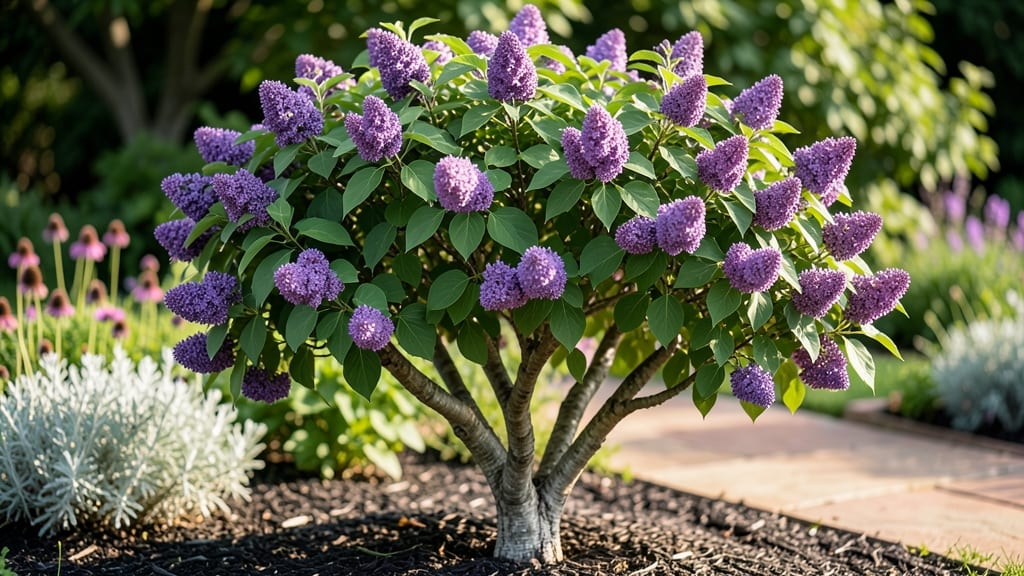
This Bloomerang Dark Purple Lilac in tree form is the kind of plant that makes neighbors stop and stare—like a living painting with cascading dark purple blooms that look like they belong in a fairy tale. 🌿 I planted mine near the front walk, and now it’s the first thing guests notice, its unique arching branches framing the entry like a natural doorway.
What makes it special isn’t just the color—it’s the year-round interest. Those velvety purple flowers appear in late spring, but the exfoliating bark and glossy foliage keep it stunning even in winter.
It thrives in formal gardens as a structured focal point or in cottage-style borders where its whimsical shape softens edges. Pair it with silver foliage plants like lamb’s ear or lavender for a striking contrast, or let it stand alone as a dramatic centerpiece. The key to keeping its shape?
Light pruning after blooming to encourage those graceful, arching branches—no heavy-handed work needed. It’s the kind of plant that grows more beautiful with age, adding drama and personality to any garden style. Once you see it in person, you’ll want one too.
📚 In This Guide
- What you need
- Instructions
- Tips and common mistakes
- Wrapping up and next steps
What you need
- ● Bloomerang Dark Purple Lilac Tree: 1 container-grown plant (3–5 gallons, 4–6 ft tall) or
- ● 1 bare-root sapling (dormant season only, 2–3 ft tall)
- ● Planting Site: Full sun location (6+ hours of direct sunlight daily)
- ● Well-draining soil (amend with compost if heavy clay)
- ● Space: 10–15 ft wide × 10–15 ft tall (mature size)
- ● Tools: Shovel or trowel (for digging)
- ● Garden gloves (to protect your hands)
- ● Pruning shears (sterilized, for shaping)
- ● Mulch (2–3 inches of organic mulch, like shredded bark)
- ● Watering can or hose (with gentle spray nozzle)
- ● Slow-release fertilizer (balanced 10-10-10, 1 lb per tree)
- ● Epsom salt (1 tbsp dissolved in water for magnesium boost)
- ● Tree stakes & ties (if planting in windy areas)
- ● Pest deterrents (neem oil or insecticidal soap for early prevention)
- ● Decorative stakes or garden flags (to mark the planting spot)
How to plant and care for a Bloomerang dark purple lilac tree form
This whimsical lilac creates a stunning focal point with fragrant blooms and year-round interest—here's how to plant and nurture it.
🪴 Step 1: Choose the Perfect Planting Spot
The Bloomerang Dark Purple lilac thrives in full sun—at least 6-8 hours daily—so scout your yard for the sunniest location. I like to place mine where it gets morning sun and afternoon shade in hotter climates, which prevents leaf scorch. The tree form grows 8-10 feet tall and wide, so ensure it has 6-8 feet of clearance from structures or other plants.
Check the soil drainage by digging a small hole—if water pools after 30 minutes, amend the site with 2-3 inches of compost or plant in a raised bed. Lilacs hate soggy roots, so prioritize well-draining soil. I always test pH too; these lilacs prefer slightly alkaline soil (6.5-7.5). If your soil is acidic, add pelletized lime before planting.
🌱 Step 2: Plant at the Right Time and Depth
Spring or early fall are ideal planting times—avoid extreme heat or cold. Dig a hole twice as wide as the root ball but only as deep as the container’s root base. The top of the root ball should sit 1-2 inches above ground level—burying too deep suffocates the plant. Gently remove the container and loosen any circling roots with your fingers.
Place the tree in the hole, backfill with native soil mixed with 1-2 inches of compost, and tamp lightly to remove air pockets. Water deeply to settle the soil, then add a 2-3 inch layer of mulch (keep it 4 inches away from the trunk to prevent rot). I like to water again after 24 hours to encourage root establishment.
☀️ Step 3: Water and Fertilize for Strong Growth
Water deeply once a week during the first growing season—1-1.5 gallons per watering—until the soil is 6 inches deep and moist. You’ll know it’s right when the top inch feels damp but not soggy. After the first year, reduce to every 2-3 weeks unless there’s no rain for 4+ weeks. Overwatering is the #1 killer of lilacs.
Fertilize lightly in early spring with a balanced 10-10-10 fertilizer (use ½ the recommended dose). These lilacs are low-maintenance and don’t need heavy feeding. I skip fertilizer entirely if the soil was amended well at planting. Avoid high-nitrogen fertilizers—they promote leafy growth at the expense of blooms.
✂️ Step 4: Prune for Shape and Blooms
Prune immediately after flowering (late spring) to shape the tree and encourage next year’s blooms. Remove dead, crossing, or weak branches first, then thin out 10-20% of the oldest wood to improve airflow. The Bloomerang form naturally grows in a rounded shape, but I lightly trim back any leggy branches to maintain its whimsical silhouette.
Never prune in fall or winter—you’ll cut off next year’s flower buds. If you must prune for safety (e.g., branches near power lines), do it in late winter when the tree is dormant. Sterilize pruners with rubbing alcohol between cuts to prevent disease spread.
🌿 Step 5: Enjoy Year-Round Interest
These lilacs offer four-season appeal: fragrant dark purple blooms in late spring, glossy green foliage in summer, golden-yellow fall color, and exfoliating bark in winter. Deadhead spent blooms by early summer to redirect energy to next year’s flowers. I also keep an eye out for lilac borers—tiny holes in stems signal an infestation, so treat with neem oil if spotted.
After 3-5 years, your Bloomerang lilac will become a showstopping focal point. Group it with complementary perennials like catmint or lavender for a pollinator-friendly display. With minimal care, it’ll reward you with decades of color and fragrance—exactly as promised!
Tips & tricks for perfect Bloomerang lilac planting
Here's what I wish I'd known before planting my first whimsical lilac—these little details make all the difference.
Sunlight Secret: While 6-8 hours of sun is perfect, I've found that morning sun with afternoon shade in hotter climates prevents leaf scorch while still giving you those stunning dark purple blooms. If you're in a particularly hot region, consider a 50% shade cloth for the afternoon hours during summer months—it's a game-changer for maintaining vibrant foliage.
Root Preparation: When removing your lilac from its container, gently loosen any circling roots with your fingers rather than cutting them. I've seen people use pruners here, but that can actually damage the roots more than help. Think of it like untangling headphones—patient finger work is best. This step ensures your tree establishes roots more quickly after planting.
Mulching Wisdom: That 2-3 inch layer of mulch around your lilac is crucial, but keep it 4 inches away from the trunk to prevent rot. I like to use organic mulch like shredded bark or wood chips, and I always refresh it annually. This helps maintain moisture levels and regulates soil temperature, especially during those first critical growing seasons.
Pruning Timing: The instructions say to prune immediately after flowering, but I've learned to wait until the blooms have completely faded and any seed pods have formed. This ensures you don't accidentally cut off next year's flower buds. I mark my calendar right after the last blooms fall to remind myself—it's easy to forget in the excitement of summer!
Pro Tips for Bloomerang Dark Purple Lilac Tree Form
- Here's what I wish I'd known before planting my first whimsical lilac—these little details make all the difference.
- Sunlight Secret: While 6-8 hours of sun is perfect, I've found that morning sun with afternoon shade in hotter climates prevents leaf scorch while still giving you those stunning dark purple blooms.
- Root Preparation: When removing your lilac from its container, gently loosen any circling roots with your fingers rather than cutting them.
Frequently asked questions
Got questions about the Bloomerang Dark Purple Lilac Tree Form? You’re not alone! Here are some of the most common ones—plus expert answers to help you make the most of this showstopper in your garden.
How fast does the Bloomerang Dark Purple Lilac Tree grow?
The Bloomerang grows at a moderate pace, typically adding 12–24 inches per year under ideal conditions. With proper care (sunlight, well-draining soil, and occasional pruning), it can reach 10–15 feet tall and wide within 5–7 years. Patience pays off—its stunning blooms are worth the wait!
When is the best time to plant a Bloomerang Dark Purple Lilac Tree?
Plant your Bloomerang in early spring or fall for the best results. This timing allows roots to establish before extreme heat or cold sets in. Avoid planting in summer (unless your climate is mild) or winter (risk of frost damage). Pro tip: Soak the root ball before planting to reduce transplant shock!
Does the Bloomerang Dark Purple Lilac bloom only once a year?
Not at all! Unlike traditional lilacs, the Bloomerang is a re-blooming variety, producing two flushes of flowers per season: the first in early spring and a second, lighter bloom in late summer/fall. This extends your garden’s color palette and attracts pollinators year-round.
Can I prune the Bloomerang Dark Purple Lilac Tree after it blooms?
Yes, but timing matters! Prune right after the first spring bloom (or in early summer) to shape the tree and encourage strong growth for the next season. Avoid heavy pruning in fall or winter, as it removes next year’s flower buds. Use clean, sharp tools to make cuts just above a leaf node for a tidy look.
What’s the hardiness zone for the Bloomerang Dark Purple Lilac Tree?
The Bloomerang thrives in USDA Hardiness Zones 3–8, making it versatile for most U.S. climates. In Zone 3–4, protect young trees with mulch in winter. In Zone 8+, ensure it gets partial shade during peak summer heat to prevent stress. Always check your local microclimate—it’s the key to success!
What are some alternatives if I can’t find a Bloomerang?
If the Bloomerang isn’t available, consider these re-blooming lilac varieties with similar drama:
- ‘Dwarf Korean Lilac’ (Syringa meyeri) – Compact, fragrant, and cold-hardy.
- ‘Miss Kim Lilac’ – Smaller size, purple blooms, and reliable reblooming.
- ‘Bloomerang White Lilac Tree’ – Same form, just with creamy white flowers.
All offer long-lasting color and adaptability!
Wrapping up and next steps
The Bloomerang Dark Purple Lilac isn’t just a tree—it’s a statement piece that brings color, texture, and charm to your garden year-round. With its whimsical, weeping form and stunning blooms, it’s perfect for adding drama and elegance to any landscape.
Whether you’re a seasoned gardener or just starting, this lilac is a low-maintenance, high-reward choice.
Ready to transform your outdoor space? Plant one today and watch your garden come to life with beauty that lasts! 🌸 For extra inspiration, browse local nurseries or check out design ideas to make the most of your new focal point.