
Pests and Diseases
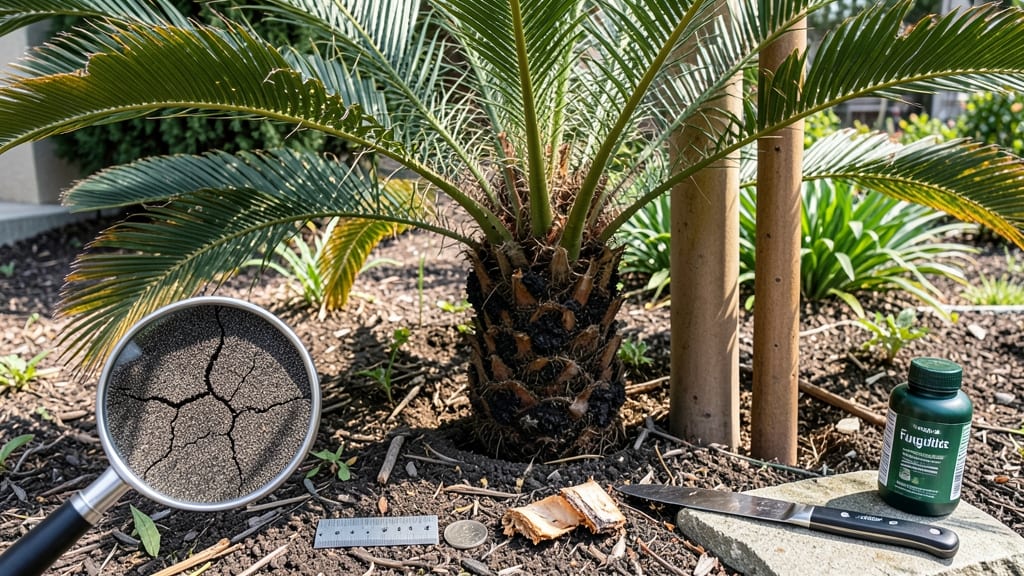
Black fungus creeping up your palm tree trunk is a silent killer—if you don’t act fast. 🌿 I’ve seen healthy palms turn into hollow shells in months when this stuff spreads, and the worst part? It’s often hidden until it’s too late.
The good news? You can stop it before it ruins your tree. This isn’t just about spraying something random—it’s about identifying whether it’s Phytophthora (the wet-weather menace) or Ganoderma (the wood-rotting aggressor). Both start with dark streaks or crusty patches, but the fixes differ.
The key is catching it early, when you can still save the tree with the right treatment. By the end of this, you’ll know exactly what to look for, how to prune out the infected areas, and whether to reach for organic copper sprays or stronger fungicides.
Some cases need a pro, but most can be turned around with the right steps. The goal? A palm that stays strong, not a slow-motion disaster. Let’s get started before it spreads further.
Root Causes of Dark Trunk Discoloration
If you’ve spotted black fungus creeping up your palm tree trunk, it’s not just an eyesore—it’s a warning sign. Understanding why this happens is the first step to stopping it before it damages your tree.
Below, we break down the key factors that create the perfect storm for fungal growth on palm trunks.
🌧️ Excess Moisture and Poor Drainage
Fungi thrive in damp conditions, and palm trees are especially vulnerable when their trunks stay wet for extended periods. Here’s why moisture fuels black fungus:
- Overwatering or irrigation issues: If you’re watering too frequently or using sprinklers that soak the trunk (instead of the soil), moisture lingers on the bark. Pro tip: Water at the base, not the trunk, and ensure the soil drains well.
- Poor airflow: Dense foliage or nearby structures (like fences or walls) trap humidity against the trunk. Fungi like Phytophthora or Ganoderma (common palm trunk pathogens) exploit this environment.
- Rainfall without sun exposure: Trunks that don’t dry quickly after rain create a fungal-friendly microclimate. Solution: Prune surrounding branches to improve airflow and sunlight penetration.
🌡️ Warm, Humid Climates and Seasonal Triggers
Black fungus on palm trunks is more aggressive in tropical or subtropical climates, where warmth and humidity are year-round. But even in drier regions, seasonal shifts can trigger outbreaks:
- Summer monsoons or sudden downpours: Heavy rain followed by high temperatures creates ideal fungal conditions. Watch for: Black streaks or powdery growth after prolonged wet spells.
- Winter dormancy stress: Some palms (like Cocos nucifera) weaken in cooler months, making them more susceptible to opportunistic fungi. Action: Apply a fungicidal spray in late fall to prevent early-season infections.
- High humidity (60%+): Fungi spread via spores, which float in moist air. Fix: Use a dehumidifier near indoor palms or space outdoor trees to reduce spore concentration.
🦠 Injuries and Weakened Tree Defense
Healthy palm trunks have natural defenses, but physical damage or stress opens the door for fungal invaders. Common culprits:
| Cause | How It Helps Fungi | Prevention |
|---|---|---|
| 🪓 Pruning wounds | Exposed sapwood is an entry point for Botryosphaeria or Fusarium fungi. | Seal cuts with pruning paint or copper-based fungicide. |
| 🐛 Insect damage (palm weevils, borers) | Insect tunnels create moisture traps and weaken structural integrity. | Inspect trunks annually for frass (sawdust-like debris) and treat with systemic insecticides. |
| 🌱 Nutrient deficiencies (lack of potassium/magnesium) | Weakened bark is easier for fungi to penetrate. Sign: Yellowing fronds + black spots. | Fertilize with balanced palm fertilizer (e.g., 8-2-12 NPK ratio). |
🌿 Contaminated Tools or Soil
Fungal spores are persistent—they can hitchhike on tools, mulch, or even water. Here’s how contamination spreads:
- Unsterilized pruners: Cutting infected branches without cleaning tools transfers spores to healthy parts of the tree. Fix: Disinfect tools with 70% isopropyl alcohol or bleach solution (1:10 ratio) between uses.
- Infested mulch or bark: Organic mulch can harbor fungal spores. Avoid: Wood chips near the trunk; opt for gravel or inorganic mulch instead.
- Recycled potting soil: If repurposing soil from another infected plant, sterilize it by baking at 180°F (82°C) for 30 minutes.
Key Takeaway: Black fungus on palm trunks is rarely a single issue—it’s usually a mix of moisture, stress, and opportunity. By addressing these root causes, you can starve the fungus before it spreads. Next, we’ll cover how to identify specific fungal types and remove them safely.
How to Treat Palm Tree Fungus
Palm trees are stunning additions to any landscape, but when black fungus creeps up their trunks, it can look unsightly and weaken the tree’s health. The good news? With the right approach, you can reverse the damage and prevent future outbreaks.
Below, we’ve mapped out practical solutions based on the most common causes of black fungus—so you can tackle the issue head-on without guesswork.
If your palm tree is sitting in soggy soil, excess moisture creates the perfect breeding ground for fungal spores. Here’s how to dry things out and restore balance:
🔥 Step 1: Improve Soil Drainage
- Test your soil: Dig a small hole near the base of the tree. If water pools after 30 minutes, your drainage is poor.
- Amend the soil: Mix in sand, perlite, or compost (avoid heavy clay) to loosen compacted earth.
For severe cases, consider raising the planting bed slightly. - Use a wicking mat: Place a landscape fabric or gravel layer beneath the tree to encourage water runoff.
👨🍳 Step 2: Adjust Watering Habits
- Water deeply but less often: Palm trees prefer dry-ish soil—water only when the top 2–3 inches are dry.
- Avoid overhead watering: Use drip irrigation or soaker hoses to deliver water directly to the roots, reducing fungal exposure.
- Check for root rot: If the trunk feels soft or mushy, the roots may be rotting.
Trim affected roots (sterilize tools with rubbing alcohol) and replant in well-draining soil.
💡 Pro Tip:
🌡️ Morning watering is best—it gives excess moisture time to evaporate before nightfall, when fungi thrive in damp conditions.
If the black fungus is a visible growth (like sooty mold or Phytophthora infections), act fast to stop its spread.
🔪 Step 1: Prune & Clean Infected Areas
- Remove dead fronds: Use sterilized pruners to cut away blackened, dying fronds at the base.
Bag and dispose of them off-site (not in compost). - Scrape the trunk: Gently remove loose, blackened bark with a wire brush or putty knife. Avoid damaging healthy tissue. - Disinfect tools: Wipe pruners with 70% isopropyl alcohol or a 10% bleach solution between cuts.
🥘 Step 2: Apply Fungicide
- Copper-based fungicides (like Copper Sulfate) are effective against black rot. Follow label instructions for concentration.
- Neem oil spray (1–2% solution) is a natural, organic option that disrupts fungal spores.
Spray early morning or late evening to avoid leaf burn. - Baking soda solution (1 tbsp baking soda + 1 tsp dish soap + 1 gallon water) can help for sooty mold—spray every 2 weeks until cleared.
⏰ Step 3: Monitor & Repeat
- Reapply fungicide every 2–4 weeks or after rain, as spores can return.
- Keep an eye out for new black patches—if they persist, the issue may be deeper root rot, requiring a professional arborist.
An ounce of prevention is worth a pound of cure! Here’s how to keep your palm tree fungus-free:
🌡️ Optimize Growing Conditions
- Space trees properly: Crowded palms trap moisture.
Ensure 6–10 feet of airflow around each tree. - Mulch correctly: Use wood chips or pine bark (2–3 inches deep) but keep it 6 inches away from the trunk to prevent rot. - Avoid overhead sprinklers: They encourage fungal spores to cling to leaves and bark.
🎯 Strengthen Tree Health
- Fertilize in spring: Use a balanced palm fertilizer (high in potassium and magnesium) to boost resistance.
- Watch for pests: Scale insects or mealybugs can weaken trees, making them susceptible to fungus.
Treat with insecticidal soap if needed. - Prune regularly: Remove dead fronds and debris to reduce hiding spots for spores.
✨ Emergency Measures
- Solarize the soil (for severe cases): Cover the root zone with clear plastic for 4–6 weeks in hot sun to kill fungal spores.
- Consider a fungicide drench: For stubborn cases, mix fungicide with water and pour it around the drip line (the area under the tree’s canopy).
If your palm tree shows: ✅ Large, spreading black patches that won’t respond to treatment ✅ Soft, oozing trunk (sign of advanced rot) ✅ Multiple trees affected in your yard
A certified arborist can assess root health, structural integrity, and recommend targeted solutions like trunk injections or soil fumigation.
Remember: Black fungus on palm trees is manageable—but early action is key. With the right care, your tree can bounce back healthier than ever! 🌴✨
Frequently asked questions
What are the most common types of black fungus on palm trunks?
The two most dangerous are Phytophthora (water mold) and Ganoderma (brown rot). Phytophthora appears as dark, water-soaked streaks after heavy rain, while Ganoderma forms hard, crusty black patches that can cause internal rot. Sooty mold (black powdery growth) is less harmful but still needs treatment to prevent spread.
Can I save my palm tree if the black fungus has already spread halfway up the trunk?
It depends on the severity. For Phytophthora, aggressive pruning of infected areas and copper fungicide may work. But if it's Ganoderma with soft, oozing trunk tissue, the tree is likely beyond saving. In this case, remove it immediately to prevent spore spread to other plants.
How often should I apply fungicide to prevent black fungus?
For prevention, apply copper-based fungicide every 4-6 weeks during humid seasons. After treatment, reapply every 2 weeks until new growth appears. Always spray in the early morning to allow leaves to dry before nighttime moisture sets in.
Will pruning the infected parts of my palm tree help stop the spread?
Yes, but only if you do it correctly. Use sterilized tools and cut at least 6 inches below any visible black patches. Seal the wounds with pruning paint or copper fungicide immediately. Never compost infected material—bag and dispose of it off-site.
Are there any natural remedies that actually work against palm trunk fungus?
Neem oil (1-2% solution) and baking soda spray (1 tbsp baking soda + 1 tsp dish soap per gallon) can help with sooty mold. For deeper infections, these are supplemental treatments—not standalone solutions. Always combine with proper pruning and improving trunk airflow for best results.