
Pruning
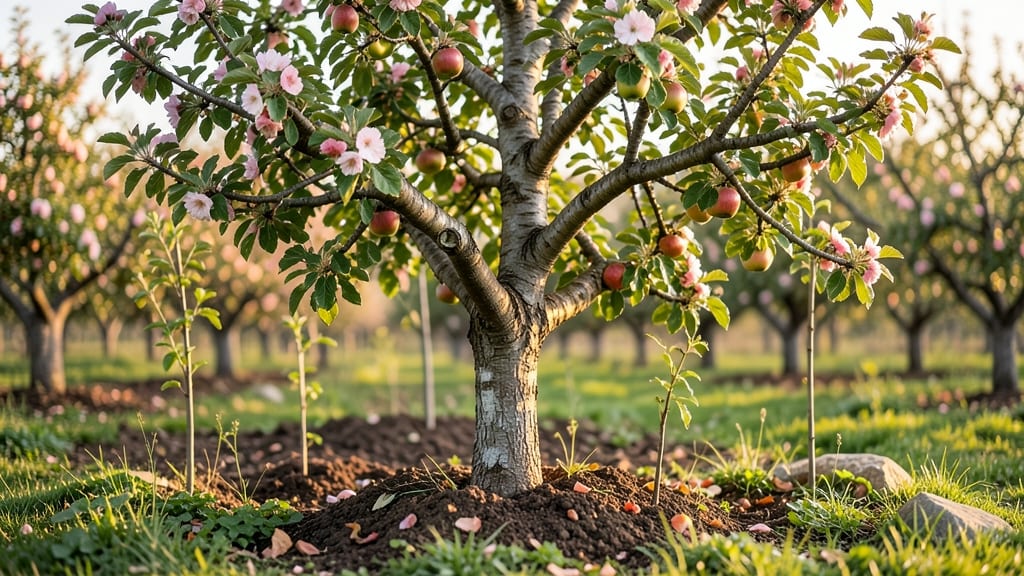
An apple tree growth chart is where the magic happens in those first five years—if you know what to expect. 🌱 I’ve tracked growth from bare-root saplings to fruit-bearing giants, and the numbers tell a story: a standard ‘Honeycrisp’ starts at 3 feet tall and can hit 20 feet in just a decade, while dwarf varieties stay under 8 feet.
The chart below breaks down each year’s growth spurt, seasonal flushes, and when to prune without stunting progress.
This isn’t just about height—it’s about timing. Year 1 focuses on root establishment (don’t prune!), while Year 3 marks the first major pruning window to shape the scaffold branches.
By Year 5, most varieties start flowering, but only if you’ve fed them the right nutrients—think nitrogen for leaves, potassium for fruit set. I’ll show you how to spot the warning signs of over-pruning or nutrient stress before they derail your tree.
What you’ll get is a roadmap to avoid common pitfalls: the 3-foot rule for early pruning, the 6-inch soil check for moisture, and the telltale signs of a tree ready for its first harvest.
No more guessing whether that branch should stay or go—just data-backed decisions that turn a gamble into a guaranteed orchard. Let’s get those measurements straight.
Works for backyard orchards, urban containers, or even bonsai-style dwarf varieties. The principles scale, but the numbers change—so we’ll cover those adjustments too. Here’s how to measure success at every stage.
📚 In This Guide
- What you need
- Instructions
- Tips and common mistakes
- Wrapping up and next steps
What you need
- ● Apple Tree Sapling or Bare-Root Plant: 1 standard-sized sapling (4–6 ft tall) or bare-root tree (dormant season purchase).
- ● Choose a dwarf (6–8 ft mature height), semi-dwarf (12–16 ft), or standard (20+ ft) variety based on space.
- ● Soil Amendments: 5–10 lbs of compost or well-rotted manure per planting hole.
- ● 1 lb of balanced fertilizer (10-10-10 or organic equivalent) for initial planting.
- ● Planting Supplies: 1 gallon of mulch (wood chips or straw) per tree.
- ○ 1 tree collar (optional, for young trees to prevent girdling).
- ● Pruning Tools: 1 pair of bypass pruners (for small branches, ¼"–½" cuts).
- ● 1 pruning saw (for thicker branches, 1"–2" diameter).
- ● 1 loppers (for medium branches, ¾"–1½" cuts).
- ● 1 disinfectant spray (70% isopropyl alcohol or bleach solution) to sterilize tools between cuts.
- ● Growth Tracking Tools: 1 measuring tape (25 ft, for height/width tracking).
- ● 1 notebook or growth chart (to log yearly measurements and milestones).
- ○ 1 digital scale (optional, for monitoring root ball weight in container-grown trees).
- ● 1 tree stake or support system (for young trees in windy areas).
- ● 1 drip irrigation kit (to maintain consistent moisture).
- ● 1 tree guard or protective wrap (for young trunks against pests/animals).
- ● 1 soil pH test kit (to ensure optimal 6.0–7.0 range for apple trees).
- ● 1 pollination partner (if growing from seed; grafted trees often need a compatible variety nearby).
How to track your apple tree’s growth year by year
Here’s how to predict—and nurture—your tree’s height and development from sapling to mature fruit-bearing giant.
🌱 Step 1: Understand Your Variety’s Natural Growth Rate
Apple trees grow at different speeds depending on the variety. Dwarf varieties like ‘Liberty’ or ‘Gold Rush’ typically reach 6-8 feet in their first year, while standard trees like ‘Fuji’ or ‘Honeycrisp’ can shoot up 12-18 feet in the same time. Check your tree’s tag or research its maturity height—this tells you whether it’s a compact bush or a towering shade tree.
I always jot down the variety and expected height in my garden journal. For example, a semi-dwarf ‘Gala’ might hit 10-12 feet by year 3, while a standard ‘Granny Smith’ could top 20 feet by then. This helps me plan spacing and pruning early.
⏰ Step 2: Measure and Record Growth Annually
Use a measuring tape to track height every spring before new growth begins. Mark the trunk with a paint stick at last year’s height, then measure how much the tree has grown. Most apple trees grow 12-24 inches per year in their first decade, though spurts can vary wildly based on water, sunlight, and soil quality.
I measure from the base of the trunk to the highest branch tip. For example, a 3-year-old ‘Red Delicious’ might grow 3-4 feet in a single season if conditions are ideal. If growth stalls, it could signal poor soil, pests, or insufficient sunlight.
☀️ Step 3: Adjust Care Based on Growth Stage
Young trees (years 1-3) need full sun (6+ hours daily) and deep watering (1-2 inches per week) to fuel rapid growth. Prune only to remove dead branches or shape the canopy—never cut more than 25% of the foliage in a single season. Over-pruning stunts growth and weakens the tree.
Mature trees (years 4-10) slow their vertical growth but focus on fruit production. Here, I prioritize thinning branches to improve airflow and fertilizing in early spring with a balanced 10-10-10 formula to support flowering. A 15-year-old ‘Granny Smith’ might only add 6-12 inches per year but will bear heavier fruit.
✂️ Step 4: Plan for Long-Term Structure
By year 5, your tree’s basic shape is set. Use the open-center or central leader pruning method to maintain strength. For dwarf varieties, I prune aggressively in early spring to encourage bushier growth—this keeps them manageable while boosting fruit yield. Standard trees need less pruning but benefit from removing crossing branches to prevent disease.
Watch for water sprouts (fast-growing vertical shoots) and suckers (shoots from the base)—these drain energy from fruit production. Snip them off at the base with clean, sharp shears to redirect the tree’s focus upward and outward.
🍏 Step 5: Anticipate Mature Height and Fruit Production
Most apple trees reach 80-90% of their mature height by year 10. A dwarf ‘Honeycrisp’ might top out at 8 feet, while a standard ‘Pink Lady’ could reach 25 feet. Use this timeline to plan harvesting tools, ladder access, and even future tree replacements if your variety is short-lived.
I always plant a second variety nearby for cross-pollination—even if your tree is self-fertile, a neighbor’s blossoms improve fruit set. By year 15, your tree’s growth slows dramatically, but with proper care, it can produce bushels of fruit annually for decades.
Tips & tricks for perfect apple tree growth tracking
Tracking your apple tree’s growth year by year takes patience and precision—but these simple tricks will help you predict and nurture its development like a pro.
Variety-Specific Planning: I can’t stress enough how critical this is. Before planting, research your specific apple variety—dwarf trees like ‘Liberty’ (6-8 feet in year 1) behave completely differently from standard trees like ‘Pink Lady’ (20+ feet by year 10). I keep a simple chart in my garden journal with three columns: variety name, expected mature height, and projected growth per year. This prevents overcrowding and helps me visualize the tree’s future shape.
Precision Measuring: In Step 2, when you measure annually, use a flexible tape measure for accuracy—rigid ones can bend when wrapping around trunks. Mark last year’s height with a paint stick or colored tape at eye level, then measure from that point to the highest branch tip. I’ve found that measuring in 12-inch increments (instead of feet) gives me more precise growth data, especially for young trees that might only grow 6-12 inches in their first year.
Seasonal Care Adjustments: The care needs in Step 3 change dramatically between years 1-3 and years 4-10. For young trees, I set a reminder to check soil moisture every 3-4 days during dry spells—apple trees in their first three years are particularly sensitive to drought. For mature trees, I switch to deep watering once every 10-14 days in summer, focusing on the root zone rather than surface watering. This matches the tree’s changing water needs as its root system expands.
Pruning Strategy: When planning long-term structure in Step 4, remember that 25% is the magic number—never remove more than that in a single season. I use the one-third rule for annual pruning: remove one-third of the oldest wood, one-third of crossing branches, and one-third of water sprouts. This keeps the tree healthy while maintaining its natural shape. For dwarf varieties, I prune slightly more aggressively in early spring to encourage bushier growth that’s easier to harvest.
Pro Tips for Apple Tree Growth Chart
- Tracking your apple tree’s growth year by year takes patience and precision—but these simple tricks will help you predict and nurture its development like a pro.
- Variety-Specific Planning: I can’t stress enough how critical this is.
- Precision Measuring: In Step 2, when you measure annually, use a flexible tape measure for accuracy—rigid ones can bend when wrapping around trunks.
Frequently asked questions
Got questions about tracking your apple tree’s growth? Here are answers to the most common ones—so you can plan with confidence!
How fast does an apple tree grow in its first year?
In their first year, most apple trees grow slowly—typically 1 to 3 feet (0.3–1 m) tall. Dwarf varieties may only reach 6–12 inches (15–30 cm). Growth depends on variety, soil quality, and care. Patience is key!
When can I expect my apple tree to bear fruit?
Fruit production varies by variety:
- Dwarf trees: 2–4 years
- Semi-dwarf trees: 3–6 years
- Standard trees: 5–8+ years
What if my apple tree isn’t growing as expected?
Slow growth could signal poor soil, pests, or disease. Check for:
- Nutrient deficiencies: Yellow leaves? Test soil and amend with compost.
- Pests: Look for aphids, mites, or borers. Treat with neem oil or insecticidal soap.
- Watering issues: Over/under-watering stunts growth. Aim for 1–2 inches (2.5–5 cm) of water weekly.
Can I prune my apple tree every year, or should I wait?
Yes! Annual pruning (best in late winter/early spring) keeps trees healthy and productive. Focus on:
- Removing dead/diseased branches
- Opening the canopy for airflow
- Shaping for easier harvesting
Are there any low-maintenance apple tree varieties?
Consider these beginner-friendly options:
Variety
Mature Height
Fruiting Time
‘Liberty’ (dwarf)
8–12 ft (2.4–3.6 m)
3–4 years
‘Honeycrisp’ (semi-dwarf)
12–16 ft (3.6–4.8 m)
4–5 years
‘Anna’ (columnar)
8–12 ft (2.4–3.6 m)
2–3 years
Wrapping up and next steps
Growing an apple tree is a rewarding journey that unfolds over years—each stage bringing you closer to a bountiful harvest! 🌱 Whether you’re nurturing a dwarf Honeycrisp or a towering Granny Smith, understanding your tree’s growth chart helps you prune with confidence and optimize fruit production.
With the right care, patience, and a little know-how, your tree will thrive, turning your backyard into a sweet, shady oasis.
Ready to take the next step? Start by marking your tree’s growth milestones—track height, branch development, and flowering patterns. Then, schedule your first pruning session (or consult our pruning guide) to shape its future. Happy growing!