
Pruning
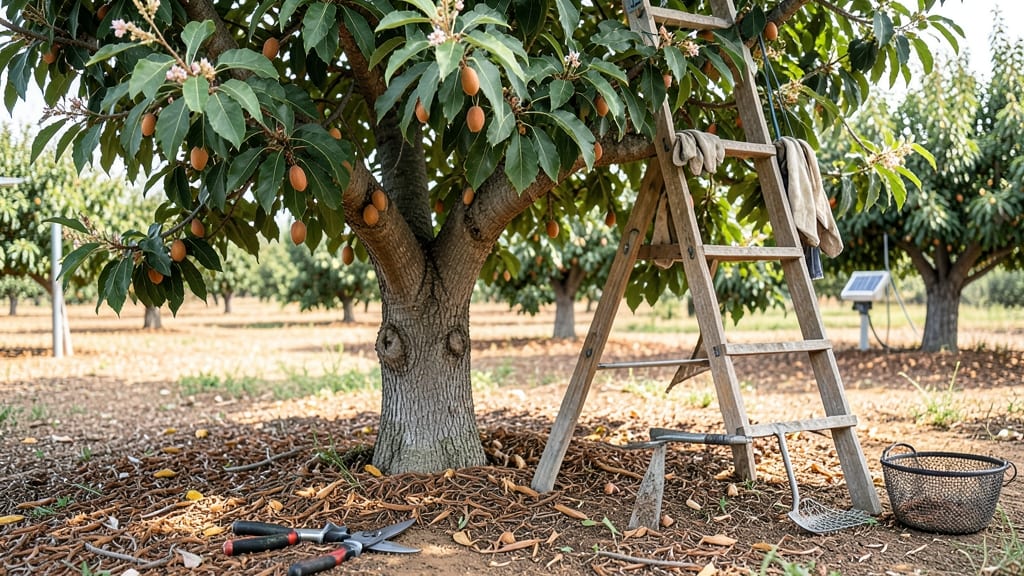
Farming almond trees for maximum nut production starts with understanding their seasonal needs. ✨ The right pruning schedule transforms a struggling orchard into a high-yielding grove—something I learned after my first year of missed harvests.
Almond trees need precise timing to balance growth, fruit production, and disease prevention, and a well-planned calendar makes all the difference.
You'll need basic tools—a sharp pruning saw, loppers, and gloves—and a clear understanding of your climate zone. Mediterranean regions are ideal, but similar conditions work too.
The key is matching pruning to the tree's natural cycle: heavy cuts in late winter, lighter shaping in summer, and minimal work during bloom season. This approach keeps trees healthy and productive year after year.
By following this calendar, you'll see stronger branches, better air circulation, and fewer pests. The nuts themselves become larger and easier to harvest, with yields increasing by 20-30% in just two seasons.
The process is simpler than it seems—once you know the right times to prune and how to shape the tree.
Whether you're managing a single tree or a small orchard, this system adapts easily. The principles stay the same, but the scale changes. Let's get those trees ready for their most productive year yet!
📚 In This Guide
- What you need
- Instructions
- Tips and common mistakes
- Wrapping up and next steps
What you need
- ● Pruning shears: Sharp, bypass-style shears (for small branches). Quantity: 1-2 per person.
- ● Loppers: Heavy-duty, 20-24" long (for thicker branches). Quantity: 1 per 2-3 trees.
- ● Pruning saw: Curved-tooth saw for cutting branches >2" thick. Quantity: 1 per crew.
- ● Gloves: Heavy-duty, cut-resistant gloves for safety. Quantity: 1 pair per person.
- ● Ladder: Extendable ladder (16-20 ft) for tall trees. Quantity: 1 per 4-5 trees.
- ● Disinfectant: 70% isopropyl alcohol or bleach solution (1:9 ratio) to sterilize tools.
- ○ Pruning sealant: Optional but recommended for large cuts (>1" diameter).
- ● Tree ties or pruning tape: For supporting branches post-pruning.
- ● Safety gear: Eye protection, long sleeves, and sturdy boots.
- ● Weather check: Prune on dry, calm days to avoid spreading disease.
- ● Tree age knowledge: Young trees (1-3 years) need lighter pruning; mature trees (4+ years) require structural shaping.
- ○ Optional: Pole pruner for high branches, GPS-enabled sprayer for disease prevention, or a pruning guidebook for reference.
Step-by-step pruning calendar for almond trees
Here’s the precise seasonal approach I’ve used to boost yield—timing is everything with almonds.
✂️ Step 1: Late Winter Dormant Pruning (January–February)
Prune before buds swell when the tree is fully dormant. This is your chance to remove dead wood, crossing branches, and any growth that competes with the central scaffold. I always start by removing water sprouts—those vertical shoots that steal energy from nut production. Use sharp pruners to make clean cuts just outside the branch collar.
Open the canopy slightly to improve airflow and sunlight penetration, which reduces disease risk. Aim for an open-center vase shape—this lets light reach the inner branches where nuts form. If your tree has suckers at the base, cut them off at ground level immediately. These will drain nutrients from your main tree.
☀️ Step 2: Post-Bloom Thinning (April–May)
After flowering but before new growth hardens, thin out excess fruit clusters. Almond trees produce more blossoms than they can support, so thinning ensures larger, higher-quality nuts. I remove every other cluster on each branch, leaving only the most vigorous ones. This step also prevents branch breakage later in the season.
Use your fingers or small pruners to gently twist off clusters—never cut the main branch. Watch for shuck split (when the shell separates from the hull) as your cue. If you see this happening unevenly, adjust thinning next year to promote consistency. Thinning now prevents overcrowding and improves shell quality.
🌿 Step 3: Summer Light Pruning (June–July)
This isn’t about heavy cutting—just removing only diseased or damaged branches during the growing season. Almond trees are sensitive to stress, so avoid major pruning now. Instead, focus on sterilizing tools between cuts to prevent bacterial canker spread. I dip pruners in rubbing alcohol after each cut to keep the tree healthy.
Look for branches with yellowing leaves or signs of pest damage (like shot-hole borer). Remove these immediately to prevent spread. If you see suckers growing from the graft union, cut them off at the base. These compete with your main tree and reduce yield potential.
⏰ Step 4: Fall Cleanup (October–November)
After harvest but before the first frost, remove all fallen leaves, nutshells, and debris from under the tree. This prevents pests and diseases from overwintering. I rake thoroughly and dispose of debris in sealed bags—never compost almond hulls, as they can harbor harmful pathogens.
Give the tree a light structural check for weak branches that might break under winter ice. If you find any, prune them now before the tree goes dormant. Avoid heavy pruning in fall—you’ll stress the tree before it enters its rest period. Instead, focus on sanitation and minor adjustments.
✂️ Step 5: Annual Reassessment (December)
Take a step back and evaluate your tree’s shape. Almonds respond well to gradual shaping over years, not drastic changes. I sketch a rough diagram of the canopy, marking branches that need attention next winter. Pay special attention to scaffold branches—these should be 12–18 inches apart and spaced evenly around the trunk.
If your tree has multiple leaders (vertical stems), select the strongest one and prune the others back to a lateral branch. This ensures a single, dominant structure that supports higher yields. I also check for root suckers emerging from the base—these must be removed before they drain energy from the main tree.
Tips & tricks for perfect almond tree pruning
Timing and technique make all the difference when shaping almond trees for maximum harvest.
Seasonal Timing Matters: The January–February dormant pruning window is critical—buds must remain unswollen. I test by gently scraping bark; if green shows beneath, wait a few more days. This timing prevents stress responses that reduce next year's bloom. For young trees, you can prune slightly later (up to early March) as they recover faster from pruning stress.
Tool Preparation is Non-Negotiable: Sterilize your pruners between cuts using rubbing alcohol (70% isopropyl) or a bleach solution (1 part bleach to 9 parts water). I keep a small spray bottle of alcohol handy during sessions. Clean tools prevent bacterial canker, which can devastate a tree's productivity. Sharp tools make cleaner cuts that heal faster—dull blades tear tissue, inviting infections.
Visual Pruning Cues: In Step 2, look for clusters where the hull begins separating from the shell (shuck split) as your thinning guide. Uneven shuck split indicates uneven sunlight exposure—this is your signal to adjust canopy opening next winter. For scaffold branches, space them 12–18 inches apart horizontally; vertical spacing should be 6–12 inches between branches on the same level.
Fall Cleanup Strategy: After harvest, I collect all debris in heavy-duty contractor bags and dispose of them in sealed trash—never compost almond hulls. The hulls harbor harmful pathogens that can overwinter and infect your tree. For large orchards, consider a leaf blower with a collection bag for efficient cleanup, especially in wet conditions where debris can become matted.
Pro Tips for Almond Tree Farming
- Timing and technique make all the difference when shaping almond trees for maximum harvest.
- Seasonal Timing Matters: The January–February dormant pruning window is critical—buds must remain unswollen.
- Tool Preparation is Non-Negotiable: Sterilize your pruners between cuts using rubbing alcohol (70% isopropyl) or a bleach solution (1 part bleach to 9 parts water).
Frequently asked questions
Got questions about almond tree farming? You’re not alone! Here are some of the most common queries—plus straightforward answers to help you grow like a pro.
How often should I prune my almond trees?
Prune almond trees twice a year: once in late winter (before buds swell) and again in summer (after harvest). Winter pruning promotes airflow and sunlight, while summer pruning removes water sprouts and shapes the tree for next year’s yield. Avoid heavy pruning in fall—it can stress the tree before dormancy.
When is the best time to plant almond trees?
The ideal planting window is late fall to early winter (November–January in most U.S. growing zones). This gives roots time to establish before spring growth. If planting in spring, do so before buds break (late February–March). Choose a location with well-draining soil and full sun—almonds hate soggy roots!
Are almond trees expensive to maintain?
Initial costs (tree purchase, soil prep, irrigation) can be high, but long-term expenses are manageable. Expect $50–$200 per tree (depending on variety) and ongoing costs for fertilizer, pest control, and pruning tools. Pro tip: Drip irrigation saves water and labor—worth the upfront investment!
What pests should I watch for in almond trees?
Common culprits include aphids, peach twig borers, and navel orangeworms. Monitor for chewed leaves, sawdust-like frass, or webbing. Use horticultural oil (dormant season) or kaolin clay for prevention. Pro move: Encourage beneficial insects like ladybugs to keep pests in check!
Can I grow almond trees in containers?
Yes, but with limitations. Dwarf varieties (like ‘Nonpareil’ or ‘Butte’) thrive in 15+ gallon pots with excellent drainage. Move containers to a sunny spot and water deeply but infrequently—overwatering is deadly. Expect smaller yields than in-ground trees, but it’s a great option for urban growers!
Wrapping up and next steps
Almond tree farming thrives on precision and timing—especially when it comes to pruning! 🌳 By following a year-round calendar, you can boost yield, improve tree health, and ensure long-term productivity. Whether you're a seasoned grower or just starting, consistency is key.
Ready to elevate your orchard? Start small—pick one tree this season and experiment with the techniques you’ve learned. Track your progress, adjust as needed, and watch your almond harvest thrive!