
Size
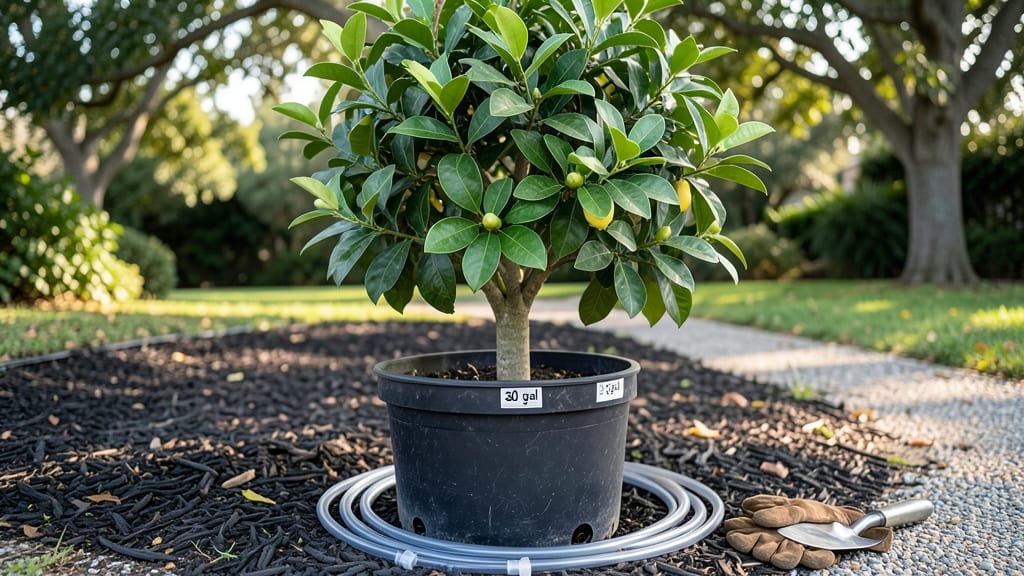
A 30-gallon tree size gives you the perfect balance between manageable planting and long-term growth potential, but not all varieties deliver the same results.
Picture this: You’ve just planted a 🌳 that looks adorable in its container, only to realize in five years it’s towering over your patio. The key to avoiding that headache? Knowing which fast-growing trees stay within your vision—and which ones will outpace your expectations.
From the Leyland Cypress that can shoot up 3 feet per year to the Dawn Redwood that grows at a more relaxed pace, your choice depends on space, sunlight, and how quickly you want shade.
Below, I break down the fastest growers by mature height and how to pick the right one for your yard.
You’ll also learn the 3 biggest mistakes new gardeners make with container trees—and how to sidestep them for a landscape that stays beautiful for decades.


Fastest-growing 30-Gallon trees: mature heights and growth rates
When selecting a 30-gallon tree, growth speed and mature height are critical factors. Fast-growing varieties can transform your landscape quickly, but some may outgrow their space within years. I’ve researched the top fastest-growing trees available in this size, balancing rapid growth with manageable heights for home gardens.
Understanding annual growth rates helps you predict how soon your tree will reach its full potential. For example, a Leyland Cypress can grow 3-4 feet per year, while a Dawn Redwood grows slower at 1-2 feet annually. Let’s explore the best options for your yard’s size and climate.
| Tree Variety | Mature Height (ft) | Annual Growth (ft) | Ideal Climate Zones | Notes |
|---|---|---|---|---|
| Leyland Cypress | 60-70 ft | 3-4 ft | Zones 6-10 | Fastest grower; needs pruning to control height |
| Green Giant Arborvitae | 40-50 ft | 2-3 ft | Zones 4-9 | Dense foliage; tolerates cold well |
| Dawn Redwood | 70-100 ft | 1-2 ft | Zones 5-8 | Slow but striking; needs space |
| Italian Cypress | 30-40 ft | 2-3 ft | Zones 7-10 | Narrow form; great for borders |
| Emerald Green Arborvitae | 12-15 ft | 1-2 ft | Zones 3-8 | Compact; ideal for small spaces |
| Crape Myrtle | 20-30 ft | 2-3 ft | Zones 7-9 | Drought-tolerant; blooms summer-fall |
The Leyland Cypress stands out as the fastest grower, adding 3-4 feet annually and reaching 60-70 feet at maturity. This makes it ideal for privacy screens or large properties, but it requires regular pruning to manage its rapid growth.
If you’re in USDA Zones 6-10, this tree will thrive with minimal care beyond watering and occasional trimming.
For a more manageable height, consider the Emerald Green Arborvitae, which tops out at 12-15 feet and grows 1-2 feet per year. This variety is perfect for small yards or container gardening, offering year-round greenery without overwhelming your space.
It’s also drought-tolerant once established, making it low-maintenance.
If you love unique foliage, the Dawn Redwood is a stunning choice, though it grows more slowly at 1-2 feet annually. Its feathery needles and tall stature (70-100 feet) make it a focal point, but it needs ample space.
Plant it in Zones 5-8 for best results, and expect it to take 20-30 years to reach maturity.
For drought-prone areas, the Crape Myrtle is a winner. It grows 2-3 feet per year and reaches 20-30 feet, with the added bonus of vibrant summer blooms. This tree thrives in Zones 7-9 and requires minimal water once established, making it a low-maintenance option for hot climates.
When choosing a 30-gallon tree, always consider your yard’s mature height limits and nearby structures. A Green Giant Arborvitae, for example, can reach 40-50 feet and grows 2-3 feet annually, so plant it at least 10 feet from your house to avoid overgrowth issues.
Always check local regulations on tree height near power lines or sidewalks.
One common mistake is assuming a fast-growing tree will stay small. The Italian Cypress, while only reaching 30-40 feet, grows 2-3 feet per year and can still outgrow small spaces.
If you’re unsure, opt for dwarf varieties like the Emerald Green Arborvitae, which stays compact while still offering privacy and year-round interest.
Before planting, test your soil’s drainage and pH. Most 30-gallon trees prefer well-draining soil with a
How to choose the right 30-Gallon tree for your landscape
Selecting a 30-gallon tree requires balancing your yard’s available space with the tree’s mature height. A 30-gallon container typically holds trees with 2- to 4-foot trunk diameters, but their eventual size can vary wildly—from 8-foot dwarf varieties to towering 80-foot giants.
Before purchasing, measure your planting area and research the tree’s projected growth rate to avoid future headaches.
Start by assessing your sunlight exposure. Some 30-gallon trees, like Leyland Cypress, thrive in full sun but may struggle in shaded spots, while others, such as Japanese Maple, prefer partial shade.
Matching the tree’s light needs to your yard’s microclimate ensures healthy growth and minimizes stress on the plant after transplanting.
🌱 30-Gallon Tree Selection Checklist
- ✅ Measure your space: Ensure 5-10 feet of clearance from structures for mature height.
- ✅ Check sunlight: Full sun (6+ hours) vs. partial shade (3-6 hours) needs.
- ✅ Test soil drainage: Amend clay soil with compost to prevent root rot in moisture-sensitive varieties.
- ✅ Review maintenance: Fast-growing trees need annual pruning to control height.
- ✅ Climate compatibility: Verify USDA Zone hardiness matches your local winter lows.
Don’t overlook soil type—some 30-gallon trees, like Pine Trees, prefer acidic soil, while others, such as Crape Myrtle, adapt to alkaline conditions. Conduct a simple soil pH test (available at garden centers) and amend the area with sulfur or lime if needed.
Proper soil prep reduces transplant shock and promotes faster root establishment.
Consider your long-term maintenance goals. Fast-growing 30-gallon trees, like Green Giant Arborvitae, can grow 3-5 feet per year and require regular pruning to maintain shape.
If you’re not prepared for annual upkeep, opt for slower-growing varieties like Dwarf Alberta Spruce, which mature at 10-15 feet with minimal pruning.
Finally, factor in your yard’s microclimate. Trees planted near foundation walls may suffer from poor airflow, while those in windy areas could need staking. Observe your yard’s wind patterns and water drainage—low spots should avoid moisture-loving trees like Willows, which can become invasive.
With these steps, you’ll confidently choose a 30-gallon tree that fits your space, thrives in your climate, and grows into a stunning landscape centerpiece without overpowering your yard. Happy planting! 🌳