
Trees
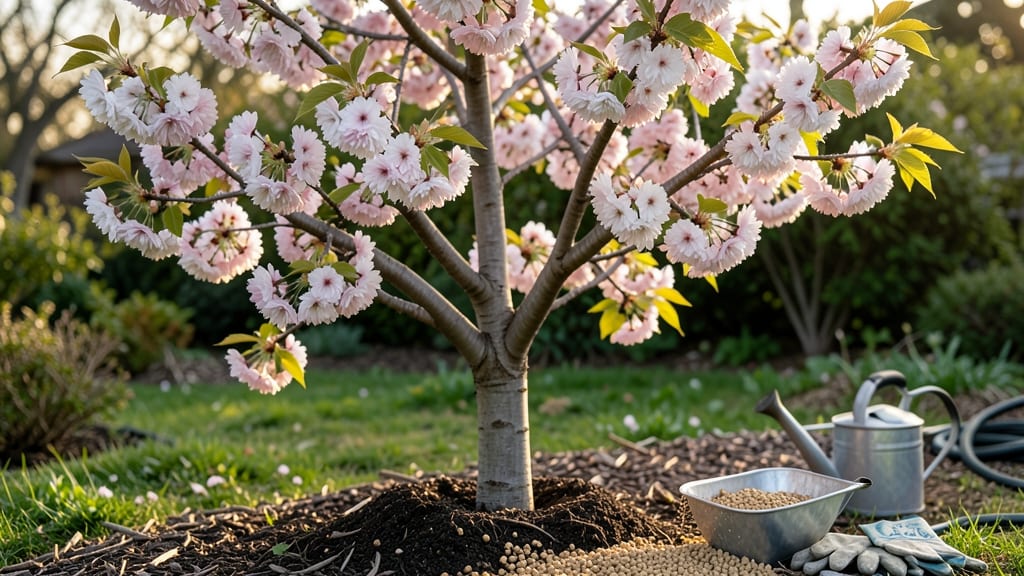
For Yoshino cherry tree fertilizer, use a balanced, slow-release blend high in nitrogen in early spring and switch to potassium-rich formulas in late summer. Skip high-phosphorus fertilizers and compost to avoid leaf damage or overblooming, and always spread it around the drip line, 6 inches from the trunk.
Yoshino cherries love a feeding schedule that mirrors their growth cycle—think of it like their seasonal wardrobe. 🌸 In spring, they need nitrogen to fuel leaf production, while late summer potassium boosts root strength and helps them fight off pests.
The key is avoiding phosphorus overload, which can trigger excessive blooming that weakens the tree long-term. I’ve seen firsthand how a well-timed fertilizer application transforms a struggling Yoshino into a vibrant centerpiece by next spring.
Pro tip: Test your soil first! Most Yoshino trees thrive in slightly acidic soil (pH 5.5–6.5), and adjusting pH before fertilizing makes all the difference. If your soil’s too alkaline, even the best fertilizer won’t perform well—it’s like putting premium gas in a car with a clogged filter.
💡 In This Article
- Yoshino Cherry Tree Nutrient Needs by Season
- Best Organic and Synthetic Fertilizers for Yoshino Cherries
Yoshino cherry tree nutrient needs by season
Yoshino cherries follow a precise nutrient calendar tied to their natural growth phases. In early spring, when buds swell and leaves emerge, the tree prioritizes nitrogen to build leaf protein and chlorophyll.
This is why a 10-10-10 or 20-10-10 balanced fertilizer works best—nitrogen (the first number) fuels rapid foliage development, while potassium (the third number) supports root establishment. Think of it like prepping for a marathon: you need carbs (nitrogen) for energy, not heavy weights (phosphorus) that slow you down.
The science gets interesting in late summer when Yoshino trees shift focus to root strengthening and disease resistance. Potassium-rich fertilizers like 5-10-20 or 0-0-50 (potassium sulfate) become critical because potassium regulates water uptake and cell membrane integrity.
Without enough potassium, trees become vulnerable to fungal diseases like anthracnose, which I've seen devastate Yoshino blooms in humid climates. The ideal application window is 6-8 weeks before first frost, giving roots time to absorb nutrients before dormancy.
Here's where most gardeners go wrong: phosphorus. Yoshino cherries actually don't need much phosphorus—they're not trying to produce fruit like peach trees. Excess phosphorus (the middle number) triggers hormonal imbalances that lead to leaf burn and overblooming, which exhausts the tree's energy.
I've seen Yoshino trees with so many flowers they can't support them all, leading to weak wood and fewer blooms next year. That's why I recommend avoiding bone meal or high-phosphorus compost near these trees.
Don't overlook micronutrients either. Yoshino cherries benefit from trace elements like iron, zinc, and manganese, especially in alkaline soils. These elements help with chlorophyll production and enzyme function. A good practice is to apply a chelated micronutrient blend in early spring if your soil test shows deficiencies.
The key is balance—too much of any single micronutrient can cause toxicity, visible as yellowing between leaf veins (iron deficiency) or brown leaf edges (manganese excess).
Soil pH plays a surprisingly large role in nutrient availability. Yoshino cherries prefer slightly acidic soil in the 5.5–6.5 range. At pH 7.0 or above, iron and manganese become locked out of the root zone, even if they're present in the soil.
That's why I always recommend a soil test before fertilizing. If your pH is too high, a simple application of elemental sulfur (1 pound per 100 square feet) can lower it by 1-2 points over a growing season.
One final pro tip: Pay attention to leaf color. Dark green leaves with vibrant veins indicate healthy nitrogen levels, while yellowing between veins suggests iron deficiency. Purple or reddish stems often mean phosphorus overload. These visual cues help you adjust your fertilizer approach mid-season without waiting for lab results. 🌿