
Pruning
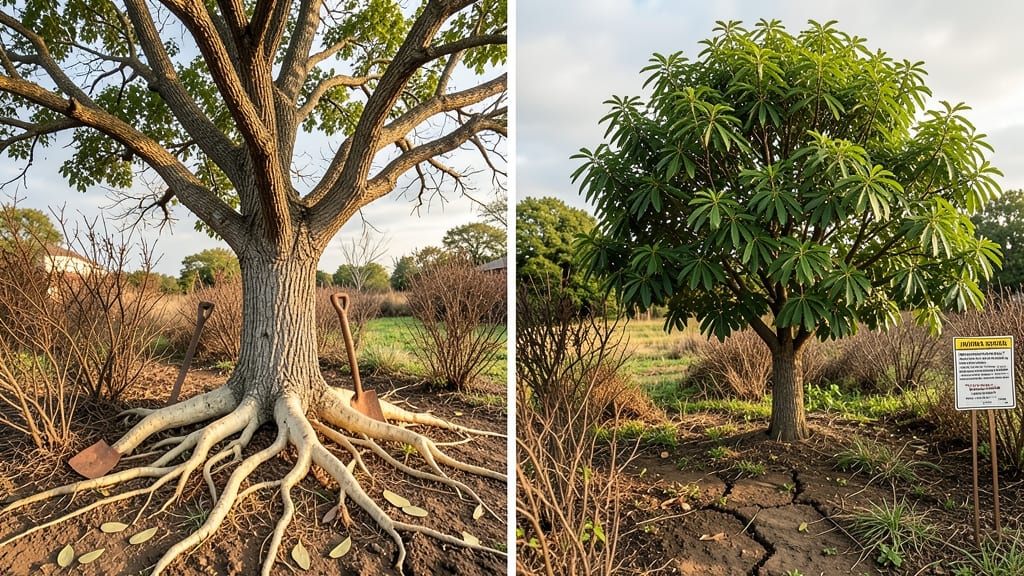
The tree of heaven is bad because it spreads aggressively, outcompeting native plants with its rapid growth and toxic compounds like allelochemicals that inhibit other species. Its invasive roots and prolific seed production disrupt ecosystems and degrade soil health.
The tree of heaven earns its notorious reputation through a combination of relentless growth and ecological sabotage. 🌱 This species releases chemicals called allelochemicals that poison surrounding plants, creating a "no-grow zone" where nothing else can thrive.
Its roots spread aggressively underground, while seeds hitch rides on clothing, tires, and even water—making eradication nearly impossible once established. In urban areas, its dense canopies block sunlight from reaching native understory plants, while in rural settings, it chokes out crops and pastures.
What makes it particularly dangerous is how quickly it takes over. A single tree can produce hundreds of thousands of seeds per year, and its roots can regenerate from stumps even after cutting.
Landowners often discover infestations too late, when the tree has already altered soil chemistry and made the area nearly uninhabitable for other plant species. The good news? Early detection and targeted removal (like stump grinding) can prevent it from becoming a permanent problem.
💡 In This Article
- How Tree of Heaven Spreads and Dominates Ecosystems
- Ecological and Agricultural Risks of Tree of Heaven Infestations
How tree of heaven spreads and dominates ecosystems
The tree of heaven's dominance begins with its explosive growth rate. This species can grow 3-5 feet per year under ideal conditions, reaching heights of 60-70 feet in just a few decades.
Its rapid vertical expansion allows it to quickly outshine native trees and capture sunlight before other species can establish themselves.
The key to this speed lies in its deep, extensive root system, which can extend up to 100 feet wide from a single trunk, creating an underground network that steals water and nutrients from surrounding plants.
What truly sets it apart is its chemical warfare strategy. The tree releases allelochemicals—specifically phytotoxins like ailanthone—through its leaves, roots, and even decomposing wood. These compounds inhibit seed germination and root growth in nearby plants, creating a 5-10 foot "no-grow zone" around mature specimens.
Studies show these chemicals can persist in soil for years, preventing native vegetation from regenerating even after the tree is removed. 🌱 The effect is particularly devastating in forests, where these chemical barriers prevent natural regeneration of hardwoods like oak and maple.
The tree's reproductive strategy is equally aggressive. A single mature tree can produce hundreds of thousands of seeds annually, which are dispersed by wind, water, and even animals.
Unlike many trees that rely on heavy, slow-falling seeds, tree of heaven seeds are lightweight and papery, allowing them to travel miles on wind currents.
Worse yet, the seeds remain viable in soil for up to 5 years, creating a massive seed bank that ensures new sprouts appear whenever conditions are favorable. This explains why infestations often appear in large, synchronized waves across entire neighborhoods.
Its root system presents another formidable challenge. The tree's roots contain pneumatophores—specialized root structures that emerge above ground to absorb oxygen in waterlogged soils.
While this adaptation helps it thrive in urban environments with compacted or poorly drained soils, it also makes the tree nearly impossible to kill through simple cutting.
Even when the trunk is removed, the roots can sprout new shoots from any remaining root fragment, leading to what's called "sucker regrowth". This biological resilience means that 90% of removal attempts fail if proper stump grinding (at least 6 inches deep) isn't performed.
Consider how this plays out in real ecosystems. In a 10-year study of infested forests in Pennsylvania, researchers found that tree of heaven reduced native plant diversity by 70% within a 5-year period.
The allelopathic effects were so strong that even mushroom species—which normally break down dead plant matter—disappeared from the soil. This creates a feedback loop: fewer decomposers mean slower nutrient cycling, which further degrades soil health and makes it harder for other plants to establish themselves.
The tree's adaptability to urban environments makes it particularly problematic. It thrives in disturbed soils (like construction sites or parking lots), where most native species struggle.
Its ability to grow in compacted, poor-quality soil—often with no more than 2% organic matter—means it can dominate areas where nothing else would grow.
This explains why it's commonly found along highways, in vacant lots, and even in cracks in concrete, where its roots can exert enough pressure to lift pavement.