
Propagation
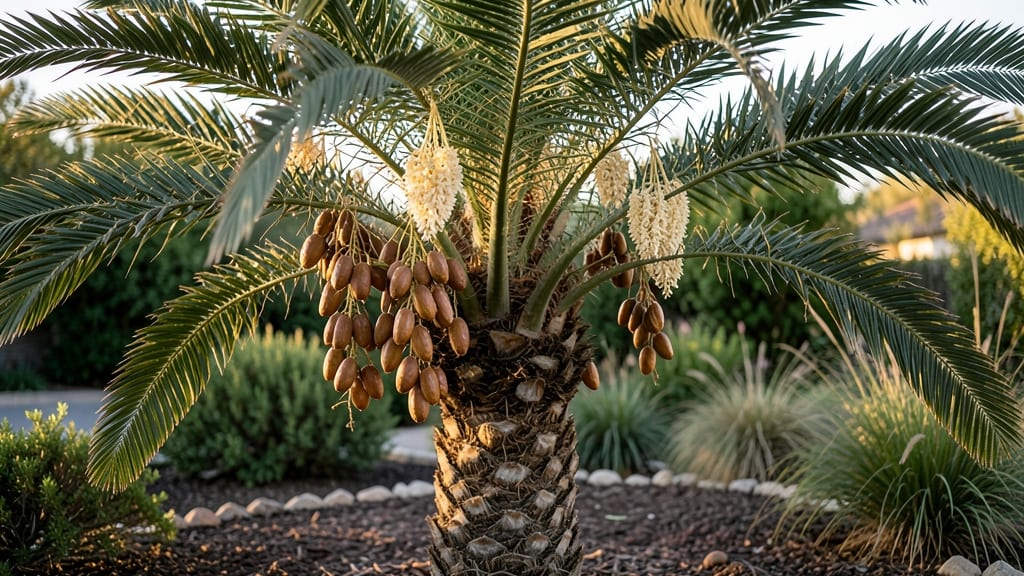
Dates come from the date palm tree (Phoenix dactylifera), a resilient desert palm thriving in hot, arid climates across regions like the Middle East and North Africa. This iconic tree features striking feathery fronds and produces clusters of sweet, edible dates after flowering.
This remarkable palm tree has been cultivated for over 6,000 years, originally domesticated in what's now Iraq and Iran. 🌵 The Phoenix dactylifera stands out with its towering height—often reaching 80 to 100 feet—and its ability to survive extreme heat and minimal water, thanks to its deep root system.
What makes it unique is its dual-purpose nature: the tree itself provides shade and building materials, while its fruit offers both nutrition and economic value across cultures.
When growing date palms, remember they need full sun exposure and well-draining soil to mimic their native desert conditions. Most varieties require 100-120 frost-free days annually, making them unsuitable for colder climates.
The fruit development process takes about 4-6 months from flowering to ripening, with the tree typically producing its first harvest around 4-5 years old.
💡 In This Article
- Identifying Date Palm Trees: Key Botanical Features
- Growing Date Palms: Climate and Care Essentials
Identifying date palm trees: key botanical features
The date palm tree (Phoenix dactylifera) is instantly recognizable by its striking feathery fronds that arch gracefully from a single trunk. These leaves, called pinnate fronds, can grow 10-15 feet long with 150-200 leaflets on each side, creating a dramatic skyline silhouette.
The trunk itself is typically 2-3 feet wide and can reach heights of 65-100 feet, though younger trees appear more slender. 🌿 Unlike other palms, date palms have a distinctive grayish-brown bark that develops deep vertical grooves as the tree matures, giving it a textured, almost sculptural appearance.
The tree's reproductive process begins with striking yellowish-white flowers that bloom in dense clusters at the top of the trunk. These flowers develop into the iconic date fruit, which starts green and firm before ripening into the familiar brown or golden hues we recognize.
What's fascinating is how the fruit changes internally: unripe dates contain 10-20% moisture and are high in tannins (bitter compounds), while fully ripened dates have only 5-10% moisture and develop their signature sweetness through enzymatic changes. This transformation happens over 4-6 months during the summer months in their native climate.
One of the most remarkable adaptations of date palms is their root system. The primary roots extend 15-20 feet deep to access groundwater, while shallow lateral roots spread outward to collect surface moisture after rare desert rains.
This dual system explains why date palms can survive months without rainfall—a critical adaptation for their arid homeland.
The tree's ability to close its stomata (pores) during drought periods further conserves water, making it one of nature's most efficient desert survivors. 💧 This physiological resilience is what allows date palms to thrive where other plants would wither.
When distinguishing date palms from other palm species, look for these key features: the single trunk (unlike clumping palms), the pendulous fronds that arch downward, and the distinctive flower clusters that emerge directly from the trunk.
The fruit itself is another dead giveaway—dates grow in tight clusters along the trunk rather than at the ends of branches like many tropical fruits.
Even the seeds are distinctive: date pits are large, fibrous, and contain up to 10% of the fruit's weight, unlike the small, smooth seeds found in other palm fruits.
What most people don't realize is how the tree's physical structure changes with age. Young date palms develop a smooth, green trunk that gradually darkens and develops grooves as it matures.
The leaf bases also leave prominent scars on the trunk, creating a natural "ring" pattern that can help estimate the tree's age. These scars are particularly visible on older specimens, where they form a textured pattern that palm enthusiasts often compare to ancient stone carvings.
The combination of these visual cues—from the frond shape to the trunk texture—makes date palms one of the most distinctive tree species in the world. 🌍
Interestingly, date palms exhibit dioecious reproduction, meaning male and female flowers grow on separate trees. This biological trait explains why commercial date orchards require both male and female trees for pollination.
The male trees produce pollen that's carried by wind or bees to fertilize the female flowers, which then develop into the fruit we harvest. This sexual dimorphism is another unique characteristic that sets date palms apart from many other fruit-bearing trees that have hermaphroditic flowers.