
Pests and Diseases
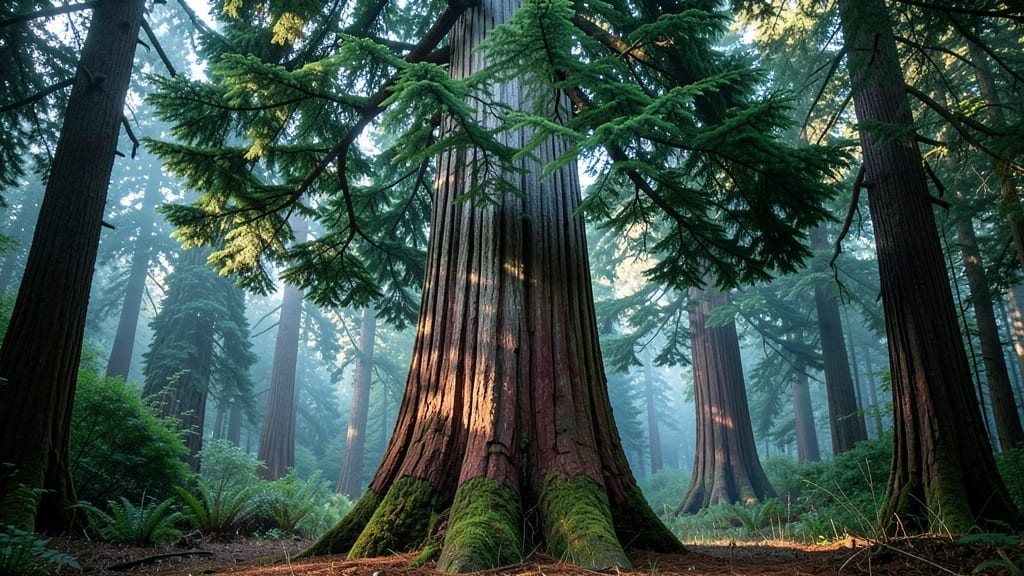
The tallest type of tree in the world is the coastal redwood (Sequoia sempervirens), which can grow over 379 feet tall, with the tallest recorded specimen, Hyperion, reaching 380.1 feet in California’s Redwood National and State Parks. These giants thrive in foggy coastal climates and live for thousands of years.
The coastal redwood isn't just the tallest—it's a biological marvel with growth rates that can exceed 3 feet per year in ideal conditions. 🌲 Their towering height comes from a combination of rapid vertical growth and specialized adaptations like thick, fire-resistant bark that stores moisture.
Unlike many trees, redwoods develop shallow but widespread root systems that anchor them in the nutrient-rich, fog-drenched soils of Northern California, where they dominate the landscape.
What makes these trees even more fascinating is their longevity—some specimens live over 2,000 years, with their massive trunks continuing to grow wider throughout their lifespans.
The world record-holder, Hyperion, wasn't discovered until 2006, hidden deep within the dense forests of Redwood National Park, where its exact location remains a closely guarded secret to protect it from human impact.
💡 In This Article
- How Coastal Redwoods Achieve Unmatched Heights
- Where to Find the World’s Tallest Trees and How to Visit Them
How coastal redwoods achieve unmatched heights
Coastal redwoods grow so tall thanks to their remarkable ability to transport water upward through specialized vascular tissues called xylem.
Their xylem vessels are wider and more efficient than those of most trees, allowing water to travel from roots to canopy at speeds up to 2 meters per hour—critical for supporting heights where gravity would otherwise make water transport nearly impossible.
The tree's thick, spongy bark, which can reach 12 inches thick on mature specimens, stores moisture like a natural reservoir, ensuring a steady water supply even during dry periods.
Their shallow but expansive root systems—spreading up to 100 feet wide—anchor them firmly in the nutrient-rich soils of their foggy habitats. Unlike deep-rooted trees, redwoods rely on surface roots that absorb moisture from frequent coastal fog, which condenses on leaves and drips down the trunk.
This "fog drip" can contribute 30-40% of their water needs, allowing them to thrive where other trees would struggle. Their rapid vertical growth—sometimes 3-4 feet per year in young trees—is fueled by this efficient water and nutrient uptake system.
Their ideal climate plays a crucial role too. Coastal redwoods grow in regions with mild temperatures (50-70°F year-round) and high humidity, conditions that minimize stress and maximize growth.
The dense fog that blankets the redwood forests provides both water and a cooler microclimate, protecting the trees from extreme heat or cold. This combination of biological adaptations and environmental perfection creates the perfect storm for growing the world's tallest trees.
What most people don't realize is how their height affects their ecosystem. The towering canopies create microclimates that support diverse plant and animal life, from mosses and ferns to rare birds and mammals.
The sheer size of these trees—with some trunks measuring 20 feet in diameter—creates a self-sustaining ecosystem where fallen needles and branches decompose slowly, enriching the soil and supporting new growth. This closed-loop system helps maintain the forest's health for centuries.
Interestingly, redwoods don't just grow tall—they grow wide too. Their massive trunks continue to thicken throughout their lives, a process called secondary growth, which can add 1-2 inches in diameter per year.
This combination of height and girth makes them some of the most massive organisms on Earth, with volumes exceeding 2,500 cubic meters in the largest specimens. Their ability to grow both upward and outward ensures they dominate their environment for millennia.
Their height also comes with defensive advantages. The thick bark protects them from wildfires, a common threat in their native California landscapes. While other trees may burn completely, redwoods often survive fires, with their bark acting as insulation.
This fire resistance allows them to regenerate quickly after disturbances, maintaining their dominance in the ecosystem. 🌲