
Lawn
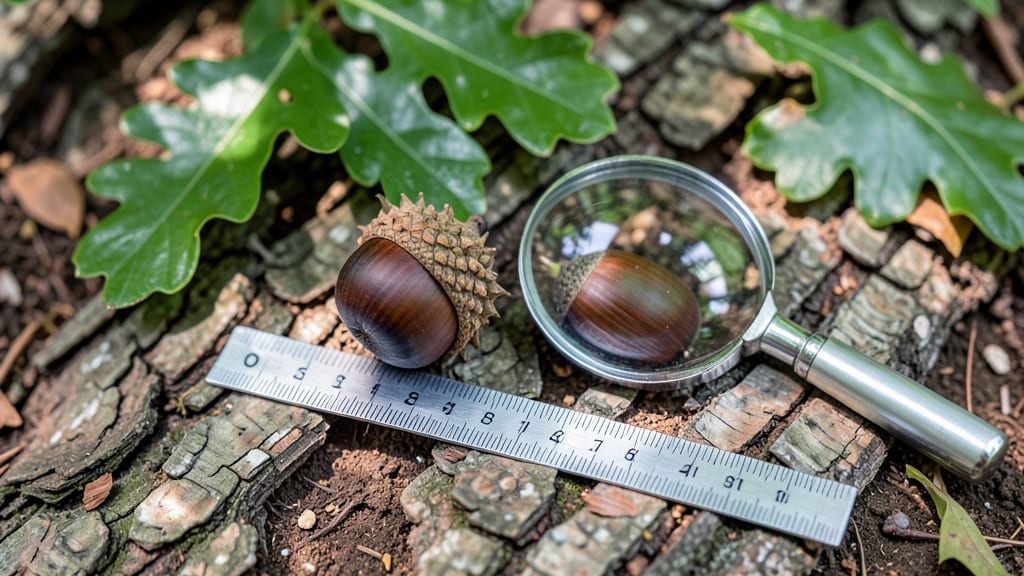
An oak tree seed, or acorn, looks like a small, oval nut with a hard, glossy brown shell and a flat or slightly pointed cap at the base, often topped with a fuzzy or scaly cup-like structure. These seeds typically measure between 1 to 2 inches in length, though variations exist across oak species.
Oak tree seeds, commonly called acorns, have a distinctive appearance that sets them apart from other nuts.
The hard, glossy shell protects the seed inside, while the cap or husk at the base plays a crucial role in germination by helping the seed stay anchored in soil. 🌰 What's fascinating is how the cap's texture—whether fuzzy or scaly—can help identify different oak species, like the smooth cap of white oak acorns versus the more hairy cap of red oak acorns.
This unique design isn't just for looks; it's nature's way of ensuring the seed survives and grows into a mighty oak.
💡 In This Article
- Acorn Structure and Anatomy Breakdown
- How to Identify Oak Tree Seeds by Species
Acorn structure and anatomy breakdown
The acorn's hard outer shell, called the nut, is actually a modified fruit that protects the seed inside. This shell is typically 1-2 inches long and 0.5-1 inch wide, with a smooth, glossy texture that ranges from light tan to deep brown depending on the oak species.
The shell's thickness varies—white oak acorns have thicker shells than red oak acorns, which affects how quickly they germinate. 🌰
At the base of the acorn sits the cap or husk, which is crucial for germination. This structure can be either fuzzy or scaly, depending on the oak species.
For example, white oak acorns have a smooth, bowl-shaped cap that often appears slightly concave, while red oak acorns feature a more hairy, cup-like cap.
The cap's texture isn't just for aesthetics—it helps anchor the acorn in soil and retain moisture, which is vital for the seed's survival during the early stages of growth.
Inside the shell lies the seed, which is the actual embryonic oak tree. This seed is surrounded by a thin, papery layer called the seed coat, which further protects it from physical damage and disease.
The seed itself contains all the genetic information needed to grow into a mature oak tree, including the root, stem, and leaf structures. When conditions are right—like adequate moisture and temperature—the seed will begin to germinate, pushing through the cap and shell to reach the soil.
One fascinating detail is how the acorn's shape and size influence its dispersal. Larger acorns, like those from white oaks, are often heavier and fall closer to the parent tree, while smaller acorns from red oaks may be carried farther by animals like squirrels or birds.
This variation in size and weight is a key adaptation that helps oak trees colonize new areas. 🌳
The acorn's anatomy also reflects its evolutionary role as a survival mechanism. The hard shell protects the seed from predators and harsh weather, while the cap ensures the seed stays in place long enough to germinate.
This dual-layered protection is why acorns are so effective at producing new oak trees, even in challenging environments. Understanding these structural details can help you appreciate how acorns are more than just seeds—they're tiny survival packages designed by nature.