
Pruning
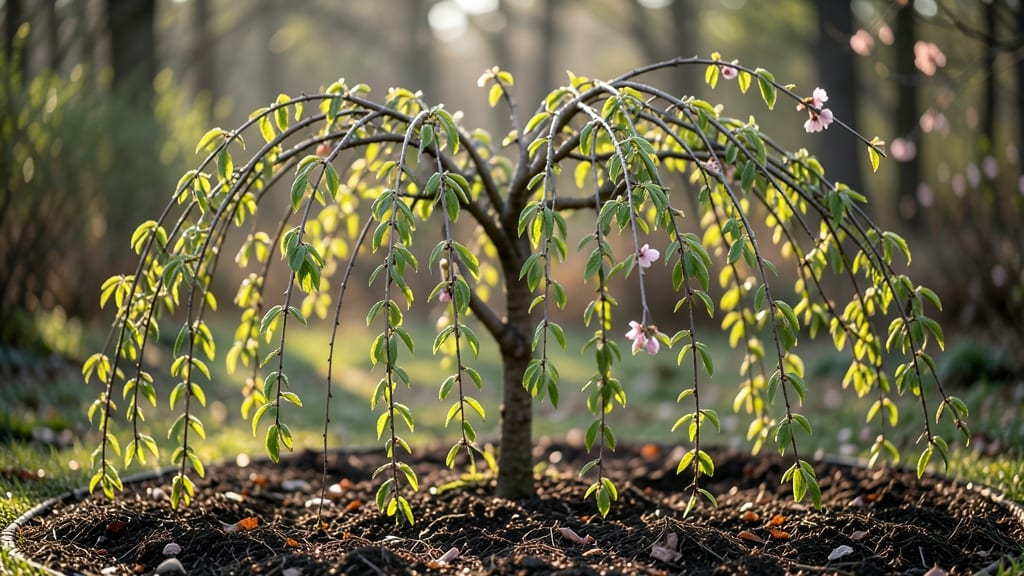
Transform your garden with a weeping peach tree's cascading beauty—the images of its graceful arcs turn a dull corner into a living work of art that changes with each season. 🌿 I fell for this tree the moment I saw how its elegant branches created such drama, blending fruit production with ornamental allure.
The first spring blooms alone make it worth the space, but the summer shade and autumn fruit add layers of interest that keep it stunning year-round.
This isn't just a pretty tree—it's a multi-season performer. In spring, pink blossoms shower the ground like confetti, while summer brings lush green foliage that filters sunlight into dappled patterns.
By fall, the peaches ripen into edible jewels, and the branches turn golden before winter's bare silhouette becomes a striking winter feature. The key to keeping it looking its best? Strategic pruning to maintain that weeping shape while encouraging healthy growth.
You'll create a garden centerpiece that doubles as a fruit producer. Imagine sipping fresh peach juice from your own tree while enjoying the shade of its cascading branches—it's the ultimate blend of form and function.
The tree thrives in full sun with well-drained soil, making it perfect for lawns, patios, or even large containers where you want that dramatic, flowing silhouette without taking up too much ground space.
Pair it with low-growing perennials like lavender or ornamental grasses to highlight its graceful form, or plant understory shrubs that won't compete for light. The possibilities for creating a living tapestry are endless—whether you want a romantic cottage garden feel or a modern minimalist statement.
This tree doesn't just grow fruit; it grows memories with every passing season.
📚 In This Guide
- What you need
- Instructions
- Tips and common mistakes
- Wrapping up and next steps
What you need
- ● Pruning shears: Sharp, bypass-style shears (for clean cuts on branches up to ½ inch thick). Pro tip: 💡 Sanitize blades with rubbing alcohol before and after use to prevent disease spread!
- ● Loppers: For branches ½ to 1½ inches thick (look for ratcheting or bypass models for precision).
- ● Pruning saw: A curved-tooth saw for thicker branches (2+ inches).
- ● Gloves: Heavy-duty, cut-resistant gloves (gardening or pruning-specific).
- ● Ladder: Sturdy, extendable ladder (if your tree is over 6 feet tall). Safety first! 🔥
- ● Disposable pruning bags: 2–3 medium-sized bags (for collecting debris).
- ● Rubbing alcohol (70% or higher): Small bottle (for sterilizing tools).
- ● Marking twine or paint: Non-toxic, biodegradable (to flag branches for removal).
- ● Pole pruner: For high branches (extends reach up to 10 feet).
- ● Tree wound dressing: Pruning sealant (controversial but useful for large cuts—research first!).
- ● Camera or sketchbook: To document your progress and capture weeping peach tree images!
- ● Budding kit: If you plan to graft new branches for a fuller weeping effect.
How to shape a weeping peach tree for stunning year-round beauty
Transform your peach tree into a living masterpiece with this simple shaping method that enhances its natural grace.
🌿 Step 1: Choose the Right Time for Pruning
Late winter or early spring—just before buds swell—is the ideal time to shape your weeping peach tree. This timing lets you see the tree's structure clearly while avoiding late-season diseases that thrive in warm, wet conditions. Avoid pruning in fall, as new growth won't harden off before winter, making the tree vulnerable to cold damage.
If you spot dead or diseased branches at any time, remove them immediately. I always carry a small pruning saw and disinfectant spray in my tool belt during growing season—you never know when you'll spot a branch that needs attention. Look for branches that are brown inside, have oozing sap, or lack leaves—these are clear signs of trouble.
✂️ Step 2: Select Branches to Shape the Weeping Form
Weeping peach trees naturally grow with graceful, arching branches, but you can enhance this effect by selectively pruning. Focus on removing any upright-growing branches that compete with the tree's natural weeping habit. These vertical branches rob energy from the tree's elegant cascading form and can make the tree look top-heavy.
Use sharp pruning shears to make clean cuts just above a bud that grows in the direction you want the branch to grow. I like to step back frequently to visualize the tree's shape—this helps me decide which branches to keep or remove. Aim for a balanced, open center that allows sunlight to reach all branches, which encourages better fruit production and healthier growth.
🌱 Step 3: Thin Out Crowded Branches for Airflow
Thinning is the key to creating that dramatic, airy canopy. Remove about 20-30% of the tree's branches, focusing on those that cross or rub against each other. These crowded branches create friction, which can damage the bark and invite pests. I always start at the outer edges and work my way inward, like trimming a bush—this keeps the tree's natural silhouette intact.
Pay special attention to branches that grow too close to the trunk. These can strangle the main stem over time and create entry points for diseases. Cut these branches back to a strong lateral branch or bud. You'll notice the tree's structure opens up immediately, allowing better airflow and sunlight penetration—this is when the tree starts looking truly elegant.
☀️ Step 4: Refine the Canopy for Maximum Dramatic Effect
Now it's time to refine the weeping effect. Look for branches that grow upward or outward too aggressively and prune them back to encourage more downward growth. This is where the magic happens—the tree's natural weeping habit will become even more pronounced. I often make small cuts to redirect growth rather than removing entire branches, which helps maintain the tree's density.
Step back every few minutes to assess the tree's balance. The goal is to create a graceful, cascading silhouette that draws the eye downward. If one side looks heavier, remove a few branches from that side to even things out. Avoid over-pruning—you want to maintain the tree's natural beauty while just enhancing it. A well-shaped weeping peach tree will have a canopy that flows like a waterfall, creating a stunning focal point in your garden.
🪴 Step 5: Post-Pruning Care for Healthy Growth
After pruning, apply a tree wound sealant to any cuts larger than ½ inch in diameter to prevent disease entry. For smaller cuts, no sealant is needed—the tree's natural healing process will take care of it. Water the tree deeply to help it recover from the stress of pruning, and apply a balanced fertilizer to encourage new growth.
Monitor the tree closely over the next few weeks. You'll see new buds forming along the branches you pruned—this is a good sign! If you notice any signs of stress, like wilting leaves or excessive leaf drop, give the tree a little extra water and keep an eye on it. Within a season, your weeping peach tree will reward you with a lush, dramatic canopy that enhances your garden's beauty year-round.
Tips & tricks for dramatic canopy shaping of weeping peach trees
Here's the secret to transforming your peach tree into a breathtaking focal point—these are the details that make all the difference.
Timing is Everything: Late winter or early spring is non-negotiable for best results. The tree is still dormant but about to wake up, making it easier to see the natural structure. I've pruned in summer before, and while it works, you'll miss the full picture of the tree's skeletal beauty. If you absolutely must prune outside this window, do it on a cloudy day to reduce stress on the tree—sunlight increases water loss through the fresh cuts.
Visualize First, Cut Second: Before making a single cut, step back and study your tree from multiple angles. I like to take photos from different perspectives to help visualize the final shape. Look for branches that grow straight up—they're the first to go. These vertical branches steal energy from the tree's graceful weeping habit. Remember, you're sculpting a living waterfall, not just trimming a bush. The goal is to enhance the natural cascade rather than force an unnatural shape.
Precision Pruning Technique: When cutting branches, always make clean cuts just above a bud that faces outward. I use sharp pruning shears for branches up to pencil thickness and a pruning saw for anything larger. The cut should be at a slight angle to prevent water from pooling on the wound. For branches larger than ½ inch, seal the cut immediately with tree wound sealant—this prevents disease entry and speeds up healing. Think of it like bandaging a cut on your own skin—it helps the tree recover faster.
Post-Pruning Recovery: After shaping, give your tree a deep watering to help it recover from the stress. I always apply a balanced fertilizer about two weeks after pruning to give the tree the nutrients it needs to produce new growth. Monitor the tree closely for the first few weeks—you'll notice new buds forming along the branches you pruned. This is your reward for careful shaping! If you see wilting leaves or excessive leaf drop, it's just the tree adjusting to its new shape. A little extra water usually does the trick.
Pro Tips for Weeping Peach Tree Images
- Here's the secret to transforming your peach tree into a breathtaking focal point—these are the details that make all the difference.
- Timing is Everything: Late winter or early spring is non-negotiable for best results.
- Visualize First, Cut Second: Before making a single cut, step back and study your tree from multiple angles.
Frequently asked questions
Got questions about cultivating or styling your weeping peach tree? You’re not alone! Here are answers to the most common queries—from pruning tips to troubleshooting—so you can keep that stunning, cascading beauty thriving year-round.
What’s the best time of year to prune a weeping peach tree for optimal growth?
Prune your weeping peach tree late winter or early spring (just before buds swell) to encourage vigorous growth. Avoid heavy pruning in fall—it can stimulate new growth that’s vulnerable to frost. Light shaping trims in summer (after harvest) help maintain the weeping form without stressing the tree. Pro tip: Use sterilized tools to prevent disease!
Why are my peach tree branches drooping, even though it’s not a weeping variety?
Drooping branches in a non-weeping peach tree often signal overwatering, root rot, or disease (like peach leaf curl). Check for:
- Yellowing leaves (overwatering)
- Mushy stems or foul odors (root rot)
- Black, curled leaves (fungal issues)
Can I train a standard peach tree to weep naturally, or do I need to graft?
While you can’t fully transform a standard peach tree into a weeping form without grafting, you can encourage a partial weeping effect by:
- Pruning lower branches to promote downward growth.
- Using spreader bars to weigh branches gently downward.
- Grafting a weeping peach cultivar (like ‘Bonanza’ or ‘Redhaven Weeping’) onto the tree’s rootstock for guaranteed results.
How often should I fertilize a weeping peach tree, and what’s the best fertilizer?
Fertilize twice a year for weeping peach trees:
- Early spring: Use a balanced 10-10-10 fertilizer to kickstart growth.
- Late spring/early summer: Switch to a low-nitrogen, high-potassium (like 5-10-10) to boost fruit production and flowering.
My weeping peach tree’s branches are breaking under the weight of fruit. What should I do?
Weeping varieties often struggle with fruit load due to their delicate structure. Take action with:
- Thin fruit: Remove 1/3 of the peaches when they’re golf-ball sized to reduce stress.
- Support branches: Use soft ties or slings to prop up heavy limbs.
- Avoid over-pruning: Heavy pruning can weaken the tree further.
Wrapping up and next steps
The weeping peach tree isn’t just a stunning addition to your landscape—it’s a year-round masterpiece when shaped with care. 🌸 From selecting the right tools to mastering pruning techniques, you now have the knowledge to cultivate its graceful, cascading beauty while ensuring health and longevity.
Whether you’re a seasoned gardener or just starting out, the key is patience and precision!
Ready to transform your outdoor space? Grab your pruners and start shaping that dreamy canopy today! Share your progress or ask questions in the comments—we’d love to see (and help with) your weeping peach tree journey!