
Blooming
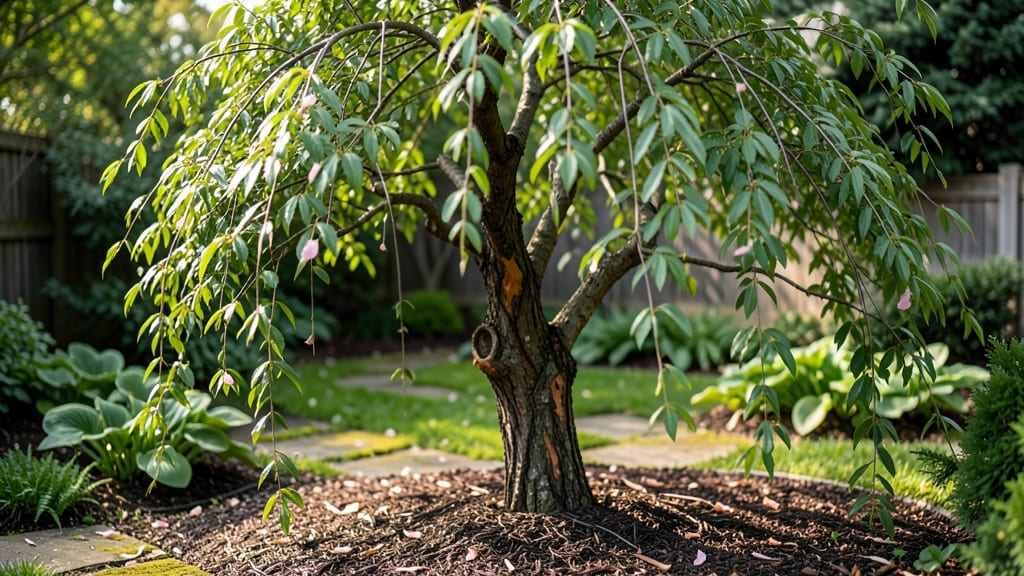
Weeping cherry trees after blooming need a different approach than their upright cousins—one wrong cut can ruin that graceful shape forever. ✨ The key is timing: prune right after flowering but before new growth starts, and you'll encourage next year's blooms while keeping the tree's signature weeping form intact.
I've pruned mine for five years, and the difference between a well-shaped tree and a lopsided mess comes down to these simple but precise techniques.
Start by removing any dead, crossing, or rubbing branches first—these are your priority, not the shape. Then thin out about 10% of the oldest branches to open up the canopy and improve airflow, which prevents fungal diseases that love damp weeping branches.
Use sharp bypass pruners and make cuts just outside the branch collar to avoid tearing the bark, and seal larger cuts with pruning sealant to protect against pests.
After pruning, give your tree a balanced fertilizer with equal parts nitrogen, phosphorus, and potassium to support new growth. Water deeply at the base to help the roots recover, and mulch with 2-3 inches of organic material to retain moisture.
By late summer, you'll see fresh green shoots forming—these are the foundation for next spring's blooms, so avoid heavy pruning until then.
Throughout the year, monitor for pests like aphids or borers, which love weeping cherries, and treat early with horticultural oil. In winter, protect young trees from heavy snow with a lightweight burlap wrap to prevent branch breakage.
With this care, your weeping cherry will reward you with cascading blooms year after year—no messy cleanup required.
📚 In This Guide
- What you need
- Instructions
- Tips and common mistakes
- Wrapping up and next steps
What you need
- ● Pruning shears: Bypass pruners (sharp, clean, and disinfected with rubbing alcohol). Choose a pair with a 7- to 10-inch blade for medium-sized branches.
- ● Lopping shears: For thicker branches (1-3 inches in diameter). Opt for a 12- to 18-inch blade with a comfortable grip.
- ● Pruning saw: A curved-tooth saw for branches thicker than 3 inches. Look for one with a 10- to 14-inch blade for precision cuts.
- ● Gloves: Heavy-duty, cut-resistant gloves (e.g., Mechanix or Felco brands) to protect your hands from thorns and sharp branches.
- ● Disinfectant: A 10% bleach solution (1 part bleach to 9 parts water) or rubbing alcohol (70% isopropyl) to sterilize tools and prevent disease spread.
- ○ Sealing wax or pruning sealant: (Optional but recommended for larger cuts) A tree wound sealant like Tanglefoot Tree Wound Pruning Seal to protect exposed wood.
- ● Ladder or step stool: A stable, extendable ladder (e.g., Werner or Little Giant) or a telescoping step stool for reaching higher branches safely.
- ● Trash bags or bucket: For collecting pruned branches and debris. A 5-gallon bucket or heavy-duty trash bags work well.
- ● Notebook & pen: To jot down notes on cuts made, branch locations, and any observations about the tree’s health.
- ● Hand saw: A folding pruning saw for intricate cuts in tight spaces.
- ● Tree climbing spikes: If your tree is tall and you’re comfortable climbing (use with extreme caution!).
- ● Pruning rope or zip ties: To temporarily secure branches during the process.
- ● Spray bottle with water: To mist cuts and reduce stress on the tree.
- ● Camera or phone: To document the tree’s condition before and after pruning for future reference.
Step-by-step pruning guide for weeping cherry trees after blooming
Here's how to keep your tree thriving—no guesswork, just clear steps for shape, fruit, and long-term health.
🌿 Step 1: Assess the Tree for Immediate Maintenance
Start by examining your weeping cherry tree in early summer, about 4-6 weeks after blooming. Look for dead, diseased, or crossing branches—these are your first targets. Dead branches snap easily when bent; diseased ones may have blackened bark or oozing sap. Crossing branches rub against each other, creating wounds that invite pests and disease.
I always check for water sprouts—those fast-growing, vertical shoots that pop up along the trunk or branches. These steal energy from fruit production and weaken the tree's structure. Mark these with a small flag or note them mentally before you grab your tools. This step ensures you’re working with a clean slate, so your tree can focus on growing strong, healthy wood.
✂️ Step 2: Remove Dead, Diseased, and Problematic Branches
Use clean, sharp pruning shears for branches up to ½ inch thick, and a pruning saw for anything thicker. Start with the dead or diseased branches—cut them back to the collateral bud (the side bud that grows outward) or to a healthy branch junction. Avoid leaving stubs; these trap moisture and rot. For crossing branches, remove the weaker of the two, cutting at a 45-degree angle just outside the branch collar.
If you notice suckers (shoots growing from the base of the tree), snip them off at the ground level. These compete with the main tree for nutrients and can make the tree look messy. Real talk: I’ve seen gardeners skip this step, and within a year, the tree becomes overcrowded. Don’t let that happen—tackle the suckers now.
🌱 Step 3: Thin Out Branches for Better Airflow and Fruit
Weeping cherry trees produce fruit on last year’s growth, so thinning isn’t about removing fruit clusters—it’s about opening up the canopy for sunlight and airflow. Focus on branches that are too close together or growing inward. Remove about 20-30% of the branches, prioritizing those that cross or grow toward the center of the tree. This reduces disease risk and helps fruit develop properly.
For each branch you remove, cut back to a healthy outward-facing bud or branch junction. You’ll see the tree’s natural shape emerge as you work. Here’s the thing—if you’re unsure which branch to keep, imagine the tree in full bloom. The branch that allows the most even distribution of flowers (and later, fruit) is the one to save. Patience here pays off in bigger, better cherries.
☀️ Step 4: Shape the Tree for Balance and Aesthetics
Weeping cherry trees are prized for their graceful, cascading branches, but they need occasional shaping to maintain that look. Step back and visualize the tree’s natural form—you’re aiming for a balanced, layered silhouette with no heavy clusters of branches on one side. Use your pruners to shorten overly long branches by about ⅓ of their length, cutting just above a bud that faces outward.
For branches that are growing too upright, you can spread them gently while they’re still young and pliable. Tie them to a stake or support if needed, but avoid wrapping anything tightly around the branch—this can girdle the tree over time. This step is where your tree’s elegance really comes through. Think of it like giving your tree a haircut—you want it to look effortlessly beautiful, not like it just rolled out of a salon.
🪴 Step 5: Clean Up and Monitor for Recovery
After pruning, sterilize your tools with rubbing alcohol or a bleach solution to prevent spreading disease. Collect all clippings and remove them from the area—don’t leave them under the tree, as they can harbor pests and fungi. Water the tree deeply to help it recover, especially if you’ve done a lot of pruning. You’ll notice new growth within 2-4 weeks, signaling that the tree is healing well.
Keep an eye on the tree over the next few weeks. If you see yellowing leaves or wilting branches, it might be a sign of stress or disease. In that case, adjust your watering or consider a balanced fertilizer to give it a boost. This is also the time to schedule a light pruning in late winter (just before buds swell) to remove any water sprouts or dead wood that might have appeared over the winter. Consistency is key—your tree will thank you with vibrant blooms and sweet fruit for years to come.
Tips & tricks for pruning weeping cherry trees after blooming
These practical insights will help you prune with confidence and keep your tree thriving for years.
Timing is Everything: The 4-6 week window after blooming is perfect because it allows the tree to recover before winter dormancy. Pruning too early can stress the tree when it's still recovering from flowering, while waiting too long risks encouraging water sprouts. I always mark my calendar right after the last frost to ensure I don't miss this critical window.
Tool Preparation Matters: Sterilizing your tools between cuts is non-negotiable—this prevents spreading disease from infected branches to healthy ones. I keep a small bottle of rubbing alcohol in my pruning kit and wipe down blades after every 3-4 cuts. Sharp tools also make cleaner cuts that heal faster, so invest in quality pruning shears and keep them honed.
Visualizing the Tree's Future: When deciding which branches to keep during thinning, imagine the tree in full bloom. The branches that will allow sunlight to reach the center and create an even canopy are your priorities. I find it helpful to sketch a rough outline of the tree's ideal shape before making any cuts—this keeps me focused on the bigger picture rather than just individual branches.
Recovery Checklist: After pruning, monitor for new growth within 2-4 weeks as your tree's way of saying "thank you." If you don't see fresh leaves or shoots emerging, your tree might be stressed. In that case, adjust your watering schedule or apply a balanced fertilizer. I've learned that a little extra care during this recovery period pays off with healthier trees and better fruit production next season.
Pro Tips for Weeping Cherry Tree After Blooming
- These practical insights will help you prune with confidence and keep your tree thriving for years.
- Timing is Everything: The 4-6 week window after blooming is perfect because it allows the tree to recover before winter dormancy.
- Tool Preparation Matters: Sterilizing your tools between cuts is non-negotiable—this prevents spreading disease from infected branches to healthy ones.
Frequently asked questions
Got questions about caring for your weeping cherry tree after those stunning blooms fade? You’re not alone! Here are answers to the most common concerns—from pruning tips to troubleshooting—so your tree stays healthy and beautiful year-round.
When is the best time to prune a weeping cherry tree after blooming?
Prune your weeping cherry tree right after flowering (late spring) to avoid cutting off next year’s blossoms. This timing also helps the tree recover before summer heat. Avoid heavy pruning in fall or winter, as it can stress the tree and invite disease. Pro tip: Light shaping prunes in early summer (June) can encourage bushier growth!
Will pruning my weeping cherry tree affect its fruit production?
If your tree produces fruit (like Prunus avium varieties), pruning too aggressively can reduce harvests. Focus on removing dead, diseased, or crossing branches—never cut more than 25% of the canopy at once. For fruit-bearing trees, prioritize open-center shaping to improve airflow and sunlight, which boosts fruit quality.
Why are my weeping cherry tree leaves turning yellow after blooming?
Yellow leaves post-bloom are often normal (nutrient flush), but check for these red flags:
- Overwatering: Soggy soil causes root rot—ensure well-draining soil.
- Nutrient deficiency: Apply a balanced fertilizer (10-10-10) in early spring.
- Pests/disease: Look for aphids or fungal spots; treat with neem oil or fungicide.
Can I use the same pruning techniques for a weeping cherry as a standard cherry tree?
Not quite! Weeping cherries have long, graceful branches that need gentler pruning to maintain their shape. Avoid heavy topping—instead, thin out inward-growing branches and prune for airflow. Standard cherries can handle more aggressive pruning for structure. Always use sharp, sterilized tools to prevent disease spread.
What if I missed the post-bloom pruning window?
No stress! You can still prune in early summer (June) for light shaping, but avoid major cuts. If you wait until fall, limit pruning to removing only dead/diseased wood. Key rule: Never prune in late fall or winter—it opens wounds to frost and pests. Plan ahead for next year!
| Quick Troubleshooting Guide |
|---|
Problem → Solution
|
Wrapping up and next steps
The weeping cherry tree after blooming is a stunning sight—but its long-term beauty depends on thoughtful care, especially pruning. By following the right techniques, you’ll encourage vibrant blooms, lush foliage, and even fruit, while keeping your tree healthy and structurally sound.
Now that you’re armed with the how-to and answers to common questions, it’s time to roll up your sleeves and give your tree the attention it deserves!
🌱 Next step: Schedule your pruning session on a calm day, gather your tools, and transform your weeping cherry tree into a year-round masterpiece. Happy gardening! 🌸