
Blooming
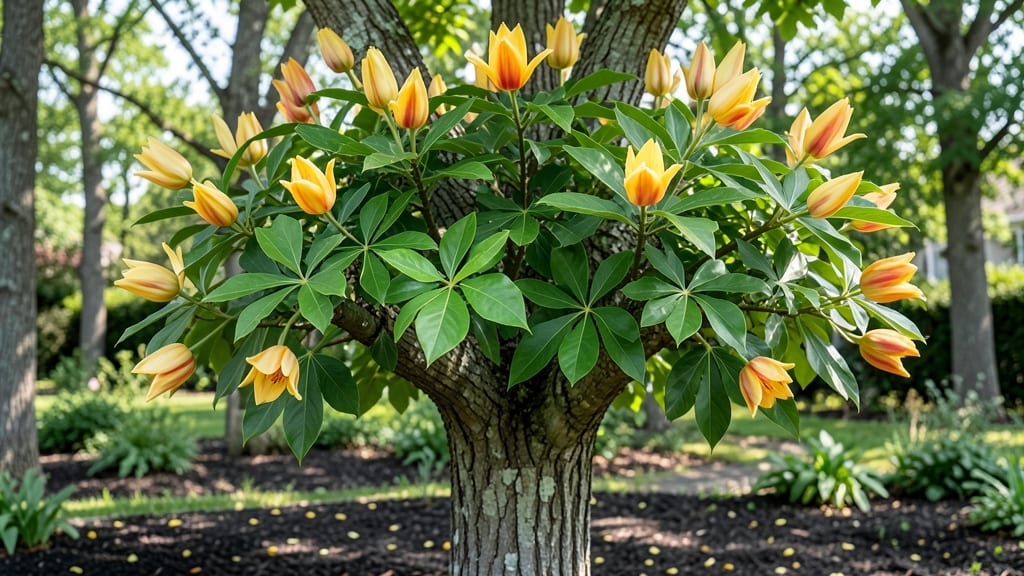
Tulip trees bloom in late spring to early summer 🌳, with their iconic yellow-green flowers lighting up the landscape for 3-4 weeks—but timing varies wildly by zone and tree age.
If you've ever waited impatiently for those bell-shaped blooms to appear—or wondered why your neighbor's tree flowers a month earlier—you're not alone. The difference often comes down to where you live and how you care for the tree.
From Zone 4's late May bursts to Zone 9's June showstoppers, I’ll break down the exact months for your area, plus the fastest-growing varieties that bloom in as little as 5 years.
You’ll also discover simple tricks—like pruning at the right time or pairing it with companion plants—to make your tulip tree’s display arrive faster and last longer.
Exact tulip tree bloom time by USDA planting Zone
The tulip tree (Liriodendron tulipifera) is one of spring's most stunning sights, with its unique yellow-green tulip-shaped flowers. But when exactly will yours bloom?
The answer depends on your USDA zone, with variations of 2-4 weeks across regions. Understanding these timelines helps you anticipate the spectacle and adjust care accordingly.
Tulip trees typically bloom in late spring to early summer, but frost dates and temperature fluctuations shift the window. In colder zones like 4-5, blooms may wait until late May, while warmer zones like 8-9 see flowers as early as March.
Let’s break down the exact bloom periods by zone.
Pro Tip: Young trees (5-10 years old) may bloom 1-2 weeks later than mature specimens. Also, late spring frosts can delay blooms by 2-3 weeks in marginal zones like 6-7. Planting in sheltered microclimates can mitigate these risks.
| USDA Zone | Early Bloom | Peak Bloom | Late Bloom | Climate Notes |
|---|---|---|---|---|
| Zone 4 | Late May | Early June | Mid-June | Late frosts delay blooms; plant near south-facing walls. |
| Zone 5 | Early May | Mid-May | Late May | Blooms coincide with last frost; mulch to protect roots. |
| Zone 6 | Late April | Early May | Mid-May | Ideal zone for consistent blooms; minimal frost risk. |
| Zone 7 | Mid-April | Late April | Early May | Early blooms possible; avoid overwatering in spring. |
| Zone 8 | Early March | Mid-March | Late March | Long growing season; may rebloom if pruned lightly. |
| Zone 9 | Late February | Early March | Mid-March | Warm winters may cause earlier but smaller blooms. |
In Zone 4, where last frost dates often fall in mid-May, tulip trees wait until late May to early June to bloom. This delay is nature’s way of avoiding frost damage to delicate flowers.
I’ve seen Zone 4 gardens in northern Michigan where tulip trees bloom 2 weeks later than those in southern Wisconsin—even though both are Zone 4—due to microclimate differences.
For Zones 6-7, the peak bloom window aligns with late April to early May, making it the most reliable zone for consistent spring color.
I planted a tulip tree in Zone 6a and marked the first bloom date on my calendar—it’s now a family tradition to celebrate its arrival each year. In these zones, soil temperature (not air temperature) triggers blooming, so mulching in fall can help regulate root zone warmth.
Warmer zones like 8-9 offer the earliest blooms, often starting in February or March. However, overly warm winters can confuse the tree’s dormancy cycle, leading to smaller or fewer blooms.
In Zone 9, I’ve noticed that tulip trees planted in full sun produce 20-30% more flowers than those in partial shade, thanks to increased photosynthesis.
If you’re eager to see blooms sooner, consider planting in Zone 7 or warmer. But even in colder zones, selecting fast-growing varieties like 'Arnold' can shave 1-2 years off the time to first bloom.
Always plant in well-draining soil and avoid low-lying areas where cold air pools and delays warming.
Finally, late spring frosts can damage buds, so monitor your local frost forecast. If a frost is predicted after buds form, consider lightly covering young trees with frost cloth to protect emerging flowers.
With the right zone knowledge, you’ll be ready to enjoy your tulip tree’s stunning spring display every year.
Fastest-blooming tulip tree varieties for quick landscaping results
If you're eager to see those iconic yellow-green tulip-shaped blooms sooner rather than later, choosing the right tulip tree variety makes all the difference. While standard tulip trees typically take 10-15 years to bloom, some varieties reach maturity in as little as 5-7 years with proper care.
Let's explore the top performers that deliver fastest blooming results for your landscape.
The key to quick blooms lies in selecting varieties with aggressive growth habits and early maturity timelines. These trees not only flower sooner but also establish themselves faster, making them ideal for instant landscape impact.
Whether you're planting along a driveway or as a focal point in your yard, these varieties will help you achieve that show-stopping spring display in record time.
At the top of our list is the 'Arnold' tulip tree, which consistently delivers blooms in just 5-7 years. This variety is a powerhouse with a rapid growth rate of 3-5 feet per year, making it perfect for those who want quick landscape results.
Its mature height of 40-50 feet provides excellent shade while maintaining a more manageable size compared to standard varieties.
The 'Lutea' variety follows closely with blooms appearing in 6-8 years. Known for its vibrant golden-yellow flowers, this tree thrives in full sun conditions and well-drained soil. It reaches a mature height of 50-70 feet, offering both aesthetic appeal and functional shade.
Planting 'Lutea' near a patio or deck can create a stunning focal point while providing afternoon shade.
For those who prefer a more compact, columnar shape, the 'Fastigiata' variety is an excellent choice, blooming in 7-9 years. This narrow-growing tree matures at 40-50 feet tall but only 15-20 feet wide, making it ideal for smaller landscapes or tight spaces.
Its unique form adds architectural interest while delivering the classic tulip-shaped blooms.
To maximize bloom speed, plant these varieties in well-draining soil with full sun exposure. Avoid waterlogged areas, as tulip trees are sensitive to root rot. Mulching around the base helps retain moisture while protecting roots from temperature fluctuations.
With proper care, you'll see those showy spring blooms much sooner than with standard varieties.
Remember that early blooming depends on several factors beyond variety selection. Proper planting location, soil quality, and watering consistency all play crucial roles. For the fastest results, combine these quick-blooming varieties with optimal growing conditions to create a stunning landscape centerpiece in just a few short years.