
Plants
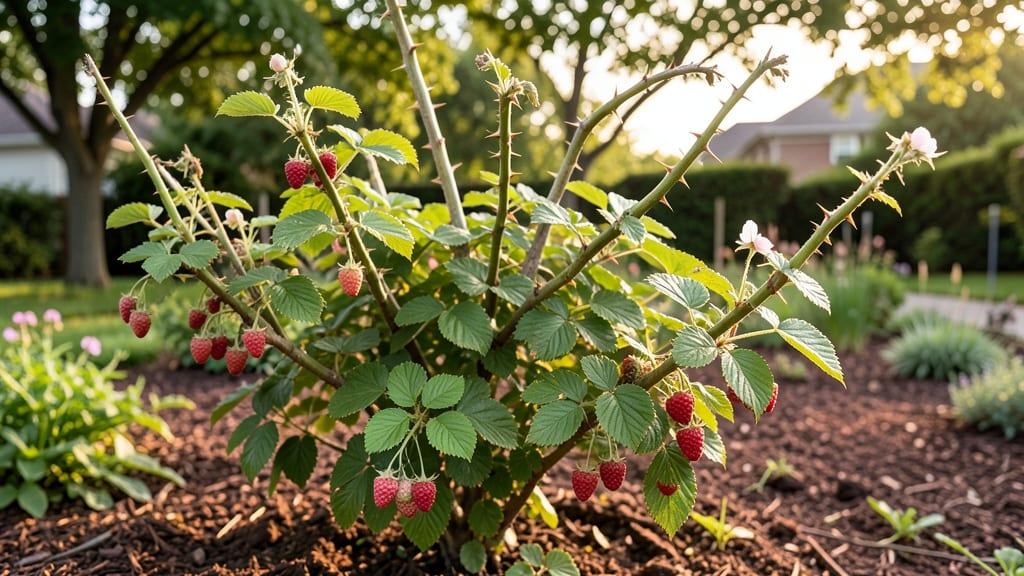
Those mock raspberry vines—with their bright red clusters—are stealing the show in my garden, but without the thorns or fuss of a tree with berries that look like raspberries. 🌿 The secret?
These fast-growing, low-maintenance plants (Rubus hybrids like wineberries) produce berries that taste like a sweeter, more tender raspberry cousin, and they thrive in zones 5-9.
What makes them special is how easy they are to grow. Plant them in full sun to partial shade, in well-draining soil, and water them consistently—though they’re surprisingly drought-tolerant once established. They spread aggressively, so give them space or contain them with a sturdy trellis.
By late summer, you’ll be harvesting clusters of juicy, seedless berries that disappear faster than you can pick them. The plants also bloom with delicate white flowers in spring, adding another layer of charm. Plus, they’re deer-resistant, which is a win in my neck of the woods.
If you’re dealing with pests, watch for spider mites and aphids—spraying with neem oil usually clears them up. And here’s the best part: these berries freeze beautifully, so you can enjoy them long after the season ends.
Natural Mimicry in Plant Evolution
When you spot a tree or vine producing berries that resemble raspberries, you’re witnessing a fascinating example of how plants evolve to attract pollinators and disperse seeds.
These look-alikes aren’t always true raspberries—they’re often the result of convergent evolution, where unrelated species independently develop similar traits to thrive in their environments. Let’s break down the key reasons why this happens, from ecological pressures to genetic quirks.
Many plants mimic raspberries (or other fruit types) to trick animals into helping them reproduce. This isn’t always about outright deception—sometimes it’s about reinforcing familiar cues that signal "easy, nutritious food." Here’s how it works:
- Color and Texture Clues: Bright red or purple berries mimic the appearance of ripe raspberries, making them instantly recognizable to birds, mammals, and insects. For example, the Rubus genus (which includes true raspberries) has close relatives like Ducus (mock raspberry) that exploit this visual shortcut.
- Scent Mimicry: Some berries emit volatile organic compounds (VOCs) similar to those of raspberries, tricking pollinators into investigating. The Ardisia genus, for instance, produces berries that smell faintly sweet, luring animals to spread their seeds.
- False Rewards: In rare cases, plants might produce berries that look edible but are toxic or indigestible (e.g., Nandina domestica, or heavenly bamboo). This "cheat" still works because predators learn to avoid the plant after one bad experience, while other animals—like birds—might still ingest and disperse the seeds.
Actionable Tip: 💡 If you’re identifying a plant with raspberry-like berries, observe whether animals (like birds or squirrels) interact with them. If they avoid the berries, it’s likely a toxic mimic; if they eat them, the plant is probably relying on seed dispersal.
Sometimes, berries that resemble raspberries arise from natural hybridization—when two closely related plant species interbreed. This can create hybrids with traits that blur the line between species. Here’s why this happens:
- Shared Ancestry: Many berry-producing plants belong to the same family (e.g., Rosaceae for raspberries or Ericaceae for blueberries). When wind, insects, or animals transfer pollen between species, hybrids with raspberry-like fruit can emerge. For example, the Rubus genus includes over 700 species, many of which hybridize easily.
- Polyploid Advantage: Some hybrids become polyploid (having extra sets of chromosomes), which can make their fruit larger, juicier, or more visually appealing to dispersers. The Rubus hybrid "loganberry" is a classic example—it’s a cross between a raspberry and a blackberry, producing berries that mimic both.
- Stable Traits: If the hybrid is fertile and thrives in its environment, its raspberry-like traits may become fixed over generations. This is how many "weedy" or invasive plants with berry mimics spread rapidly.
Pro Tip: ✨ To test for hybridization, examine the plant’s leaves, stems, and growth habit. Hybrids often have a mix of traits from parent species (e.g., thorny stems like a raspberry but broader leaves like a blackberry).
Plants don’t evolve in a vacuum—they adapt to fill gaps in their ecosystem. When a raspberry-like berry appears on an unrelated tree or vine, it’s often because:
- Competitive Advantage: In areas where true raspberries (Rubus idaeus) don’t grow, other plants evolve similar berries to attract the same pollinators and seed dispersers. For instance, the Vaccinium genus (blueberries and huckleberries) produces berries that birds might confuse with raspberries in early spring.
- Seasonal Timing: Some plants produce raspberry-like berries before true raspberries ripen, ensuring they’re the first "fruit" available to hungry animals. The Gaultheria genus (wintergreen) does this, offering early-season berries that mimic the look of raspberries.
- Climate Adaptations: In colder or drier climates, plants with raspberry-like berries might have thicker skins or higher sugar content to survive harsh conditions. These traits can make them more resilient—and more likely to spread.
Key Observation: 🌡️ Pay attention to the plant’s native range. If it grows in a region where raspberries are rare or absent, its berries are likely an evolutionary adaptation to fill that ecological niche.
While nature drives most of these mimics, humans have also played a role in spreading berries that resemble raspberries. Here’s how:
- Accidental Introductions: Ornamental plants with raspberry-like berries (e.g., Callicarpa or beautyberry) are often planted for their visual appeal. When they escape cultivation, they can outcompete native species, creating "invasive mimics."
- Selective Breeding: Some nurseries or gardeners unknowingly propagate hybrids or look-alikes because they resemble familiar fruits. For example, the Rubus hybrid "boysenberry" was bred for its raspberry-like taste and appearance.
- Seed Contamination: Seeds from raspberry-like plants might hitchhike in soil or mulch, leading to unintended growth in gardens or forests. This is how Rubus species spread globally.
Actionable Advice: 🎯 If you’re cultivating a plant with raspberry-like berries, research its origin. Avoid planting non-native species in wild areas, as they can disrupt local ecosystems.
Fixing & Cultivating Your Berry-Like Vine
Now that you’ve identified your mystery berries (likely mock raspberry vine or Rubus lookalikes), it’s time to turn your curiosity into action! Whether you’re dealing with invasive growth, misidentification, or just eager to nurture these plants, here’s how to solve common challenges—plus tips to keep them thriving.
If your berries look like raspberries but aren’t the real deal, don’t panic! Many lookalikes (like mock strawberry, blackberry, or even poisonous nightshade) can be managed with the right steps.
🔍 Step 1: Confirm the Plant’s Identity
Before acting, double-check:
- Leaf shape: Raspberry leaves are compound (3-5 leaflets); mock raspberry (Rubus phoenicolasius) has serrated edges and a reddish stem.
- Berry clusters: Raspberries grow in loose clusters; blackberries form a hollow core.
- Thorns vs. spines: True raspberries have soft thorns; lookalikes often have sharp, woody spines.
- 💡 Pro Tip: Snap a photo and compare it to a plant ID app (like PlantNet or iNaturalist) or consult your local extension office.
🌿 Step 2: Decide—Remove or Keep?
| If the Plant Is… | Action | Why? |
|---|---|---|
| Invasive (e.g., mock raspberry) | Pull or prune aggressively in early spring before new growth starts. | Prevents spreading; these vines can choke out native plants. |
| Edible but not raspberries (e.g., blackberries) | Harvest carefully—wear gloves to avoid thorns! | Many are delicious but require different care than raspberries. |
| Toxic (e.g., bittersweet nightshade) | Remove immediately—wear gloves and dispose of plants in sealed bags. | Some berries (like nightshade) are poisonous to humans and pets. |
| Desired (e.g., thimbleberry) | Prune for shape and mulch to retain moisture. | Thimbleberries are edible and low-maintenance! |
Mock raspberry vine and similar species can take over gardens if left unchecked.
🔪 Step 3: Manual Removal (Best for Small Patches)
- 🌿 Cut back vines to the ground in late winter/early spring (before leaves emerge).
- 🧤 Wear gloves—these plants have sharp spines that snag skin.
- 🗑️ Bag and dispose of cuttings (don’t compost—seeds can sprout!).
- 💧 Water the soil after removal to help native plants recover.
🌱 Step 4: Prevent Regrowth
- 🌡️ Solarize the area: Cover the ground with clear plastic for 4–6 weeks in hot sun to kill roots.
- 🌱 Plant competitors: Dense ground covers (like creeping thyme or clover) starve out invasive vines.
- ✨ Mulch heavily: Use wood chips or cardboard to block light and suppress regrowth.
If you love the look but want real raspberries, here’s how to transition:
🌱 Step 5: Plant Raspberry Varieties 1. 🛒 Choose the right type:
- Summer-bearing (one crop per year, needs winter dormancy).
- Ever-bearing (two smaller crops, good for containers). 2. 🏡 Pick a sunny spot: 6–10 hours of sun per day; well-draining soil.
- 🌱 Plant in early spring: - Dig a trench, lay 1–2 feet of compost, and place canes 12–18 inches apart. - 💡 Pro Tip: Plant barrier roots (like a buried plastic sheet) to deter voles.
🌿 Step 6: Maintain for Maximum Berries
- 💦 Water deeply (1–2 inches per week); raspberries hate soggy roots.
- 🗹 Prune old canes: Remove 2-year-old canes after harvest to encourage new growth.
- 🍄 Fertilize lightly: Use a balanced 10-10-10 fertilizer in early spring.
Even lookalike berries can attract pests—here’s how to handle them:
🐛 Common Issues & Fixes
| Pest/Disease | Signs | Solution |
|---|---|---|
| Japanese beetles | Skeletons of leaves, chewed berries | Handpick beetles or use neem oil spray. |
| Spider mites | Yellowing leaves, webbing | Spray with water to knock them off; use insecticidal soap. |
| Cane blight | Dark spots on canes, wilting | Prune infected canes; apply copper fungicide early in the season. |
| Birds | Missing berries! | Cover with netting once berries form. |
- 🔍 Inspect new plants before bringing them home (many nurseries sell invasive lookalikes).
- 🌱 Label your plants to avoid mix-ups next season.
- 📅 Prune annually to keep vines manageable.
- 🌿 Test your soil—raspberries thrive in slightly acidic (pH 6.0–6.5) soil.
Final Thought: Whether you’re eradicating an invader or planting your dream raspberry patch, the key is early action. With the right steps, you’ll either enjoy a lush, berry-filled garden—or banish those pesky lookalikes for good! 🍓✨
Frequently asked questions
Are berries that look like raspberries always edible?
Not always! While many berries resemble raspberries (like mock raspberries or thimbleberries), some—such as bittersweet nightshade or poison ivy berries—are toxic. Always confirm the plant type before consuming. Use a reliable plant ID app or consult a local extension office for verification.
How can I tell if my vine is a true raspberry or a lookalike?
True raspberries have hollow cores and soft thorns, while lookalikes often have spines or solid berry centers. Check the leaves too: raspberries have 3-5 leaflets, while mock raspberries (Rubus phoenicolasius) have serrated edges and reddish stems.
Why do some berries look like raspberries but aren’t related?
This is called convergent evolution—plants develop similar traits to attract pollinators and seed dispersers. For example, Ardisia berries mimic raspberries to lure birds, even though they’re from a completely different family. It’s nature’s way of tricking animals into spreading seeds!
Can I grow raspberry lookalikes in containers?
Yes! Many Rubus hybrids (like wineberries or blackberries) thrive in containers with well-draining soil and 6+ hours of sun. Use a 15-gallon pot with trellis support—just ensure it’s large enough for root growth and prune regularly to control size.
How do I prevent invasive berry vines from spreading?
Cut vines back to the ground in early spring before new growth starts, and wear gloves—they have sharp spines! Solarize the area (cover with clear plastic for 4–6 weeks) or plant dense ground covers like creeping thyme to block regrowth.