
Propagation
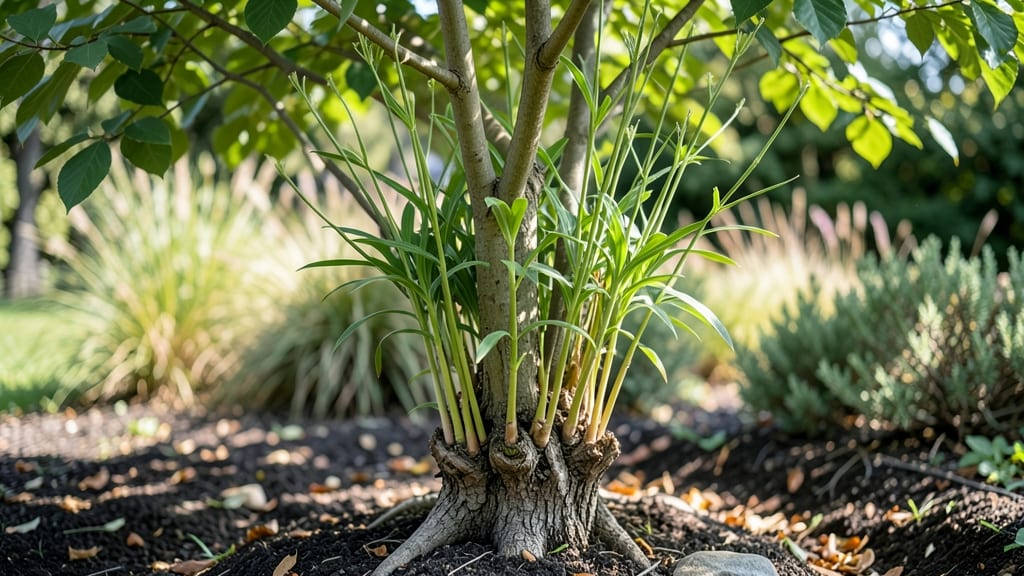
That stubborn tree sprouting from the base isn't just stubborn—it's a survival instinct. 🌱 Whether it's a root sucker from your oak or a basal shoot on your fruit tree, these shoots are nature's way of ensuring the tree keeps growing, even if the top gets damaged.
The good news? You can manage them without harming your tree's health.
These sprouts pop up when trees feel stressed—maybe from drought, poor soil, or even just genetics. Some trees, like willows or apples, are naturally prone to sending up shoots from their base, while others do it as a last-resort backup plan.
The key is understanding whether these shoots are helpful (like replacements for damaged trees) or just pesky (like when they crowd out your lawn).
With just a few simple steps—like pruning at the right time or using a natural barrier—you can keep your tree healthy and your yard tidy. No chemicals needed, just smart timing and a sharp pair of shears.
You'll end up with a stronger tree and a cleaner landscape, all while giving nature a little nudge in the right direction.
Works for fruit trees, shade trees, and even those unexpected volunteers in your flower beds. Here's how to take control without cutting down the good stuff.
Root Causes Of Stubborn Base Growth
If you’ve ever pruned a tree—whether it’s a stubborn shrub, a fruit-bearing branch, or a decorative hedge—only to find new shoots erupting from the exact spot you cut, you’re not alone.
This phenomenon, often called basal sprouting or suckering, is actually a survival tactic hardwired into many plant species. But why does it happen? Let’s break down the science behind this persistent regrowth and the triggers that set it off.
Plants are masters of resilience, and basal sprouting is a built-in backup system. When a tree or shrub loses a branch—or even its entire top—it relies on dormant buds hidden in the bark, roots, or base to regenerate.
These buds, called adventitious buds, are genetically programmed to activate when the plant senses stress, injury, or a loss of leadership (like the main stem).
Think of it like a biological insurance policy: if the "CEO" (main stem) is removed, the underlying team (lateral buds) steps in to keep the operation running. This is especially common in:
- Fruit trees (e.g., apple, citrus, fig)
- Hardwood shrubs (e.g., willow, poplar, elderberry)
- Succulents and cacti (which sprout from the base even after severe pruning)
Pro Tip: 💡 If you’ve ever heard gardeners say, "You can’t kill a willow," it’s because these trees thrive on basal sprouting—even if you cut them down to stumps!
While nature drives this behavior, human intervention often accelerates it. Poor pruning techniques can encourage basal sprouting by sending mixed signals to the plant. Here’s how:
| Pruning Mistake | Why It Causes Sprouting |
|---|---|
| Cutting too close to the base | Removes the plant’s natural growth regulators (like auxin hormones), leaving exposed tissue that demands new growth to heal. |
| Top-heavy pruning (e.g., shearing shrubs into a "ball") | Strips away the apical dominance (the plant’s "boss" bud), causing lower buds to rush to fill the power vacuum. |
| Using dull or dirty tools | Causes jagged cuts that stress the plant, triggering emergency sprouting to seal wounds. |
| Pruning at the wrong time (e.g., late winter/early spring for deciduous trees) | Stimulates new growth when the plant is already gearing up for a flush of energy, leading to uncontrolled suckering. |
Actionable Fix: ✨ Always prune just above a leaf node or bud (the "swollen bump" on the stem) and use clean, sharp tools to minimize stress signals.
Beneath the soil, your tree’s root system is hard at work—and it plays a surprising role in basal sprouting. Here’s how:
- Root pressure: When roots absorb water and nutrients rapidly (e.g., after rain or overwatering), they create hydraulic pressure that forces water—and hormones—up through the stem. This can trigger dormant buds to wake up and sprout.
- Cytokinin hormones: Produced in the roots, these plant growth regulators promote cell division and are linked to lateral bud activation. If roots are healthy and active, they’ll flood the base with signals to grow.
- Stress hormones (abscisic acid): When a plant is thirsty, root-bound, or diseased, these hormones can override the usual growth patterns, leading to desperation sprouts from the base.
What You Can Do: 💧 Monitor soil moisture—consistent hydration (not soggy soil) keeps root pressure balanced. For potted plants, check for root-bound conditions (roots circling the pot), which can force basal sprouting.
Not all plants sprout from the base with equal enthusiasm. Some species are genetically wired to produce more adventitious buds than others. Here’s the breakdown:
| High-Sprouting Species | Why They Do It |
|---|---|
| Willow (Salix spp.) | Evolved to regrow from stumps to avoid erosion in wetlands. |
| Poplar (Populus spp.) | Fast-growing with shallow roots; sprouts to colonize space quickly. |
| Apple & Pear Trees | Basal shoots help rejuvenate older orchards by producing new leader stems. |
| Succulents (e.g., Jade Plant, Aloe) | Store water in their bases; sprouting is a survival mechanism against drought. |
| Bamboo (Running Types) | Uses rhizomes to spread aggressively—cutting the stalk often triggers massive basal regrowth. |
Key Takeaway: If you’re dealing with a high-sprouter, accept that basal growth is part of its DNA. For others, proactive pruning can curb the habit.
Fixing Unwanted Base Sprouts
Now that you understand why your tree is sprouting from the base, let’s tackle the solutions—whether you want to encourage new growth (like with rooted cuttings) or stop unwanted suckers. Below are practical, step-by-step fixes tailored to the root cause, plus prevention tips to keep your tree thriving without surprises.
If you’re intentionally propagating a tree from a base cutting (like willow, olive, or maple), these sprouts are your new plant’s lifeline! Follow these steps to boost success rates:
🔥 Step 1: Choose the Right Cutting
- Select semi-hardwood cuttings (new growth that’s slightly woody but still flexible).
- Look for nodes (bumps where leaves attach)—these are where roots will form.
- Pro tip: 💡 Use a clean, sharp knife to avoid crushing the stem.
🍳 Step 2: Prep for Root Growth
- Strip lower leaves (leave 3–4 at the top) to reduce moisture loss.
- Dip in rooting hormone (optional but helpful for stubborn species like roses).
- Pro tip: 🌡️ Warm water soak (24 hours) can jumpstart rooting in some species (e.g., willow).
👨🍳 Step 3: Plant in the Perfect Medium
Use a mix of:
- 50% perlite/pumice (for aeration)
- 50% peat moss or coconut coir (for moisture retention)
- Alternative: Water propagation (place cuttings in a jar of water, changing it weekly).
🥘 Step 4: Create Ideal Conditions
- Humidity: Cover with a plastic bag or propagator to trap moisture.
- Light: Bright, indirect light (no harsh sun).
- Temperature: Keep 65–75°F (18–24°C)—warmer = faster roots!
- Pro tip: ✨ Mist daily to keep the base damp but not soggy.
⏰ Step 5: Patience & Monitoring
- Roots typically form in 2–8 weeks (check by gently tugging—they’re ready if slight resistance).
- Once roots appear, transplant carefully to avoid shock.
If your mature tree is throwing up nuisance shoots from the base (like fruit trees or shrubs), act fast to prevent resource drain and keep energy in the main trunk.
🔪 Step 1: Identify the Type of Sprout
- Suckers: Fast-growing, thin shoots from the base or roots.
- Water sprouts: Vertical shoots from the trunk or branches (often leggy).
- Key difference: Suckers come from below ground; water sprouts emerge above.
🌿 Step 2: Remove It Properly
- For small suckers: Snap or cut at the base with pruners (sterilized with rubbing alcohol).
- For stubborn root suckers: Dig 1–2 inches deep around the base and sever the root with a spade.
- Pro tip: 🔥 Paint the cut with pruning sealant (optional) to prevent disease entry.
🌡️ Step 3: Prevent Regrowth
- Apply mulch (2–3 inches of wood chips) around the base to block sunlight (suckers need light to grow).
- Use a root barrier (buried vertically around the trunk) to stop underground spread.
- Pro tip: 🎯 Reapply mulch seasonally—it breaks down over time!
🚫 Step 4: Long-Term Management
- Prune regularly (early spring or late fall) to stay ahead.
- Fertilize the main trunk (not the base) to strengthen the parent tree.
- Avoid overwatering—stressed trees produce more suckers.
Want to avoid base sprouts altogether?
Try these proactive strategies: - Grafted trees: Buy certified grafted varieties (e.g., fruit trees)—they’re bred to resist suckering. - Proper pruning: Thin out dense branches to reduce stress and energy waste. - Soil health: Test soil pH (ideal: 6.0–7.0) and add compost to support strong root systems. - Avoid injury: Protect trunks from damage (voles, lawnmowers) that triggers sprouting.
Final Note: Whether you’re growing a new tree from a cutting or battling stubborn suckers, the key is consistency. Check your tree regularly, act at the first sign of unwanted growth, and soon you’ll have a strong, healthy specimen—without the surprises!
Frequently asked questions
Why do some trees sprout more aggressively from the base than others?
Genetics play a huge role! Trees like willows, poplars, and fruit trees (such as apples or pears) are naturally wired to produce basal sprouts as a survival mechanism. These species evolved to regrow quickly after damage or pruning. Even succulents and bamboo use this trait to spread or survive drought. If your tree is a high-sprouter, accept it as part of its nature—though you can still manage it with proper techniques.
Can I turn those base sprouts into new plants?
Many base sprouts can be propagated into new trees. Simply dig up a healthy sprout with some roots attached, replant it in a pot with well-draining soil, and keep it moist. Species like willow, olive, and maple root easily this way. Just avoid trying this with aggressive spreaders like bamboo—you’ll end up with more work than you bargained for!
What’s the best time of year to prune unwanted base shoots?
Late winter or early spring is ideal for most trees. This timing gives you a head start on controlling growth before the tree enters its active season. For evergreens or tropical plants, prune during their dormant period. Always sterilize your tools first to prevent disease spread—especially if you’re dealing with multiple cuts around the base.
Will removing base sprouts harm my tree?
Not if done correctly! Removing healthy sprouts won’t kill the parent tree, but over-pruning can stress it. Focus on cutting just above the base (about 1/4 inch from the ground) and avoid removing too many at once. For root suckers, dig down slightly to sever the root connection. Always prioritize keeping the main trunk strong—it’s the powerhouse of your tree!
How can I tell if a base sprout is beneficial or just a nuisance?
Look at the sprout’s purpose: beneficial sprouts often appear after damage (like storm damage) and help the tree recover. Nuisance sprouts usually crowd the base, compete with grass, or drain energy from the main tree. If the sprout is weak, leggy, or growing in the wrong direction, it’s likely a nuisance. Strong, upright sprouts from grafted trees (like fruit trees) might be worth keeping!