Pruning
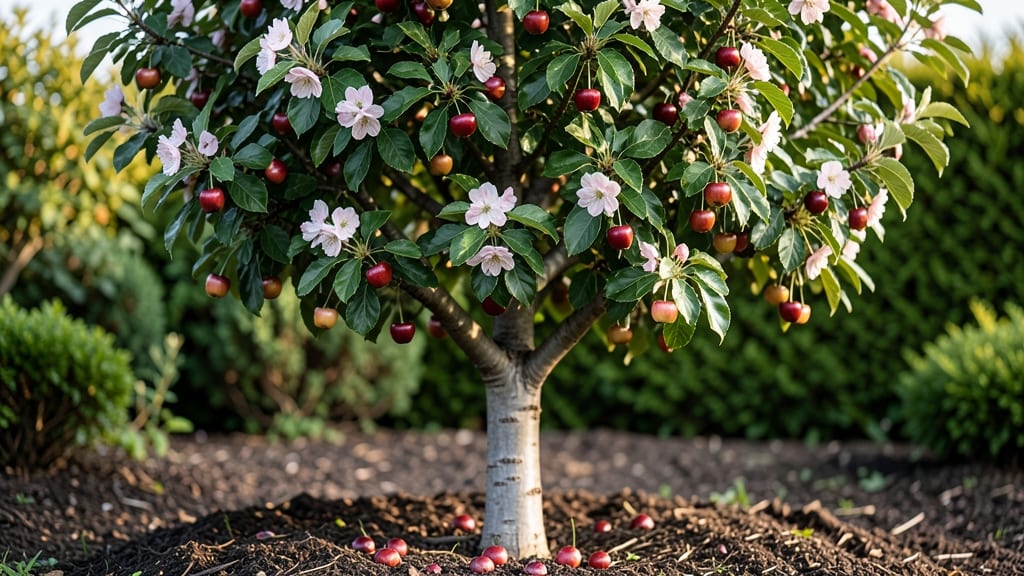
Rainier cherry trees are NOT fully self-pollinating, though they produce some fruit alone. For optimal yields, plant at least one compatible variety like Bing or Stella within 50 feet to ensure reliable cross-pollination and heavier fruit set.
Understanding why Rainier cherry trees produce some fruit alone but thrive with pollinators is key to maximizing your harvest. 🌸 These trees have partial self-fruitfulness due to their genetic makeup, meaning they can set fruit without cross-pollination—but the quality and quantity improve dramatically with compatible partners.
The best pollinators for Rainiers are early-ripening varieties like Bing or Stella, which bloom at similar times and attract more bees to your orchard. Planting them within 50 feet ensures pollen transfer happens efficiently, especially during cool spring weather when bees are less active.
What many gardeners overlook is that temperature plays a huge role in pollination success. If spring temperatures drop below 55°F during bloom, bees become sluggish, reducing pollination rates. Adding bee-friendly plants like lavender or clover near your cherry trees creates a pollinator-friendly environment that boosts fruit set naturally.
💡 In This Article
- Why Rainier Cherries Need Cross-Pollination for Best Fruit
- Top Companion Cherry Varieties for Rainier Trees
Why Rainier cherries need cross-pollination for best fruit
Rainier cherry trees exhibit partial self-fruitfulness, meaning they can produce some fruit without cross-pollination—but the process is inefficient. Their flowers contain both male and female reproductive parts, yet the pollen often fails to fertilize their own ovules effectively.
This happens because the genetic makeup of Rainiers causes self-incompatibility, a natural mechanism that prevents inbreeding and ensures genetic diversity. When pollen from the same tree tries to fertilize its own ovules, biochemical barriers in the style (the flower's neck) block fertilization, leading to poor fruit set.
The key to better fruit development lies in cross-pollination, where pollen from a different but compatible tree fertilizes the ovules. Studies show that Rainier trees cross-pollinated with varieties like Bing or Stella produce 30-50% more fruit than those left to self-pollinate.
This is because compatible pollen contains different genetic markers that bypass the self-incompatibility response. For example, Bing cherries bloom about 3-5 days earlier than Rainiers, ensuring overlapping bloom periods that maximize pollinator activity. 🌿 The result? Larger, more uniform fruit with fewer misshapen or undersized cherries.
Temperature and weather play critical roles in this process. Rainier cherries bloom in late spring, often when daytime temperatures hover around 60-70°F but nights dip below 50°F. Cold snaps below 55°F reduce bee activity by 70%, directly impacting pollination rates.
Even light rain during bloom can wash pollen away, leaving flowers unpollinated. This is why planting companion varieties like Stella—known for its longer bloom period—helps ensure at least some pollen transfer, even in less-than-ideal weather.
The combination of compatible genetics and optimal bloom timing creates the perfect conditions for heavy fruit set.
Beyond genetics, the physical structure of Rainier flowers contributes to their cross-pollination needs. Their shallow nectar glands produce less nectar than some other cherry varieties, making them less attractive to bees.
When you add a companion tree like Lapins—with its deeper nectar glands and more visible pollen—you create a "pollinator magnet" effect. Bees visit both trees more frequently, increasing the chances of successful cross-pollination.
This synergy explains why orchards with mixed varieties often see 2-3 times more fruit than single-variety plantings.
What most gardeners don't realize is that even partially self-pollinated Rainier cherries often develop smaller pits and thinner flesh compared to cross-pollinated fruit. The reason? Self-pollinated ovules receive less genetic stimulation for full development.
When cross-pollinated, the resulting cherries typically have 10-15% more juice content and a firmer texture—qualities that make them more desirable for fresh eating and commercial markets.
The visual difference is striking: self-pollinated cherries may appear paler and less vibrant, while cross-pollinated ones develop the characteristic deep red hue and glossy finish that Rainiers are prized for.
For those in cooler climates, understanding these botanical quirks becomes even more important. In regions where spring blooms coincide with unpredictable weather, planting three compatible varieties (like Rainier + Bing + Stella) creates a "pollination safety net."
Even if one variety's bloom is disrupted by frost or rain, the others will likely still produce pollen. This diversity approach mirrors commercial orchards, where 5-10% of trees are planted as pollinizers to guarantee consistent yields. The lesson?
While Rainier cherries can survive alone, their true potential unfolds when paired with the right companions. 🌱