
Trees
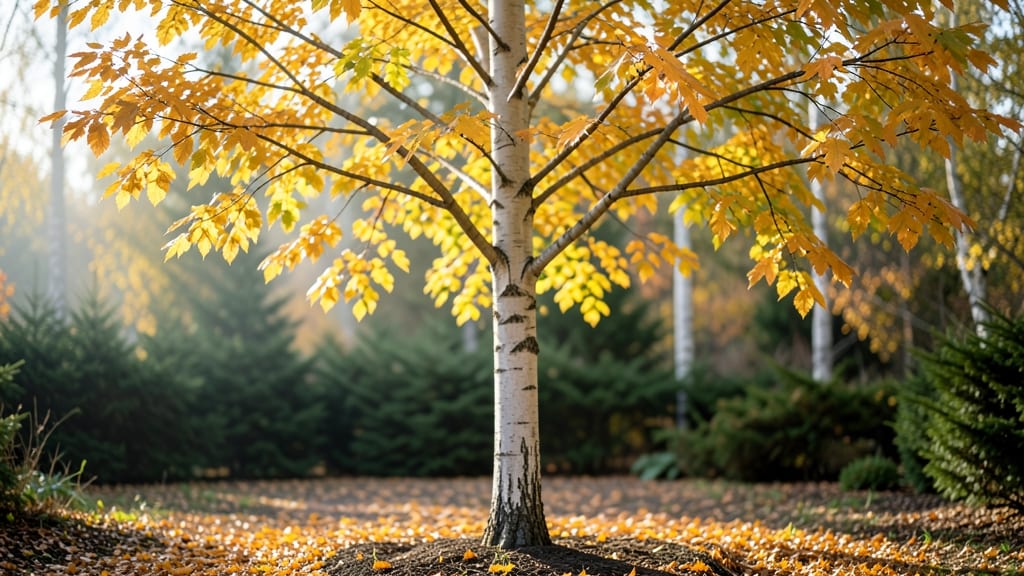
Poplar tree leaves in fall transform into soft golden-yellows or pale browns before they fall, as the chlorophyll breaks down faster than in slower-growing trees while producing fewer vibrant pigments. This muted shift happens because poplars prioritize rapid nutrient withdrawal over pigment development.
This subtle color change happens because poplar trees—like cottonwoods and aspens—grow so quickly that their leaves prioritize nutrient recycling over pigment production. 🌳 Unlike maples or oaks that build up bright reds and oranges, poplars focus on shedding leaves efficiently once daylight shortens.
The result? A more understated autumn display that still signals the season's arrival. Gardeners often overlook poplars for fall color, but their unique pattern can create beautiful contrast in mixed landscapes when paired with more vibrant species.
What makes this transition interesting is how it reflects the tree's fast-growing nature. Poplars allocate energy toward new growth rather than storing pigments, so their leaves fade more uniformly.
This biological trade-off explains why their fall colors never reach the intensity of hardwoods like sugar maples, which invest heavily in anthocyanins for brighter displays.
💡 In This Article
- Why Poplar Leaves Change Color Differently Than Maples or Oaks
- Identifying Poplar Trees by Their Fall Leaf Patterns
Why poplar leaves change color differently than maples or oaks
Poplar trees—including cottonwoods, aspens, and balsam poplars—produce far less dramatic fall colors because their biology prioritizes speed over pigment production.
While maples and oaks invest energy in creating bright anthocyanins (the reds and purples) and carotenoids (the oranges), poplars focus on rapidly breaking down chlorophyll to recycle nutrients back into the tree.
This process happens 3-4 weeks faster in poplars than in slower-growing hardwoods, leaving behind only muted yellows from residual carotenoids.
The key difference lies in their growth strategy. Poplars are among the fastest-growing trees in North America, with some species adding 3-6 feet per year under ideal conditions.
This rapid growth demands quick nutrient recycling, so leaves prioritize chlorophyll degradation over pigment development. 🌳 In contrast, maples and oaks grow more slowly, allowing time for anthocyanin synthesis—these pigments act as sunscreens to protect leaves during nutrient withdrawal, creating vibrant colors.
Poplar leaves lack this extra step, resulting in their subdued palette.
Another factor is leaf structure. Poplar leaves are typically 3-6 inches long with smooth edges and a triangular shape, which affects how light interacts with their surface. Their thinner leaves also have fewer layers of cells, meaning pigments have less surface area to reflect.
When you compare a poplar leaf to a sugar maple leaf under the same light conditions, the maple's thicker, lobed structure scatters light more dramatically, enhancing color visibility.
Temperature plays a surprising role too. Poplars thrive in cooler climates but still show muted colors because their optimal growing conditions don't align with peak pigment development.
While some poplars (like the yellow poplar) may develop slight golden hues, they never reach the intensity of trees that experience 40-50°F nighttime temperatures combined with sunny days—a perfect recipe for vibrant fall colors.
This explains why poplars in northern climates might show slightly more color than those in warmer regions.
What most people don't realize is that poplar leaves actually contain the same pigments as other trees—they just express them differently. The carotenoids responsible for yellows are present in both poplars and maples, but poplars lack the enzymatic pathways to produce significant amounts of anthocyanins.
This biological limitation means their fall display will always be more subdued, though no less beautiful in its own understated way.
For gardeners, this means poplars can serve as excellent background plants that complement more colorful species. Their soft yellows and browns create a calming contrast to the fiery reds of maples or the deep oranges of oaks.
Planting poplars near vibrant foliage trees can actually enhance the overall seasonal effect by providing a neutral backdrop that makes other colors pop more dramatically.