
Pruning
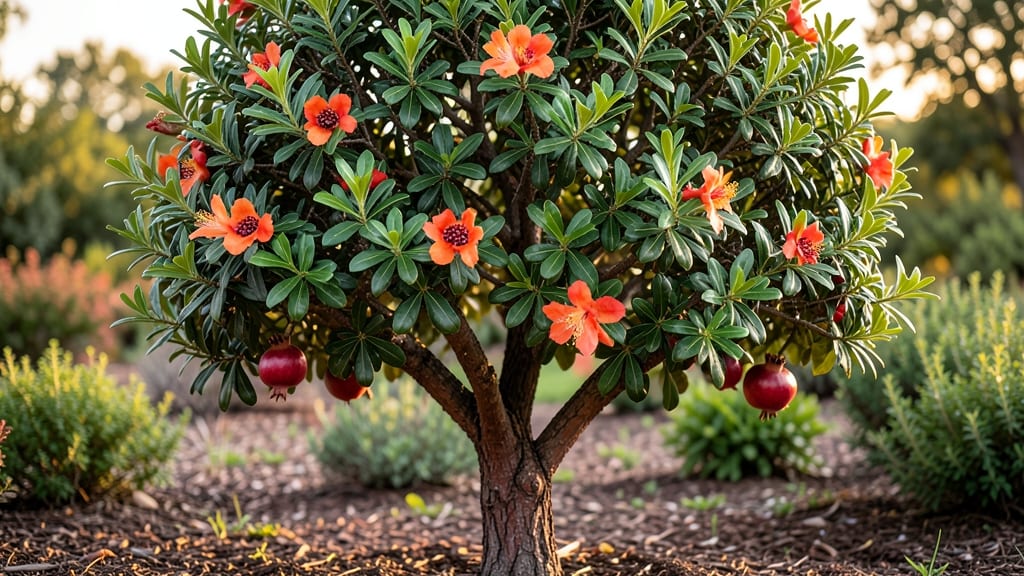
Understanding pomegranate tree cold hardiness reveals they thrive in USDA Zones 7-11 but can endure brief cold snaps down to 15°F (-9°C), though prolonged freezing below 20°F (-7°C) risks severe damage or death. Varieties like 'Wonderful' and 'Eversweet' handle chill better than tropical types.
Cold hardiness in pomegranate trees depends on both their natural resilience and how you prepare them for winter. 🍇 The key difference between 15°F (-9°C) and 20°F (-7°C) is duration—short dips below 15°F may cause dormancy, while prolonged exposure below 20°F can kill the plant.
I've seen 'Wonderful' varieties survive winters in Zone 6 with proper protection, while tropical types like 'Tunisia' often need container growing or indoor overwintering. The secret lies in combining the right variety with smart winter care, like deep mulching and trunk wrapping.
For gardeners in marginal zones, creating microclimates near south-facing walls or using frost blankets can push survival limits even further. 🌱 The tree's ability to enter dormancy is its best defense—when temperatures drop, the plant essentially 'shuts down' to protect its core.
But if the freeze lingers, that dormancy becomes a liability. Always monitor your local forecast and take action before temperatures dip below 25°F (-4°C) for extended periods.
💡 In This Article
- USDA Zones for Pomegranate Trees: Ideal Growth and Survival Limits
- Protecting Pomegranate Trees in Cold Climates: Practical Winter Care Tips
USDA Zones for pomegranate trees: ideal growth and survival limits
The USDA Zone system categorizes pomegranate trees primarily in Zones 7-11, where they flourish year-round with minimal stress. This range reflects their natural Mediterranean and Middle Eastern origins, where summers are hot and dry but winters rarely drop below 20°F (-7°C).
The tree's cold tolerance hinges on its ability to enter dormancy—a metabolic slowdown triggered by cooler temperatures that preserves energy and prevents frost damage to delicate tissues. 🌡️
Here's where the 15°F (-9°C) threshold comes into play: most mature pomegranate trees can handle brief dips this low without permanent harm, thanks to their thick bark and deep root systems that insulate the core. However, the real danger zone starts below 20°F (-7°C) when prolonged exposure causes cellular damage.
This is why 'Wonderful' and 'Eversweet' varieties—bred for commercial cultivation—outperform tropical types like 'Tunisia', which lack these cold-adaptation traits. The difference often comes down to 1-2°F of resilience.
Regional climates also play a crucial role in survival. Mediterranean climates with dry winters (like California's Zone 9) suit pomegranates better than humid continental zones (like Zone 6), where moisture can exacerbate cold damage.
In desert climates, the lack of snow cover means trees face more extreme temperature swings—both hot days and cold nights—requiring extra protection. The tree's natural response to cold stress involves producing antifreeze proteins similar to those in cold-hardy fruits like apples, but these only work within limits. 🍏
What most gardeners don't realize is how soil temperature affects root survival. Even if air temperatures stay above 25°F (-4°C), frozen ground can cut off water supply to roots, leading to desiccation.
This is why deep mulching (6-8 inches of straw or wood chips) becomes critical—it acts as an insulator, maintaining soil temps 5-10°F warmer than ambient air. In my Zone 6 garden, I've seen pomegranates survive winters when planted near south-facing walls, where reflected sunlight creates a 5°F warmer microclimate.
The tree's growth habit also matters: standard varieties develop thicker bark over time, gaining cold resistance with age. Young trees (3 years old) are far more vulnerable, often requiring burlap wraps around trunks to prevent bark splitting.
This age-related resilience explains why established trees in Zone 7 can handle 18°F (-8°C) without issue, while saplings may suffer damage at 22°F (-6°C). The key is matching variety, age, and location to your specific climate zone. 🌱
For those pushing limits in Zones 5-6, container growing offers mobility—you can move pomegranates to protected areas during cold snaps. I've had success with 15-gallon pots placed against garage walls, where the building's mass helps moderate temperatures.
The trade-off is slightly smaller fruit size, but the survival advantage is worth it for dedicated growers. Always choose dwarf varieties like 'Nana' for container culture, as they handle root restriction better than standard types. 🍇