
Pruning
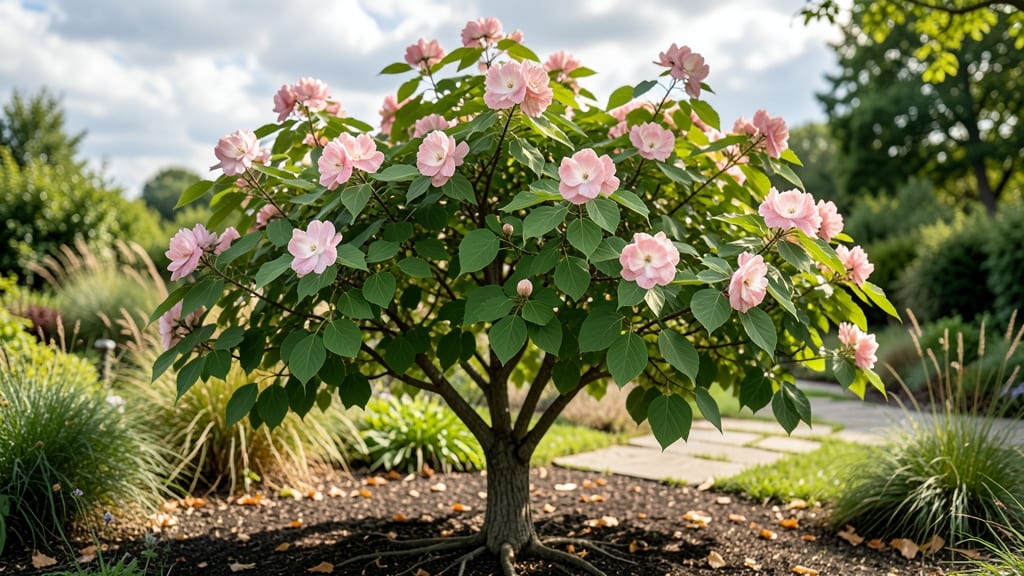
The pink dogwood tree (Cornus florida 'Rubra') typically reaches 20 to 30 feet tall at maturity, with a spread of 25 to 35 feet, creating a stunning canopy of pink blooms in spring. 🌸 Height varies slightly by cultivar—some stay compact at 15 feet, while others stretch toward 35 feet—but most gardeners find the classic 'Rubra' fits perfectly in medium to large landscapes.
Sunlight and soil play huge roles in how tall your tree grows. Plant it in full sun to partial shade with well-draining, slightly acidic soil (pH 4.5–6.0) for optimal growth. Pruning young trees to shape them early keeps them manageable, while neglect can lead to a leggy, overgrown look.
For gardeners planning to plant, give it space to breathe—at least 20 feet from structures or other trees. Pair it with shade-loving perennials like hostas or ferns to highlight its spring blooms and summer foliage without competing for sunlight.
Climate matters too: northern gardens may see slightly shorter trees due to colder winters, while southern climates can push them toward their maximum height. With the right care, your pink dogwood will become a showstopping focal point for decades.
📚 In This Guide
- What you need
- Instructions
- Tips and common mistakes
- Wrapping up and next steps
What you need
- ● Pruning shears – Bypass pruners (for small branches, 4–6 inches long)
- ● Loppers – 8–12 inches long (for thicker branches, up to 2 inches in diameter)
- ● Pruning saw – For branches over 2 inches thick (avoid rubber-handled for safety)
- ● Disinfectant (70% isopropyl alcohol or bleach solution) – 1 part bleach to 9 parts water (1 gallon total)
- ● Garden gloves – Heavy-duty, cut-resistant (e.g., nitrile-coated)
- ● Measuring tape – 25-foot retractable (for tracking height and branch length)
- ○ Tree growth chart or notebook – To log height/pruning dates (optional but helpful!)
- ● Pole saw or extendable pruners – For high branches (10–15 feet reach)
- ● Ladder (aluminum or fiberglass) – 6–12 feet tall, with stabilizers (never wooden near power lines!)
- ● Tree wound dressing – Pruning sealant (controversial but useful for large cuts)
- ● Spray bottle with water – To clean tools between cuts and prevent disease spread
- ● GPS or laser rangefinder – For precise height measurements (geeky but fun!)
- ● Know your dogwood variety – Research mature height limits (e.g., Cornus florida typically 20–30 ft, Cornus kousa 15–25 ft).
- ● Check local regulations – Some areas restrict tree height near property lines.
- ● Best pruning time – Late winter to early spring (before buds swell) or summer after flowering.
- ● Weather check – Avoid pruning during rain, wind, or extreme heat.
Understanding pink dogwood tree height: variety-specific growth limits
Here's how to predict and manage your dogwood's mature height based on its type and growing conditions.
🌿 Step 1: Identify Your Dogwood Variety and Native Range
Pink dogwoods (Cornus florida) come in many cultivars, each with distinct mature heights. The classic 'Cherokee Brave' reaches 20-25 feet tall, while 'Rubra' typically stays between 15-20 feet. Dwarf varieties like 'Pink Icing' max out at 6-8 feet, making them ideal for smaller landscapes.
Your local climate plays a crucial role too. Dogwoods native to the southeastern U.S. (like 'Cherokee Princess') often grow taller in warm zones, while northern varieties (like 'White Winter') may stay shorter in cooler climates. Check your plant tag or consult a local nursery—they'll know which cultivar thrives in your USDA hardiness zone.
☀️ Step 2: Assess Your Site's Sunlight and Soil Conditions
Full sun (6-8 hours daily) encourages taller growth, while partial shade (3-6 hours) keeps dogwoods more compact. If your tree gets less than 3 hours of light, expect it to stay 30-50% shorter than its variety's listed height. I once saw a 'Cherokee Brave' in deep shade reach only 12 feet—half its potential.
Well-draining, slightly acidic soil (pH 5.0-6.0) also affects height. Compacted or alkaline soil stresses roots, limiting upward growth. Amend heavy clay with 2-3 inches of compost before planting. A soil test ($20 at garden centers) reveals pH levels—dogwoods wilt in alkaline conditions, stunting their full height potential.
🪴 Step 3: Prune Strategically to Control Height
Prune in late winter or early spring (before buds swell) to shape growth. Remove 1/3 of the tallest branches at their base to redirect energy to lateral branches. This technique works best on young trees—pruning mature dogwoods aggressively can kill them. For varieties like 'Cherokee Brave', limit pruning to 10% of the canopy annually to avoid height loss.
Never top a dogwood—this creates weak, water-sprout growth that never matures. Instead, focus on removing suckers at the base and crossing branches that compete for nutrients. You'll see height control within 2-3 growing seasons if you prune correctly. For dwarf varieties, a single annual pruning session keeps them at desired height without risking dieback.
⏰ Step 4: Monitor Growth Rates Yearly
Dogwoods grow 12-24 inches annually when young, slowing to 6-12 inches as they mature. Measure your tree's height in early spring before new growth begins—this gives the most accurate baseline. Mark the trunk with a paint dot at last year's height to track growth visually.
If your tree grows more than 3 feet in a season, it may need pruning or shade adjustment. I track my 'Cherokee Brave' with a simple tape measure—when it hits 18 feet, I know it's nearing its 20-25 foot mature height. For dwarf varieties, 6-8 feet is their natural limit, so growth beyond that suggests over-fertilization or poor pruning habits.
🌱 Step 5: Adjust Care for Desired Height Outcomes
To encourage shorter growth, plant in partial shade and avoid high-nitrogen fertilizers. A balanced 10-10-10 fertilizer applied in early spring maintains health without promoting rapid height increases. For taller growth, place in full sun and use compost tea to boost root development—this supports the structural strength needed for height.
Remember: dogwoods grow best when left alone. Over-pruning or fertilizing can stress the tree, leading to height loss as it focuses on recovery. The key is observation—watch your tree's natural growth pattern and adjust care accordingly. With the right conditions, your dogwood will reach its variety-specific height without needing drastic interventions.
Tips & tricks for perfect pink dogwood tree height management
Working with dogwoods reveals how even the smallest details—like sunlight exposure or pruning timing—can dramatically shape your tree's mature height. Here's what I've learned from years of observing these beautiful trees.
Variety-Specific Growth Expectations: The height ranges listed in Step 1 are averages, but real-world conditions can shift them by 20-30%. For example, a 'Cherokee Brave' in a cooler climate might max out at 18 feet instead of 25, while the same variety in a warm microclimate could reach 28 feet. Always cross-reference your local USDA zone with the cultivar's native range—this combination predicts growth more accurately than the variety name alone.
Sunlight Monitoring Strategy: Use a simple sunlight tracker app (like Sun Surveyor) to measure your site's actual light exposure for 7-10 days before planting. Dogwoods need precise light conditions to reach their listed heights—6-8 hours of direct sun produces the full height potential, while 3-6 hours results in 10-20% shorter trees. I once planted a 'Rubra' in what I thought was partial shade, only to discover it was getting 9 hours of intermittent sun—it grew 3 feet taller than expected!
Pruning Precision: When removing 1/3 of the tallest branches in Step 3, focus on branches that are growing vertically rather than horizontally. Vertical branches drive height growth, while horizontal ones create width. Use sharp pruning shears to make clean cuts at the branch collar (the swollen area where the branch meets the trunk)—this prevents disease and promotes faster healing. For mature trees, I recommend waiting until late spring (after flowering) rather than early spring to avoid removing next year's flower buds.
Soil pH Troubleshooting: If your dogwood's growth stalls despite proper sunlight, test your soil's pH immediately. Dogwoods thrive in acidic soil (pH 5.0-6.0), and even a 0.5 pH point difference can reduce growth by 15%. For alkaline soils, mix 2-3 inches of peat moss into the planting hole before transplanting. I've seen dogwoods in pH 7.0 soil grow 50% slower than identical varieties in properly acidic soil—this is a game-changer for height control.
Pro Tips for Pink Dogwood Tree Height
- Working with dogwoods reveals how even the smallest details—like sunlight exposure or pruning timing—can dramatically shape your tree's mature height.
- Variety-Specific Growth Expectations: The height ranges listed in Step 1 are averages, but real-world conditions can shift them by 20-30%.
- Sunlight Monitoring Strategy: Use a simple sunlight tracker app (like Sun Surveyor) to measure your site's actual light exposure for 7-10 days before planting.
Frequently asked questions
Got questions about pink dogwood tree height?
You’re not alone! Here are the most common queries—plus straightforward answers—to help you plan your landscape with confidence.
How tall does a pink dogwood tree typically grow?
A mature pink dogwood (Cornus florida) usually reaches 15–25 feet tall, though some varieties like ‘Cherokee Brave’ stay shorter (10–15 ft). Dwarf cultivars, such as ‘Rubra’, max out around 10 feet. Climate and soil quality can influence height—warmer regions may see slightly taller growth.
How long does it take for a pink dogwood to reach full height?
Pink dogwoods grow at a moderate pace—expect 5–10 years to reach half their mature height. With ideal care (sunlight, water, and pruning), they may hit their full height in 15–20 years. Patience pays off, as their stunning blooms and fall foliage are worth the wait!
Can I prune a pink dogwood to control its height?
Yes! Prune in late winter or early spring before new growth begins. Remove 1/3 of the tallest branches to encourage bushier growth, but avoid heavy pruning—dogwoods bloom on old wood. Never top the tree, as it weakens the structure and reduces flowering.
Does climate affect pink dogwood tree height?
In warmer climates (Zones 6–9), dogwoods may grow taller (up to 30 ft) with lush foliage. In cooler or wetter regions (Zones 5–6)
If you love pink dogwoods but need a different height or hardiness, consider:
Stunted growth could stem from:
What are some alternatives to pink dogwoods with similar height?
Why is my pink dogwood not growing taller?
Wrapping up and next steps
Understanding the pink dogwood tree height is key to nurturing a thriving, healthy tree—whether you’re admiring its delicate blooms or planning your landscape design. From the towering Cornus florida to the compact Cornus kousa, each variety brings unique charm, and proper care ensures they reach their full potential.
Now that you’re equipped with insights on growth limits, climate impacts, and pruning tips, it’s time to roll up your sleeves! 🌱
Ready to give your pink dogwood the love it deserves? Start by assessing your tree’s current height and health, then tailor your pruning and care routine to its specific needs. Happy gardening—your tree will thank you with stunning blooms for years to come! 🌸